


I had 92 days.
Not perfect days. But clean ones. I’d started to breathe again. Started to believe I could be more than the worst things I’d done. Started to think maybe—just maybe—I wouldn’t always be carrying shame around like a backpack full of bricks.
Then I used.
It happened fast. Quietly. A moment of exhaustion, a conversation I wasn’t ready for, and suddenly I was in the car with someone I swore I’d blocked. And I used.
The next day, I woke up with the taste of metal in my mouth and a silence in my chest that scared the hell out of me. Not because I relapsed. But because I didn’t care.
Or thought I didn’t.
What I Thought I Lost
The morning after, I couldn’t look at myself. I didn’t even cry—I just felt numb. I kept repeating, “I had 90 days. I had 90 days. I had 90 days.”
But it felt like I had nothing.
That voice in my head—the mean one—said I ruined everything. That no one would take me seriously again. That I didn’t deserve to be in recovery spaces anymore.
That voice? It’s a liar.
But it’s also loud. And for a few days, I believed it.
Until I realized that staying in that space—numb, hiding, half-alive—was just another version of using. I needed help. Again. And I had a choice: pretend I was okay, or get real and ask for what I actually needed.
Detox Didn’t Mean I Failed. It Meant I Was Still Trying.
Going back into detox felt humiliating at first. I imagined showing up and seeing the staff look at me like, “Oh, it’s you again.”
But that didn’t happen.
I walked in, and someone at the front desk looked me in the eye—not through me—and said, “I’m glad you’re here.”
No sarcasm. No side-eye. Just welcome.
That mattered more than I can explain. Because I didn’t need a lecture. I needed a place to feel safe. I needed a place where I didn’t have to keep pretending.
At Port Charlotte Detox, I got medical care for the withdrawal. But more than that, I got space. I got dignity. I got people who treated me like I was still worthy—even if I didn’t believe it yet.
You Don’t Go Back to Zero
Here’s the thing I learned that I wish I’d known sooner: relapse doesn’t delete your recovery.
It doesn’t erase the work you’ve done. It doesn’t reset your soul to square one.
It means something came up you didn’t have the tools for yet. That’s it. Not that you failed—but that something hurt, and you responded the only way you knew how.
When I came back to detox, I wasn’t starting from nothing. I came back with 92 days of proof that I could do it. And I came back with a better understanding of what I needed to stay there.
I Didn’t Need to Be Punished. I Needed to Be Met.
I think a lot of us come into recovery expecting it to feel like a constant apology. Like we have to shrink to make up for what we’ve done. And when we relapse, it’s easy to think we have to shrink even more.
But that mindset doesn’t help. What helped me? Being treated like a full person. Not a mistake.
I didn’t need someone to tell me, “You messed up.” I already knew.
What I needed was someone to say, “You’re not done. And you’re not alone.”
And that’s exactly what I got in the detox program. If you’re looking for a drug detox program in Charlotte County or somewhere nearby like Fort Myers, know this: you’re not walking into punishment. You’re walking into possibility.
What Helped Me Rebuild (And Stay)
Once I got through the physical detox—and let’s be honest, the emotional crash that came with it—I made a few changes.
This time, I let myself:
- Be honest in meetings—even when I was embarrassed
- Ask for help before I spiraled
- Stop chasing perfection, and focus on connection
- Recognize triggers without needing to fix them all at once
- Forgive myself in small pieces, not all at once
I stopped measuring my worth by how many days I had. And I started measuring it by how willing I was to stay real.
That’s the only metric that matters.
FAQs for Anyone Who’s Relapsed After 90 Days
Is it normal to relapse after a few months sober?
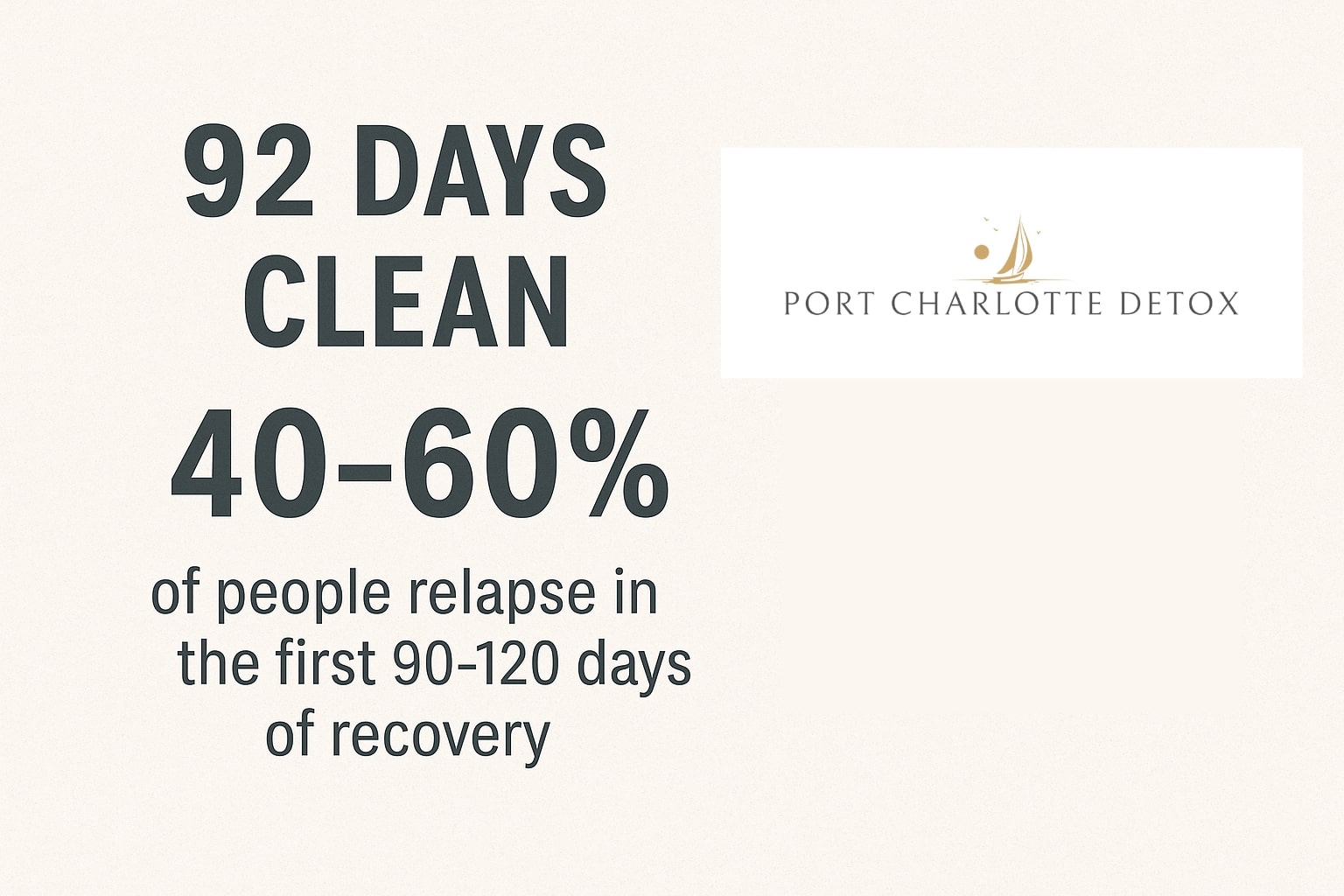
Yes. It’s more common than people think. Many people relapse around the 60–120 day mark—when the brain is still healing, but the urgency of early sobriety fades.
Do I need detox again if I only used once?
Maybe. If you’re struggling physically or emotionally after a slip, detox can give you the support to stabilize and reflect. You don’t have to be “out of control” to benefit from it.
Will treatment centers judge me for relapsing?
Not at Port Charlotte Detox. We’re built to support real recovery—which includes people who’ve stumbled and still want to come back.
What if I’m scared to tell anyone I relapsed?
That fear is normal. But silence grows shame. The bravest thing you can do is speak up. You might be surprised how many people respond with understanding—not judgment.
Can I still be proud of the days I had before I used?
Absolutely. You earned them. They’re part of your story, and nothing takes that away.
You Can Come Back. You Don’t Need to Start Over.
If you’ve relapsed, you’re not disqualified from recovery.
You haven’t ruined everything.
You haven’t lost the right to try again.
At Port Charlotte Detox, they helped me stop spinning. They helped me stop hiding. They reminded me that recovery isn’t about perfection—it’s about permission.
Permission to come back.
Permission to try again.
Permission to be human.
Call (844)336-2690 or visit our drug detox program services in Port Charlotte, Florida to find your way back—without judgment, without starting over, and without pretending to be okay. You’re allowed to be real here.