


When you’re a parent watching your young adult spiral—again—it can feel like a movie you’ve already seen too many times. The calls stop. The lies start. The worry doesn’t sleep.
Maybe they promised it was just “once.” Maybe they went to treatment already, and you believed it worked. Now they’re using again, and you’re back in the eye of the storm—wondering if this time will be different. If there’s still time to help. If help even helps.
If you’re here, searching for answers about drug detox, we want you to know something: there’s no shame in needing clarity. You’re not expected to have it all figured out. And no, you didn’t fail them.
This guide will walk you gently through one of the first questions most parents ask: How long does a drug detox program usually last—and what can I expect when my child enters one?
We’ll cover what detox really involves, how it varies from person to person, and what comes after those first few days. If you’re considering options for a drug detox program in Port Charlotte, Florida, our team is here to provide care—not just for your child, but for you too.
What is the average length of a drug detox program?
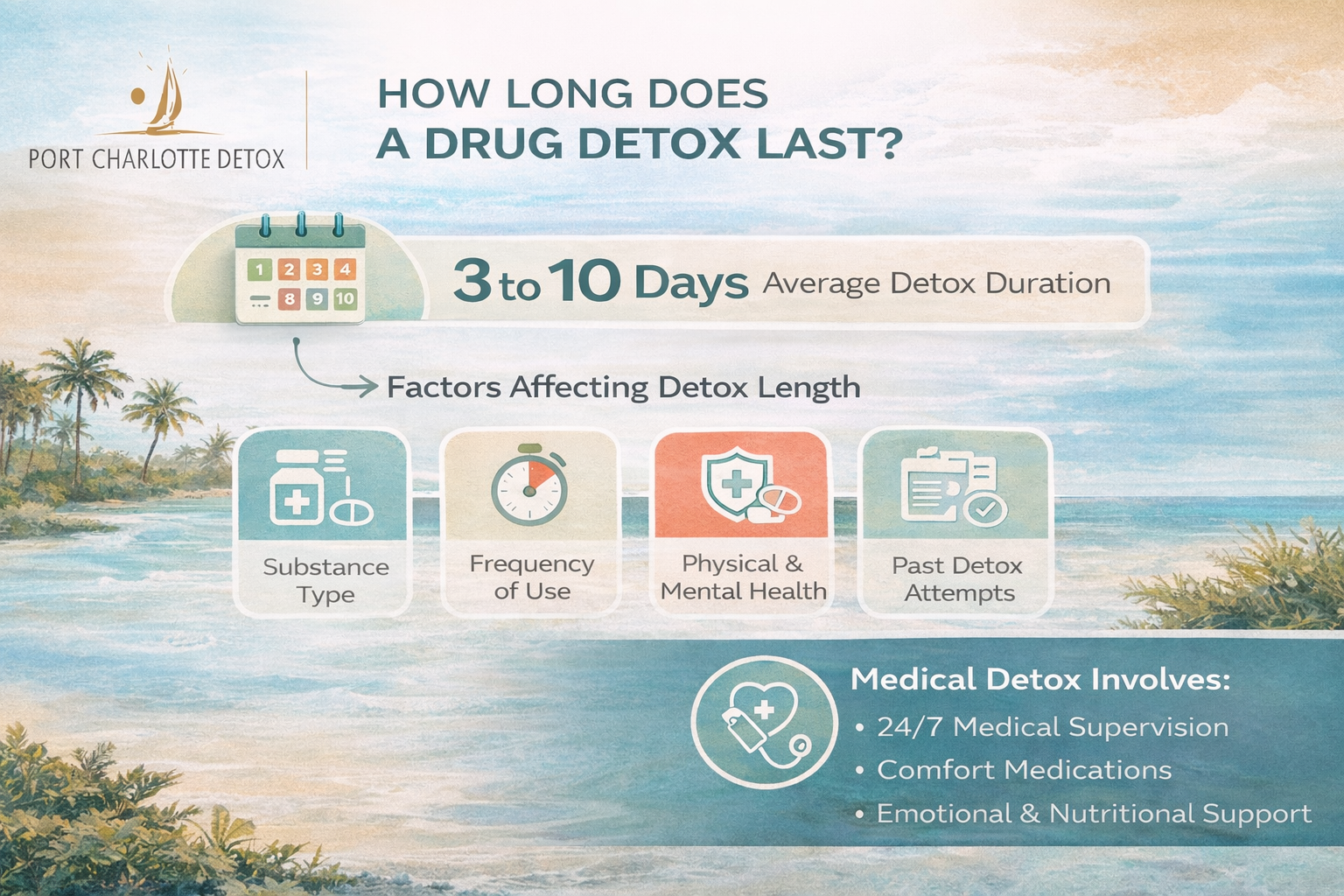
In most cases, a medically monitored drug detox program lasts anywhere from 3 to 10 days. However, that number isn’t a deadline. It’s a range based on typical medical needs and withdrawal timelines.
Detox timelines vary based on several key factors:
- The specific substance used
- Length and frequency of use
- Whether multiple substances are involved
- The person’s physical and mental health
- Previous detox attempts or relapses
For example, someone detoxing from alcohol or benzodiazepines may require a longer, slower process than someone withdrawing from certain stimulants. In some cases, particularly when co-occurring disorders or complications are present, detox may take closer to 14 days.
Think of detox as the medical stabilization phase—the part where the body begins healing from physical dependence. It’s not the full recovery process, but it’s where recovery can begin.
Why does detox length vary so much?
No two people walk into detox with the same story—or the same needs. That’s why there isn’t a universal timeline. Detox length depends not just on the drug used but on how that drug affected your child’s system.
Here are a few ways detox duration can differ:
Substance type:
- Opioids: Detox symptoms usually peak within 48–72 hours and taper off within a week, though cravings and discomfort may linger longer.
- Alcohol: Can cause dangerous withdrawal symptoms like seizures or delirium tremens (DTs), requiring longer and closer medical observation.
- Benzodiazepines: These often require a very gradual taper over 1–2 weeks due to seizure risk and rebound anxiety.
Usage patterns:
- Daily or heavy use typically leads to longer withdrawal periods and a greater need for medical intervention.
- If your child has relapsed after a period of sobriety, detox may be shorter—but still crucial for restarting recovery safely.
Co-occurring issues:
Mental health conditions like depression, anxiety, or trauma history can complicate withdrawal and extend the need for supportive care. At Port Charlotte Detox, we approach each case with this full picture in mind.
What exactly happens during detox?
Detox is often portrayed as a brutal or scary experience. But in a professional setting, it’s a carefully monitored process designed to manage symptoms and reduce risk—not cause more harm.
At our Port Charlotte detox facility, this stage includes:
- 24/7 medical supervision to monitor vital signs and prevent medical emergencies
- Comfort medications (when appropriate) to ease symptoms like nausea, insomnia, or anxiety
- Nutritional support and hydration
- Emotional stabilization and preparation for next steps
Our goal isn’t just to “get the drugs out.” It’s to help your child feel safe enough to imagine staying—and clear enough to consider healing.
Is it dangerous to detox at home?
Yes, in many cases. Home detox might seem like the more private or immediate choice—but it can come with serious medical risks.
Alcohol and benzodiazepine withdrawal in particular can be life-threatening without proper care. Even opioid withdrawal, which is rarely fatal, can cause severe dehydration, heart rate changes, or mental health crises.
Here’s the truth: detoxing without help isn’t brave. It’s risky. And your child deserves better than to go through that pain alone.
If you’re in the region and considering options, our medical detox program near Fort Myers provides the oversight and compassion that home detox simply can’t offer.
As a parent, what should I expect emotionally?
You might feel hopeful one minute and furious the next. That’s okay.
You might catch yourself wondering, How many times are we going to do this? followed by guilt for even thinking it. That’s okay too.
Detox can be emotionally confusing for families. Your child may not express gratitude. They may not seem “better.” They might be irritable, withdrawn, or indifferent in early withdrawal. This doesn’t mean detox isn’t working—it just means it’s hard. And hard is normal here.
Some things to keep in mind:
- Phone access may be limited at first, depending on the program’s policies
- Your child may need space to adjust before they’re ready to talk or reconnect
- It’s okay to have boundaries and still love them
And most importantly: it’s not your job to fix it all. It’s your job to love them while they do the work.
What happens after detox ends?
This is one of the most important parts of the process to understand: detox is only the first phase of recovery. While detox helps clear the body of substances, the real healing happens afterward—in therapy, in community, in ongoing care.
Here’s what often comes next:
- Residential treatment (often 30+ days)
- Partial hospitalization (PHP) or intensive outpatient programs (IOP)
- Medication-assisted treatment (MAT) where appropriate
- Therapy and psychiatric care
- Family involvement and education
We help families and individuals develop clear discharge plans that include the next level of care. No one is discharged without a pathway forward.
Will they be “cured” after detox?
We wish recovery were that quick. But the truth is, detox doesn’t “fix” addiction. It removes the substance—but the pain, habits, and emotional patterns behind the substance still need healing.
Think of it this way: detox is like cleaning a wound. It’s vital. But it’s only the start of full recovery.
If your loved one has relapsed before, you may feel skeptical about trying again. That’s understandable. But each detox, each attempt at care, can be a real chance to shift direction—especially if the follow-up support is strong.
When should I call for help?
If you’re asking that question… the time is now.
Even if your child says they’re “fine.” Even if they beg you not to interfere. Even if you’ve already tried before.
You don’t have to wait for a crisis to take action. If you’re noticing:
- Increased secrecy or withdrawal
- Missed school or work
- Physical symptoms like shakes, nosebleeds, weight loss
- Emotional volatility, depression, or paranoia
…it may be time to reach out.
You’re not “overreacting.” You’re parenting in a storm. And you don’t have to do it alone.
What if they refuse to go?
This is one of the most heartbreaking situations a parent can face: knowing your child needs help, but watching them say no.
While voluntary treatment tends to yield stronger outcomes, there are times when safety concerns justify more assertive measures. If your loved one is a danger to themselves or others, and won’t seek care willingly, our team can help you explore options—including intervention planning and crisis assessment.
Sometimes, the first call isn’t about getting them in. It’s about getting you the support and clarity you need to know what’s possible.
Need someone to talk to—right now?
Call us at (844)336-2690 or visit our Port Charlotte drug detox program page. Whether your loved one is ready or not, you can still take the next right step. You don’t have to wait for permission to protect their future.