


You thought things were getting better.
Or maybe you knew they weren’t—but you were too exhausted to start over again.
Your child—the one who swore they’d stop drinking, the one who promised it was just “a phase”—is spiraling again.
And this time, they say they’re going to detox at home.
They say they can handle it.
They don’t want help.
They just need to “get through the worst of it.”
As a parent, this is where your chest tightens. Because deep down, you’re wondering:
Is this safe? Is this even survivable?
At Port Charlotte Detox, we see this scenario more than you’d think. And the truth is, alcohol detox can be one of the most dangerous parts of the recovery process—especially if done without medical support.
This blog will walk you through when detox becomes dangerous, what signs to look for, and how to support your child in getting the help they actually need.
Detoxing from Alcohol Isn’t Just “Hard”—It Can Be Life-Threatening
There’s a misconception that detoxing from alcohol is “easier” or “less dangerous” than detoxing from drugs.
It’s not.
In fact, alcohol withdrawal can be more deadly than opioids or stimulants. That’s because alcohol is a central nervous system depressant. When someone who’s been drinking heavily stops suddenly, the body goes into shock—chemically, neurologically, and sometimes physically.
And that shock can spiral fast.
When Detox at Home Crosses the Line into Danger
Here’s what to watch for if your child is attempting to quit drinking on their own—or claims they’ve already started “drying out”:
Mild to Moderate Withdrawal Signs (Still Serious):
- Nausea or vomiting
- Shakiness or trembling hands
- Sweating, especially at night
- Anxiety or irritability
- Headache
- Insomnia
- Loss of appetite
- Racing thoughts or confusion
These symptoms can last 1–3 days and may seem manageable at first. But they often intensify quickly—especially if your child starts drinking again mid-withdrawal to “take the edge off.”
Severe Withdrawal Warning Signs:
- Visual or auditory hallucinations
- Seizures
- Rapid heartbeat
- Disorientation or inability to recognize surroundings
- Fever or profuse sweating
- Paranoia or delusional thinking
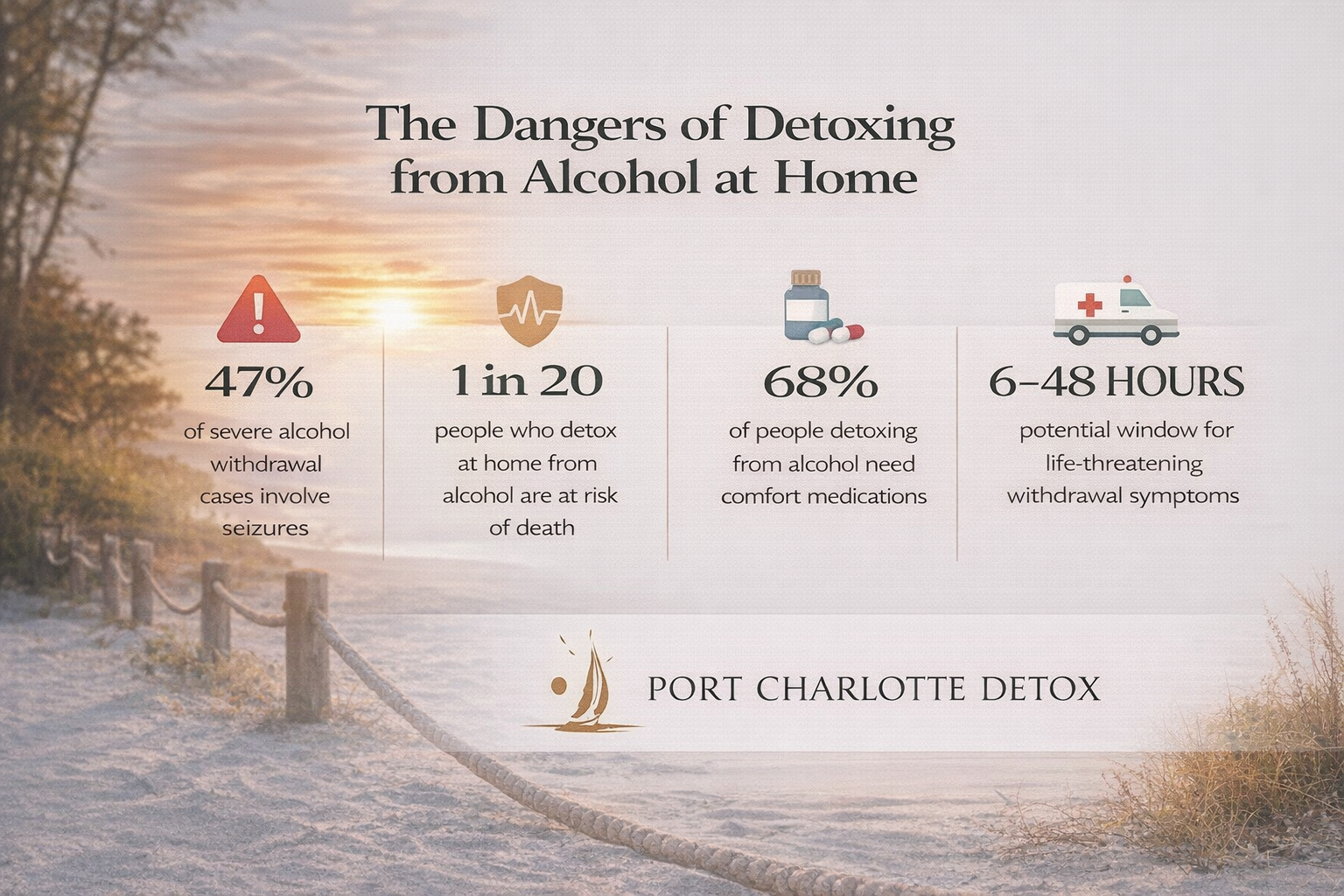
This cluster of symptoms is known as delirium tremens (DTs). It can lead to cardiovascular collapse, brain damage, or death without immediate medical intervention.
If you’re seeing these signs, this is not the time to wait it out. Call 911 or get to an ER immediately.
“They Said They Could Do It Alone. I Wanted to Believe Them.”
We hear this from parents every week. It’s heartbreaking and human.
Your child might say:
- “I’ve done this before.”
- “I just need 3–4 days.”
- “I don’t want to go to another facility.”
- “I’ll be fine—I just need to sleep it off.”
You might even feel a flicker of hope: Maybe this time it’ll work.
But detoxing at home doesn’t prove strength. It increases risk. Your child may not realize how dangerous withdrawal can be. They may feel ashamed, determined, or afraid. And that combination can lead them to try and “tough it out” in silence.
That’s where your role shifts—not to fix them, but to name the risk and offer another way.
What Safe Alcohol Detox Really Looks Like
At Port Charlotte Detox, alcohol addiction treatment starts with medical stabilization, emotional support, and dignity.
Here’s what’s included in a safe detox:
- 24/7 medical monitoring: Nurses and doctors watch for seizure activity, dehydration, and cardiovascular issues.
- Comfort medications: These reduce pain, anxiety, insomnia, and nausea during withdrawal.
- Supervised tapering (if needed): For severe cases, a slow reduction of alcohol or cross-taper may be used to prevent shock.
- Clinical support: Therapists and recovery specialists help manage the emotional overwhelm that often comes up early.
- Next-step planning: No one is left wondering “what now?” after detox. We help clients and families figure out where to go next—outpatient, residential, or step-down care.
Detox typically lasts 5–7 days. But for many families, it’s the first real breath of safety they’ve felt in a long time.
Learn more about our alcohol addiction treatment options.
What to Say When They Refuse Medical Detox
If your child isn’t ready to go to detox, it doesn’t mean they’re hopeless. It just means fear is louder than logic right now. You still have influence—even if you feel powerless.
Here are a few gentle approaches that build connection instead of resistance:
Acknowledge their fear:
“I know you don’t want to go back into treatment. But I’m scared this could be dangerous.”
Reflect your role:
“I’m your parent—not your doctor. I don’t know how to keep you safe if this goes badly.”
Use facts, not pressure:
“Alcohol withdrawal can cause seizures and even death. I didn’t realize that until recently. I’m not trying to control you—I just want you alive.”
Offer logistics:
“I called a detox center. They can help manage this. We don’t have to do this alone.”
Even if they push back, your words matter. You’re planting a seed. And when the window cracks open, you’ll already have a plan.
You Don’t Have to Be the ER
We’ve said it before, and we’ll keep saying it:
You are not a detox center.
You’re a parent who loves their child.
And you are not meant to be the frontline medical team in their withdrawal.
Even if you’ve done this before.
Even if they “made it through last time.”
Even if you think it’ll be worse if you intervene.
Your job is to stay human—not to play nurse, therapist, or security guard.
And if your child is truly ready to get sober, the safest place for that to begin is in the care of professionals trained for the physical and emotional complexity of detox.
FAQs: When Alcohol Detox Becomes Dangerous
Is every alcohol detox dangerous?
No—but it can become dangerous quickly, especially for people with long-term or heavy drinking histories. Medical detox is the safest route if there’s any risk.
Can someone have a seizure without warning?
Yes. Seizures can occur even in people who’ve never had one before—sometimes within 6–48 hours of their last drink.
Isn’t it better for them to detox in a familiar place?
Emotionally, yes—but physically, it’s not safe if symptoms escalate. Detox centers offer the balance of comfort and medical monitoring that’s often needed.
What if they won’t agree to go?
You can still call and talk through options with our admissions team. We’ll help you prepare for the conversation and offer guidance based on what’s happening right now.
What happens after detox?
Detox is just the beginning. Most clients transition into residential or outpatient programs. We help build a plan based on your child’s needs and willingness.
You’re Not Helpless—Even If It Feels That Way
If your child is trying to detox alone, you’re not failing for being scared.
You’re being realistic.
Because loving someone in addiction means holding more fear than most people can imagine—and still showing up.
So here’s what you do:
- Trust your gut
- Name what you see
- Don’t wait for things to get worse
- Reach out, even if they won’t
- Let yourself be the parent—not the medic
Call (844)336-2690 or visit Port Charlotte Detox’s alcohol addiction treatment page to learn more about safe detox, emotional support, and how to protect your child—without doing it all yourself. Serving Charlotte County, FL, Near Fort Myers. We’ll meet you both with clarity, care, and a real plan.