


You don’t need everything to fall apart to start questioning whether something needs to change. For a lot of people, it starts quietly. A thought you can’t shake. A pattern you notice but don’t fully understand yet. A feeling that something isn’t as under control as it used to be.
If you’re here, reading this, there’s already a level of awareness that matters. And it’s worth listening to.
If you’ve been exploring options like a drug detox program, it doesn’t mean things are “bad enough.” It means you’re paying attention before they have to be.
Do You Really Have to Hit Rock Bottom First?
No—and waiting for that moment often makes things more complicated than they need to be.
The idea of “rock bottom” is something many people carry with them. It suggests that help only becomes valid after things fall apart—after relationships are damaged, health declines, or life becomes unmanageable.
But that’s not how real change usually begins.
More often, it starts in smaller, quieter moments:
- Realizing you’re relying on something more than you used to
- Noticing your mood shifts when you don’t use
- Feeling a low-level anxiety that wasn’t there before
- Wondering if this is becoming a pattern
You don’t need a dramatic breaking point to take a step forward. In fact, the earlier you respond to those signals, the more options—and stability—you tend to have.
What Does “Needing Help” Actually Look Like?
It rarely looks like what people expect.
There’s no single version of someone who “needs help.” Many people who reach out are still working, still showing up for their responsibilities, still maintaining relationships. On the outside, things might look completely fine.
But internally, it can feel different.
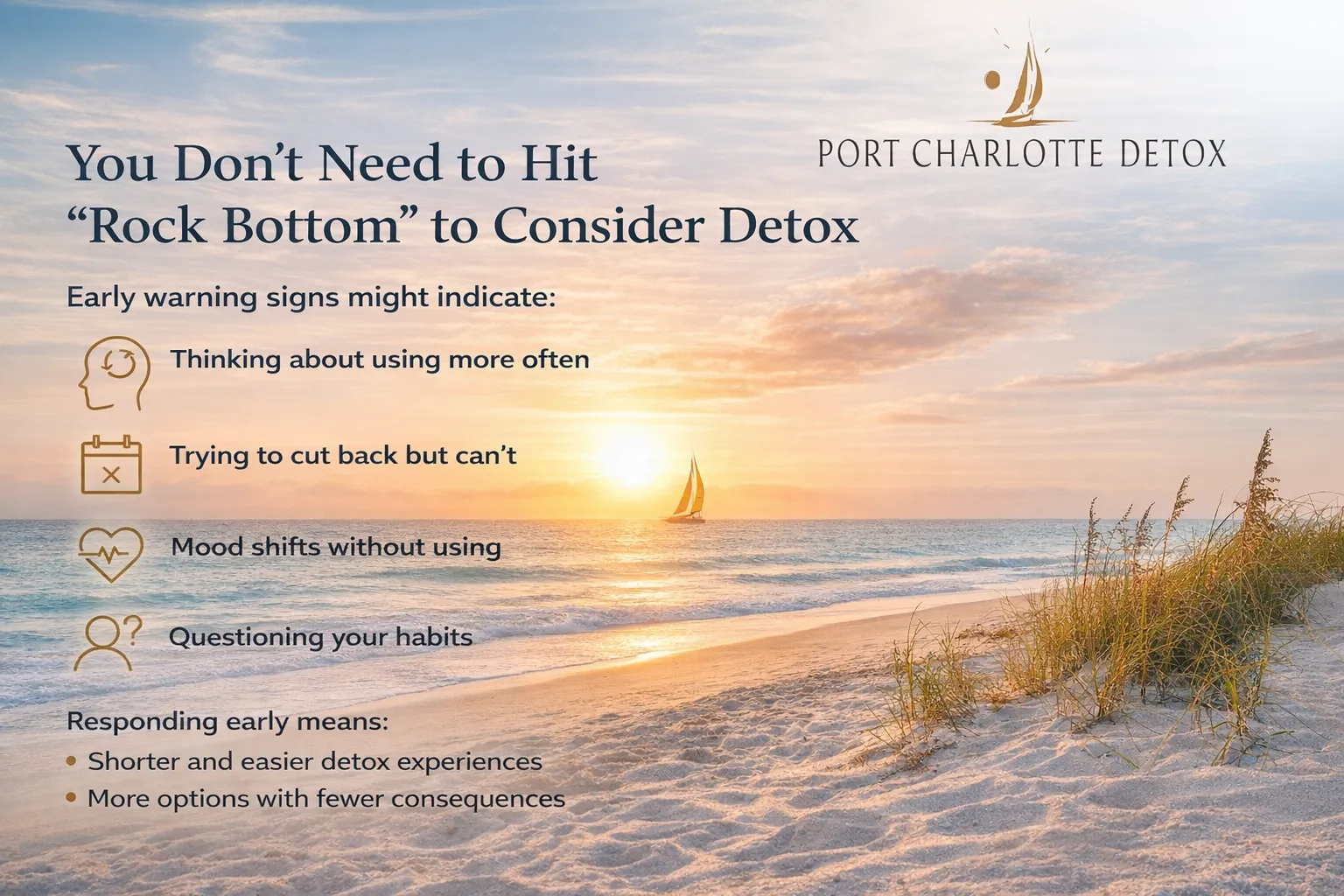
You might notice:
- You think about using more often than you used to
- You’ve tried to cut back, but it doesn’t stick
- You feel off, irritable, or uncomfortable without it
- You’re starting to question your habits, even if no one else has
These are not signs of failure. They’re signals. And responding to them early can make a meaningful difference in what comes next.
Is It Too Soon to Consider Detox?
If you’re asking that question, it’s usually not too soon.
Detox isn’t about hitting a certain level of severity. It’s about what your body has adapted to—and what it might need in order to safely reset.
Some substances create physical dependence that can make stopping uncomfortable or, in some cases, unsafe without support. That doesn’t mean you’ve “gone too far.” It just means your body has adjusted, and it may need help recalibrating.
This is often why people begin searching for something like medical detox near me. Not because everything has collapsed—but because they want a safe, structured way to step back and regain control.
And that’s a valid reason to reach out.
What Happens If You Don’t Wait?
There’s a common assumption that waiting somehow makes people more ready.
In reality, waiting often adds layers—physically, emotionally, and mentally.
Starting earlier can mean:
- Shorter and more manageable withdrawal experiences
- Less disruption to your daily life
- Fewer consequences to work through later
- A clearer, more grounded starting point
We’ve worked with people who came in before things escalated. They weren’t in crisis. They were aware. They were thoughtful. They simply didn’t want to wait until things got worse.
And their experience often reflects that decision.
“I kept telling myself I’d deal with it later. But later just kept getting heavier. Coming in when I did gave me space to breathe again.”
– Former Client
That kind of clarity is easier to access when you don’t wait for everything to break first.
Will You Be Judged for Coming in “Too Early”?
This is one of the most common fears—and one of the least accurate.
There’s no threshold you have to meet to deserve support.
You don’t need to prove how much you’ve struggled. You don’t need a certain number of consequences or a specific kind of story. If something feels unsustainable or concerning, that’s enough.
In fact, reaching out earlier often reflects a level of self-awareness that can support long-term change. It means you’re noticing patterns, asking questions, and willing to explore something different before things become overwhelming.
That’s not something to question. That’s something to respect.
What Does Early Detox Support Actually Feel Like?
A lot of people expect intensity, discomfort, or pressure.
But early support often feels very different.
Instead of chaos, many people describe:
- A sense of relief from not having to manage it alone
- Physical stabilization in a safe, monitored environment
- The ability to slow down and think more clearly
- Space to figure out next steps without immediate pressure
It’s not about forcing a long-term decision. It’s about creating a safe starting point.
For individuals coming from areas like Charlotte County, Florida, having access to a calm and supportive environment can make the idea of getting help feel more approachable—less like a drastic move, and more like a thoughtful next step.
What If You’re Still Not Sure?
Uncertainty is part of this process.
You don’t have to be 100% sure to start asking questions. You don’t have to have everything figured out before reaching out. In fact, most people don’t.
Sometimes the most important step is simply allowing yourself to explore the idea of change without pressure.
You might not be ready to commit to anything yet. But you might be ready to:
- Learn what your options look like
- Understand what your body might need
- Talk through what’s been on your mind
- Get a clearer picture of what support actually involves
That space—between questioning and deciding—is where a lot of meaningful shifts begin.
For those in nearby areas like Lee County, Florida, even having access to information or a conversation can help bridge that gap between uncertainty and clarity.
Why Early Awareness Matters More Than You Think
There’s a quiet strength in noticing something before it becomes overwhelming.
It doesn’t always feel like strength. Sometimes it feels like doubt, or confusion, or even guilt for questioning things that “aren’t that bad.”
But awareness is where change begins.
Think of it this way: it’s easier to adjust your direction when you’re slightly off course than when you’re completely lost.
The same idea applies here.
Catching patterns early can mean:
- Less physical strain on your body
- More emotional clarity
- Greater control over your choices
- A smoother transition into whatever comes next
You’re not behind. You’re not overreacting. You’re paying attention.
You Don’t Have to Wait for a Breaking Point
A lot of people look back and wish they had listened to that early voice sooner.
Not because things became impossible—but because they became heavier than they needed to be.
You don’t have to wait for something dramatic to happen.
You don’t have to prove that things are “bad enough.”
You don’t have to carry it alone until it becomes too much.
There’s another option—one that starts earlier, feels steadier, and gives you more room to breathe.
Taking a Step Doesn’t Mean You’re Committing Forever
One of the biggest misconceptions is that reaching out locks you into something permanent.
It doesn’t.
Taking a step can simply mean:
- Having a conversation
- Learning what support looks like
- Exploring whether this feels like the right fit
- Giving yourself a safe place to pause and reset
You’re allowed to take this one step at a time.
And sometimes, that first step is just being honest with yourself about what you’re feeling.
A Different Kind of Starting Point
Not every story has to begin with loss, crisis, or a breaking point.
Some begin with awareness.
Some begin with a quiet moment of honesty.
Some begin with a question that doesn’t go away.
If that’s where you are, you’re not behind. You’re right on time.
If you’re ready to explore what support could look like—even if you’re not completely sure yet—you can take that next step at your own pace.
Call (844)336-2690 to learn more about our Drug detox program in Port Charlotte, Florida.