


The hardest part about relapsing after real sober time isn’t always the drinking itself.
Sometimes it’s the moment afterward.
The moment your body starts reminding you how quickly alcohol can take hold again.
The moment you wake up shaky, anxious, sweating, and suddenly terrified of what happens if you stop.
I remember sitting alone after a relapse, staring at my phone and typing symptoms into Google like I was trying to negotiate with reality.
“Can alcohol withdrawal cause seizures?”
“How dangerous is it to stop suddenly?”
“What if I just taper myself off quietly?”
Underneath all of it was one thought I couldn’t say out loud:
“I cannot believe I’m back here.”
If you’re reading this after relapsing, especially after meaningful sober time, I want you to hear this clearly:
You are not broken because you struggled again.
You are not weak because you’re scared.
And you are definitely not the only person who has tried to hide withdrawal symptoms while pretending everything was still under control.
A lot of people start searching for confidential alcohol detox support not because they’ve “given up,” but because part of them knows this situation could become dangerous if they keep trying to manage it alone.
Relapse After Real Sobriety Feels Different
People who haven’t experienced relapse after sober time often don’t understand how emotionally brutal it can feel.
The drinking hurts.
But the shame usually hurts more.
Because now you know what clarity felt like. You remember sleeping normally. You remember feeling emotionally present again. You remember the version of yourself that started coming back during recovery.
And then suddenly you’re hiding bottles, deleting search history, panicking about withdrawal symptoms, and wondering how things unraveled so quickly.
That emotional whiplash can become overwhelming.
A lot of alumni quietly isolate after relapse because they believe:
- “I ruined everything.”
- “Nobody will trust me again.”
- “I already had my chance.”
- “People from recovery will judge me.”
- “I should be able to fix this myself.”
But relapse is not proof that recovery failed.
Sometimes it’s proof that something painful went untreated underneath the surface:
- Stress
- Burnout
- Grief
- Anxiety
- Loneliness
- Emotional exhaustion
- Mental health symptoms
- Isolation
Alcohol often re-enters the picture because people are trying to survive emotionally, not because they stopped caring about recovery.
Fear Changes the Way People Think
One thing I remember most clearly after relapse was how quickly fear took over my thinking.
Not rational fear. Survival fear.
Every symptom suddenly felt catastrophic:
- Racing heart
- Sweating
- Tremors
- Panic
- Insomnia
- Nausea
- Feeling detached from reality
- Waking up terrified at 3am
And because I was ashamed, I kept trying to convince myself I could “handle it privately.”
That’s a dangerous combination:
Fear + isolation + withdrawal.
A lot of people searching for a safe way to quit drinking are not looking for a lecture. They’re looking for reassurance that they don’t have to gamble with their body just because they relapsed.
And honestly, they shouldn’t have to.
Alcohol Withdrawal Is Not About Willpower
This part matters.
People often talk about alcohol withdrawal like it’s a character test:
- “Just stop.”
- “Be stronger.”
- “Power through it.”
But alcohol withdrawal is neurological and physical, not moral.
After prolonged or heavy drinking, the nervous system adapts to alcohol being present. Suddenly removing it can create serious medical complications for some people, including seizures.
That reality scares a lot of people because they realize they can’t simply “tough this out” safely anymore.
And honestly, fear of withdrawal keeps many people drinking longer than they want to.
I’ve heard people say:
“I wasn’t even drinking to get drunk anymore. I was drinking because I was scared to stop.”
That sentence says so much.
At a certain point, alcohol stops feeling like relief and starts feeling like maintenance. Like constantly feeding a fire you’re secretly terrified of.
Trying to Detox Alone Can Become a Trap
A lot of people try to manage withdrawal quietly at home first.
Especially alumni.
They think:
- “I already know recovery.”
- “I don’t want anyone to know.”
- “I can taper myself.”
- “I’ll stop after this weekend.”
- “I just need to get through a few rough days.”
But withdrawal symptoms can escalate unpredictably for some people.
And the emotional side of detox can become intense too:
- Panic attacks
- Extreme anxiety
- Depression
- Restlessness
- Confusion
- Emotional flooding
- Insomnia severe enough to feel destabilizing
That combination can quickly push people back into drinking just to make the symptoms stop temporarily.
Not because they don’t want recovery. Because fear overwhelms the nervous system.
That’s why medically supervised support exists in the first place.
Not to punish people.
To keep them safe long enough to stabilize.
The Most Dangerous Thought Is “I Don’t Want to Bother Anyone”
Relapsed alumni often minimize their own suffering.
They don’t want to “start drama.”
They don’t want to disappoint family again.
They don’t want to walk back into treatment feeling ashamed.
So they disappear quietly.
That isolation can become incredibly risky.
One of the hardest truths about relapse is that addiction thrives in secrecy. The longer someone hides symptoms, the harder it becomes emotionally to ask for help later.
I’ve seen people wait until:
- Hallucinations started
- Panic became unbearable
- They couldn’t keep fluids down
- Their hands shook constantly
- They stopped sleeping almost entirely
before finally reaching out.
Not because they wanted to suffer. Because shame convinced them they had to earn help by surviving longer first.
You don’t.
You Are Not Starting Over Completely
This is something I wish more relapsed alumni understood.
You are not back at zero emotionally.
You still know things you didn’t know before:
- What honesty feels like
- What sobriety gave you
- What isolation does to your thinking
- Which warning signs matter
- How quickly addiction lies
- That another way of living is possible
That knowledge matters deeply.
Even if you feel embarrassed right now, part of you already remembers yourself without alcohol controlling every decision.
That memory can become a lifeline.
One person described relapse this way:
“It felt like getting lost in a city I used to know by heart.”
That’s painful. But it also means the road back still exists.
Recovery Is Not Invalidated by Returning
A lot of alumni fear they’ll be judged for needing help again.
But honestly, many people in long-term recovery have experienced some version of relapse, return, recalibration, or emotional collapse.
Recovery is rarely one clean, perfect line.
Sometimes people need:
- More support
- Different coping tools
- Better mental health care
- More honesty
- Stronger boundaries
- A safer environment
- Medical detox support
- Community again
None of that makes someone hopeless.
And reaching out early after relapse can sometimes prevent things from becoming far more dangerous physically and emotionally.
The Goal Is Safety First, Not Perfection
When people panic after relapse, they often become obsessed with fixing everything immediately.
Quit instantly.
Undo the damage instantly.
Get emotionally stable instantly.
But recovery after relapse usually starts smaller than that.
Sometimes the first real goal is simply:
- Stay alive
- Stay medically safe
- Tell the truth
- Stop isolating
- Let someone help
That’s enough for today.
A safe way to quit drinking starts with understanding that your body deserves medical care, not punishment.
And honestly, you do too.
There’s a Difference Between Shame and Responsibility
Relapse may require accountability.
But accountability and self-hatred are not the same thing.
One helps people heal.
The other keeps them stuck.
You can take your situation seriously without treating yourself like a lost cause.
That balance matters.
Because people who believe they’re beyond help often stop seeking help entirely.
And if you’re here reading this, some part of you clearly still wants things to get better.
Protect that part.
FAQ: Stopping Drinking Safely After Relapse
Can alcohol withdrawal actually cause seizures?
Yes. Severe alcohol withdrawal can lead to seizures and other serious medical complications in some cases. This is why medical supervision may be recommended depending on drinking history and symptoms.
Is it dangerous to stop drinking suddenly?
For some people, especially after prolonged or heavy alcohol use, suddenly stopping without medical support can become dangerous.
What are serious alcohol withdrawal symptoms?
Symptoms like hallucinations, severe shaking, confusion, seizures, rapid heart rate, extreme agitation, or severe sweating may require immediate medical attention.
Why does relapse feel emotionally worse the second time?
Many people say relapse feels heavier after sober time because they remember what recovery felt like and feel ashamed losing that stability again.
Can physical dependence return quickly after relapse?
Yes. For some people, dependence and withdrawal symptoms can return faster than expected after renewed heavy drinking.
What’s the safest first step if I’m scared to stop?
A professional medical evaluation can help determine the safest way to approach withdrawal and detox based on your specific situation.
What if I’m embarrassed to ask for help again?
That fear is incredibly common among alumni after relapse. Needing help again does not erase the progress or growth you already achieved.
Can I detox at home safely?
Some people underestimate the medical risks of alcohol withdrawal. It’s important to speak with professionals before attempting detox alone, especially if withdrawal symptoms have occurred before.
Does relapse mean treatment failed?
No. Relapse can happen for many reasons and often signals that additional support, coping tools, or treatment adjustments may be needed.
What if I don’t think I’m “bad enough” for detox?
You do not need to wait until things become catastrophic before seeking help. Fear about withdrawal itself is a valid reason to seek professional guidance.
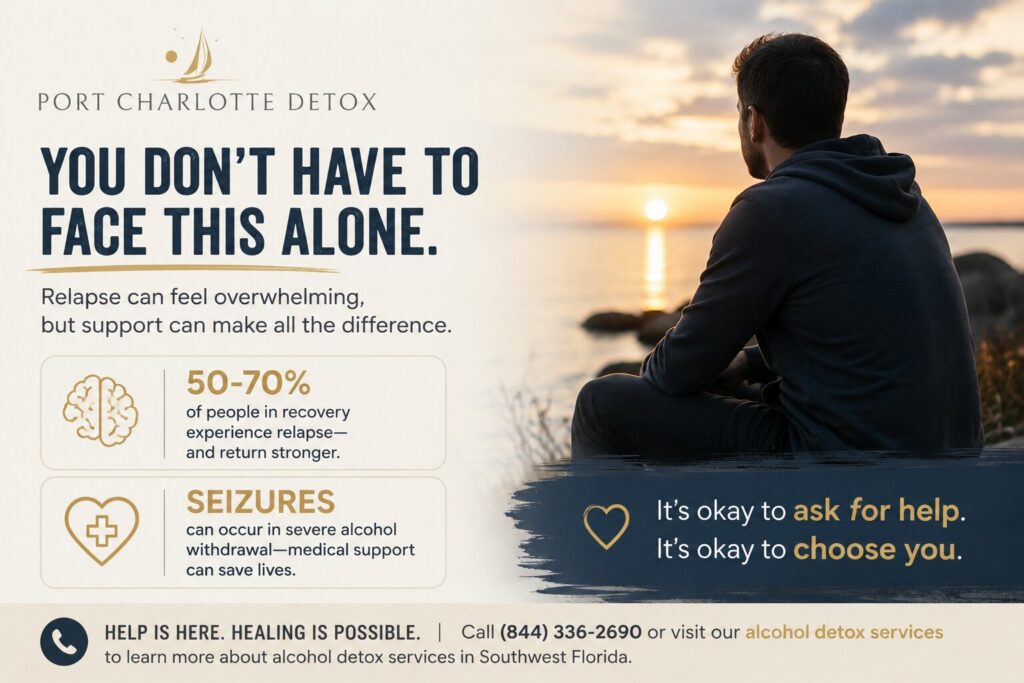
Call (844)336-2690 or visit our compassionate alcohol detox services to learn more about alcohol detox services in Southwest Florida.