


Most people think they’ll know exactly when it’s time to get help.
They imagine a dramatic moment.
A lost job. A legal problem. A health crisis. A relationship ending.
The reality is often much quieter.
Many of the people I meet are still going to work every day. They’re paying their bills. They’re taking care of their families. Their coworkers have no idea they’re struggling. Their friends may not suspect a thing.
From the outside, life appears normal.
Inside, however, they’re exhausted.
They spend every day managing cravings, hiding symptoms, making promises to themselves, and wondering whether tomorrow will finally be the day they get things under control.
If you’ve found yourself searching for answers and exploring options like medical detox support, there is a good chance you’re carrying more weight than anyone around you realizes.
And perhaps the most important thing I can tell you is this:
You do not have to lose everything before taking your concerns seriously.
The Search Most People Never Talk About
I often hear the same story.
Someone is sitting alone late at night.
Everyone else is asleep.
They’re scrolling through websites, reading articles, and searching phrases they never thought they’d type into Google.
They’re not necessarily ready to commit to anything.
They’re trying to understand what their options are.
Sometimes they’ve been concerned for months.
Sometimes years.
What keeps them stuck is the belief that they’re somehow different from people who seek treatment.
After all, they’re still functioning.
They’re still meeting responsibilities.
They’re still holding everything together.
At least that’s what it looks like from the outside.
But functioning and thriving are not the same thing.
Many high-functioning individuals become experts at surviving while quietly struggling beneath the surface.
The Energy It Takes to Maintain the Appearance
One thing people rarely talk about is how exhausting it becomes to maintain the image that everything is fine.
You tell yourself you’ll only drink a certain amount.
You promise yourself you’ll stop tomorrow.
You reassure loved ones that you’re okay.
You convince yourself that because you’re still succeeding professionally, things can’t be that serious.
Yet the mental energy required to manage all of this grows heavier over time.
I’ve heard clients describe it as trying to hold a beach ball underwater.
At first, it feels manageable.
But eventually, every ounce of energy goes toward preventing it from resurfacing.
The substance itself often becomes only part of the problem.
The secrecy.
The worry.
The self-negotiation.
The fear of being discovered.
Those burdens accumulate slowly until carrying them becomes its own form of suffering.
Why Successful People Often Wait Longer
One of the biggest misconceptions about addiction is that success protects people from it.
It doesn’t.
In fact, professional success can sometimes make it easier to delay seeking help.
When life still appears functional, people have plenty of evidence to support denial.
They tell themselves:
“I haven’t lost my job.”
“My family doesn’t know.”
“I still pay my bills.”
“I’m not as bad as other people.”
These thoughts can feel reassuring.
Unfortunately, they can also become reasons to postpone action.
The problem isn’t that life has already fallen apart.
The problem is that you’re spending increasing amounts of effort making sure it doesn’t.
Eventually, many people realize they are no longer managing the substance.
They’re managing the consequences of continuing to use it.
The Moment People Begin Looking Closer to Home
At some point, many individuals stop asking whether they need help and start asking practical questions.
They search for services nearby.
They look at maps.
They calculate driving distances.
They wonder whether anyone they know will see them.
For people in Southwest Florida, searches related to medical detox Port Charlotte often happen during this stage.
Not because they’ve suddenly reached rock bottom.
Because they’re beginning to imagine what getting support might actually look like.
That shift matters.
It means the conversation is no longer theoretical.
It means part of them is considering change.
And that willingness is often where recovery begins.
What the First Conversation Usually Feels Like
Many people expect the first phone call to feel intimidating.
They imagine being judged.
They imagine being pressured into decisions.
They imagine someone telling them how bad things really are.
In reality, most initial conversations are surprisingly straightforward.
The goal is understanding.
Someone listens.
They ask questions.
They gather information about your situation, your history, and your concerns.
Most importantly, they help you understand what options may be available.
People often tell me afterward:
“That wasn’t nearly as scary as I expected.”
The fear leading up to the call is frequently far worse than the conversation itself.
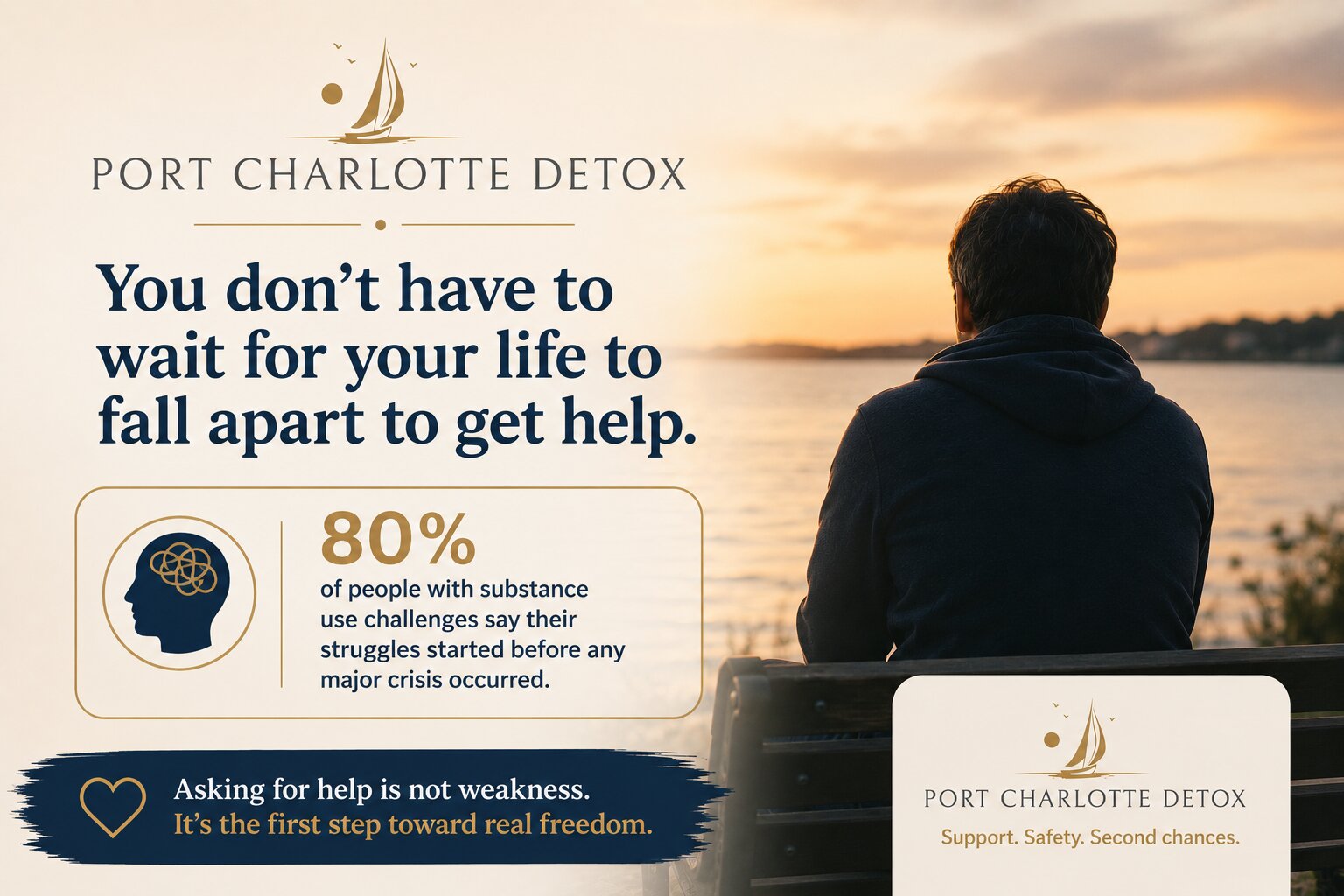
You Don’t Have to Wait Until Things Get Worse
This is one of the most dangerous beliefs I encounter.
Many people assume they need undeniable proof before seeking support.
They believe things must become significantly worse before help is justified.
But waiting has costs.
Substance use rarely stands still.
The emotional burden tends to grow.
Relationships become strained.
Physical health can suffer.
Mental health concerns often intensify.
The longer someone waits, the more difficult daily life can become.
Seeking help isn’t an admission of failure.
It’s a decision to stop allowing a problem to dictate the future.
You don’t need permission from a crisis to take action.
Recovery Starts Smaller Than Most People Think
People often imagine recovery as one giant decision.
In reality, it usually begins with a series of smaller ones.
Deciding to be honest with yourself.
Deciding to ask questions.
Deciding to learn about available options.
Deciding to have a conversation.
Those steps may seem minor.
They’re not.
Every significant change starts with a moment when someone chooses curiosity over avoidance.
The first step isn’t becoming completely certain.
The first step is becoming willing to explore the possibility that life could feel different.
The Relief Many People Don’t Expect
One of the most surprising things clients tell me is that they feel relief almost immediately after reaching out.
Not because all their problems disappear.
Not because recovery becomes easy overnight.
Because they stop carrying everything alone.
The constant mental debate begins to quiet.
The pressure of secrecy starts to ease.
For the first time in a long time, they have support.
And support changes things.
Even before recovery is fully underway, people often feel lighter simply because they’re no longer facing everything by themselves.
You Are Allowed to Take This Seriously
If you’re still working, still meeting obligations, and still appearing successful, you may be tempted to dismiss your concerns.
Please don’t.
You don’t have to wait until your life is unrecognizable.
You don’t have to prove that things are bad enough.
And you certainly don’t need to hit someone else’s definition of rock bottom.
The fact that you’re reading this suggests something inside you recognizes that change may be needed.
Listen to that voice.
Sometimes the strongest thing a person can do is stop pretending they can carry everything forever.
Frequently Asked Questions
How do I know if it’s time to seek help?
If you’re spending significant time worrying about your substance use, trying to control it, hiding it, or wondering whether you need help, those concerns deserve attention. You don’t need a crisis to start exploring your options.
Can I seek treatment if I’m still working full-time?
Yes. Many people who seek help are employed, caring for families, and managing other responsibilities. Treatment planning often takes those responsibilities into account.
What if I’m not sure my problem is serious enough?
Uncertainty is extremely common. Many people reach out because they have questions, not because they have all the answers. Speaking with a professional can help clarify your situation.
Will people find out if I call?
Treatment providers take privacy seriously. Reaching out for information is confidential, and asking questions does not obligate you to begin treatment.
What happens if I wait longer?
Every situation is different, but substance use challenges often become more difficult over time. Seeking guidance earlier may help prevent additional consequences and provide greater options for support.
Call (844)336-2690 or visit our Drug Addiction Treatment services to learn more about our Drug Addiction Treatment services Charlotte County, FL.