


There are mornings that families never forget.
Sometimes they begin after an argument. Sometimes after a frightening fall. Sometimes after yet another bottle of wine quietly disappears before dinner.
Then comes the sentence everyone has been hoping to hear:
“I’m done. I’m never drinking again.”
For a brief moment, relief fills the room.
But almost immediately, another question takes its place:
“Is it safe for them to stop drinking all at once?”
As a clinician, I’ve met many parents and family members who believed quitting immediately was always the healthiest decision. While the desire to stop drinking is an encouraging first step, the body doesn’t always respond as quickly as the mind does.
If your loved one has been drinking wine every day for years, it’s important to understand that alcohol withdrawal can sometimes become a medical emergency. Learning about your options before symptoms begin can help you make informed decisions instead of reacting during a crisis. If you’re looking for guidance, our medical alcohol detox program provides a safe place for people who need professional support during withdrawal.
Does daily wine really put someone at risk?
Many families assume wine is different.
Because it’s served at dinner, paired with meals, and widely accepted socially, it often feels less concerning than liquor or other alcoholic drinks.
But the body doesn’t recognize alcohol based on whether it came from a wine glass or a whiskey bottle.
It recognizes alcohol.
When someone drinks every day over many months or years, the brain gradually adjusts to alcohol being present. Instead of functioning normally without it, the nervous system begins depending on it.
That means suddenly removing alcohol may create a shock to the body.
Some people experience relatively mild symptoms.
Others develop serious complications that require immediate medical treatment.
The amount someone drinks, how long they’ve been drinking, previous withdrawal experiences, age, medications, and underlying health conditions all play a role in determining risk.
This is why it’s impossible for families to accurately predict withdrawal severity based on appearances alone.
Someone who seems healthy can still develop dangerous symptoms.
Why can stopping suddenly become dangerous?
Alcohol slows activity within the brain and central nervous system.
Over time, the brain works hard to compensate by increasing its natural level of stimulation.
While alcohol continues entering the body every day, this balance remains relatively stable.
When alcohol suddenly disappears, the brain doesn’t immediately return to normal.
Instead, it may become overstimulated.
Imagine driving downhill while pressing the accelerator.
When you suddenly remove one force, the other continues pushing forward until things stabilize.
The nervous system behaves similarly.
That overstimulation may cause withdrawal symptoms ranging from uncomfortable to life-threatening.
Families researching the quit drinking cold turkey dangers are often surprised to learn that withdrawal isn’t simply about cravings.
It can affect nearly every system in the body.
What symptoms should families never ignore?
Withdrawal doesn’t look exactly the same for everyone.
Some people begin feeling uncomfortable within several hours after their last drink.
Others notice symptoms later.
Early signs often include:
- Anxiety
- Restlessness
- Sweating
- Headaches
- Shaking hands
- Trouble sleeping
- Upset stomach
- Rapid heartbeat
Because these symptoms can resemble anxiety or illness, families sometimes underestimate what’s happening.
However, withdrawal can progress.
Warning signs requiring immediate medical attention include:
- Hallucinations
- Severe confusion
- Seizures
- High fever
- Loss of consciousness
- Extreme agitation
One of the biggest concerns is that families cannot reliably predict who will develop severe withdrawal.
Someone who experienced only mild symptoms previously may have a much more serious withdrawal during another attempt to stop drinking.
That’s one reason clinicians often recommend speaking with medical professionals before quitting alcohol after long-term daily use.
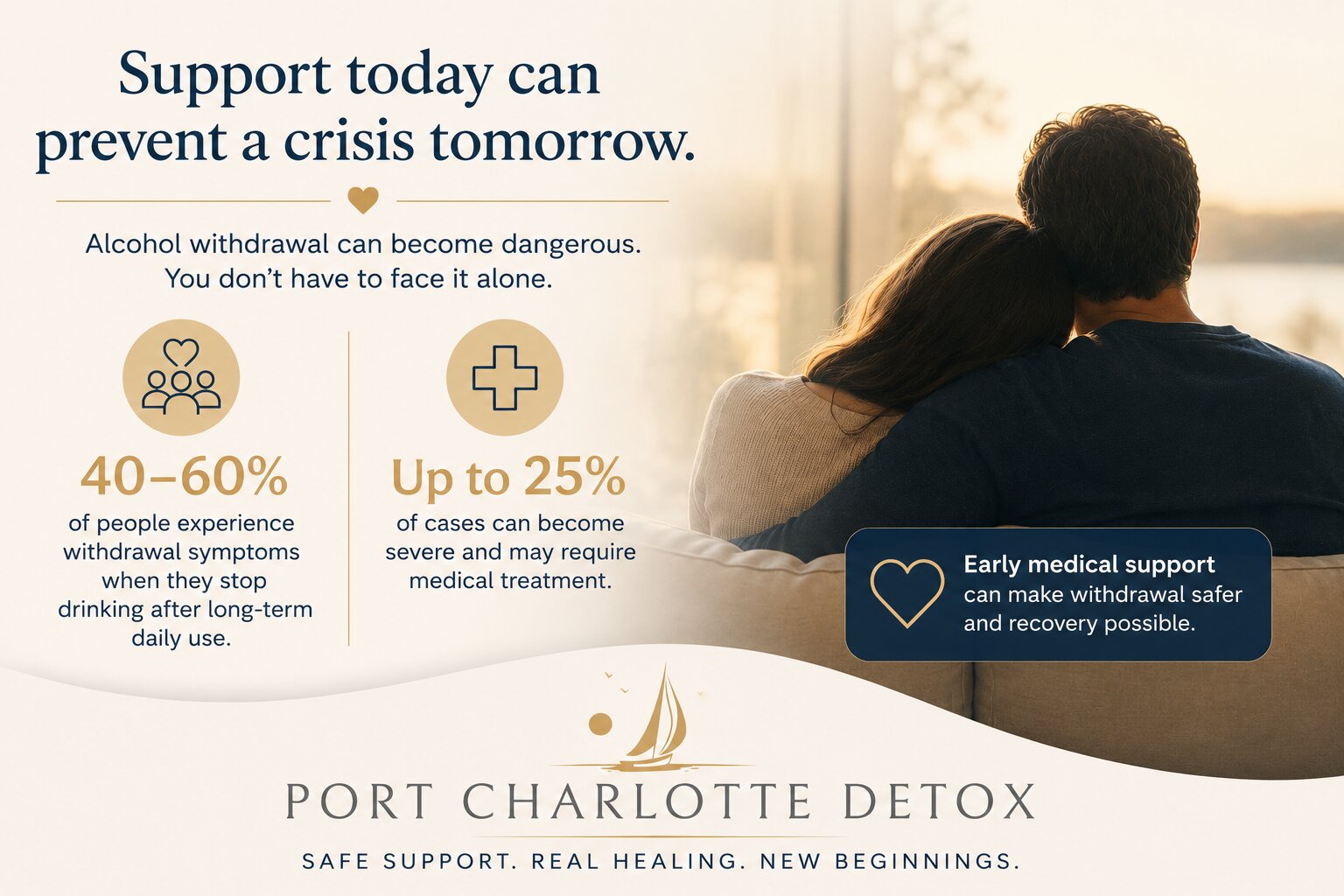
Should families encourage someone to quit immediately?
Families naturally want alcohol out of the picture as soon as possible.
That desire comes from love.
But encouraging someone to stop without understanding their medical risk can unintentionally place them in danger.
Instead of asking only, “How do we get them to stop?”
A more helpful question is:
“How do we help them stop safely?”
This shift changes everything.
Rather than relying on determination alone, families begin considering medical support, monitoring, and professional guidance.
Recovery isn’t measured by how much someone suffers during withdrawal.
It’s measured by whether they safely reach the next stage of healing.
What can parents and loved ones do right now?
Watching someone struggle with alcohol can leave families feeling powerless.
You can’t make another person choose recovery.
But you can influence the environment around them.
Consider these practical steps:
- Stay calm during conversations.
- Avoid blaming or shaming language.
- Express concern using specific observations.
- Encourage a professional medical assessment.
- Learn about withdrawal symptoms before they begin.
- Remove unnecessary stress when possible.
- Take emergency symptoms seriously.
Families sometimes believe they must have every answer before asking for help.
You don’t.
Often, the first conversation with a treatment professional is simply about understanding what comes next.
Why does medical detox make such a difference?
Many people think detox simply means waiting for alcohol to leave the body.
In reality, medical detox is about helping people move through withdrawal as safely and comfortably as possible while healthcare professionals monitor their condition.
Medical teams can observe changes in vital signs, evaluate symptoms, provide medications when appropriate, and respond quickly if complications develop.
This level of support often reduces unnecessary suffering while lowering the risk of severe medical emergencies.
It also creates an opportunity to begin thinking beyond withdrawal.
Detox is often the first chapter—not the entire story.
Once the body begins stabilizing, individuals can start focusing on recovery, emotional healing, and building healthier coping strategies.
Recovery Begins With One Safe Decision
Families often believe recovery starts when someone takes their last drink.
From a clinical perspective, recovery often begins slightly earlier.
It begins the moment someone says:
“I need help.”
Or when a loved one says:
“Let’s figure this out together.”
Like walking across a bridge in thick fog, you don’t need to see the entire journey before taking the first step.
You only need enough light to move forward safely.
Choosing medical guidance doesn’t mean someone is weak.
It means they’re giving themselves the safest possible opportunity to begin healing.
If your loved one has been drinking daily for years, there is hope.
With the right support, many people safely navigate withdrawal, begin treatment, rebuild relationships, and create lives that no longer revolve around alcohol.
Frequently Asked Questions
Is wine safer than liquor when it comes to alcohol withdrawal?
No. Long-term daily wine consumption can still lead to physical dependence. The risk depends more on drinking patterns and overall health than on the type of alcoholic beverage.
How soon can alcohol withdrawal begin?
Many people begin experiencing symptoms within 6 to 24 hours after their last drink, although timing varies from person to person.
Can alcohol withdrawal become life-threatening?
Yes. Severe alcohol withdrawal can cause seizures, hallucinations, delirium tremens (DTs), and other serious complications that require emergency medical care.
Who should consider medical detox?
Individuals who have consumed alcohol daily for a long period, experienced withdrawal previously, have significant medical conditions, or show moderate to severe symptoms should speak with a healthcare professional before stopping alcohol.
What should I do if my loved one starts hallucinating or has a seizure?
Seek emergency medical care immediately. These symptoms should never be ignored and require urgent evaluation.
Is detox the same as addiction treatment?
No. Detox focuses on helping the body withdraw from alcohol safely. Many people benefit from continuing treatment afterward to address the emotional, behavioral, and psychological aspects of recovery.
Take the Next Step
If you’re worried about someone who has been drinking wine every day for years, you don’t have to face these decisions alone. Professional guidance can help determine the safest way forward.
Call 844-336-2690 or visit our Alcohol Detox Program to learn more about our alcohol detox services Sarasota, FL.