


For a long time, I believed there were only two kinds of people in recovery.
The ones who made it.
And the ones who didn’t.
When I reached ninety days sober, I finally thought I belonged to the first group.
I slept better. My family trusted me again. I laughed more. I started planning for the future instead of worrying about getting through each day.
Then I relapsed.
It didn’t happen because I stopped caring about recovery.
It happened because I slowly stopped paying attention to the small things that had been keeping me healthy.
One stressful week became two.
One difficult conversation stayed with me longer than it should have.
Then came the thought I had promised myself I would never believe again:
“Maybe just one drink.”
If you’re reading this after drinking again, I know how heavy that moment can feel.
The physical discomfort is real.
But the emotional weight is often even heavier.
You may be wondering whether you’re headed back into withdrawal. You may be searching for medical support because your body feels different than it did before. Most of all, you may be questioning whether asking for help again means you’ve failed.
It doesn’t.
I learned that the hard way.
When I finally reached out, nobody treated me like someone who had thrown everything away. Instead, they helped me focus on the safest next step. If you’re worried about withdrawal after a relapse, learning more about medical alcohol detox services may help you understand what options are available.
I Thought Relapse Meant I Had Lost Everything
The first few hours after drinking again were filled with regret.
The first few days were filled with shame.
Every accomplishment I had celebrated suddenly felt meaningless.
Ninety days of hard work seemed to disappear overnight.
I kept replaying the same thoughts.
“People warned me this would happen.”
“I’m back where I started.”
“What’s the point of trying again?”
Looking back, I realize those thoughts weren’t facts.
They were fear speaking louder than hope.
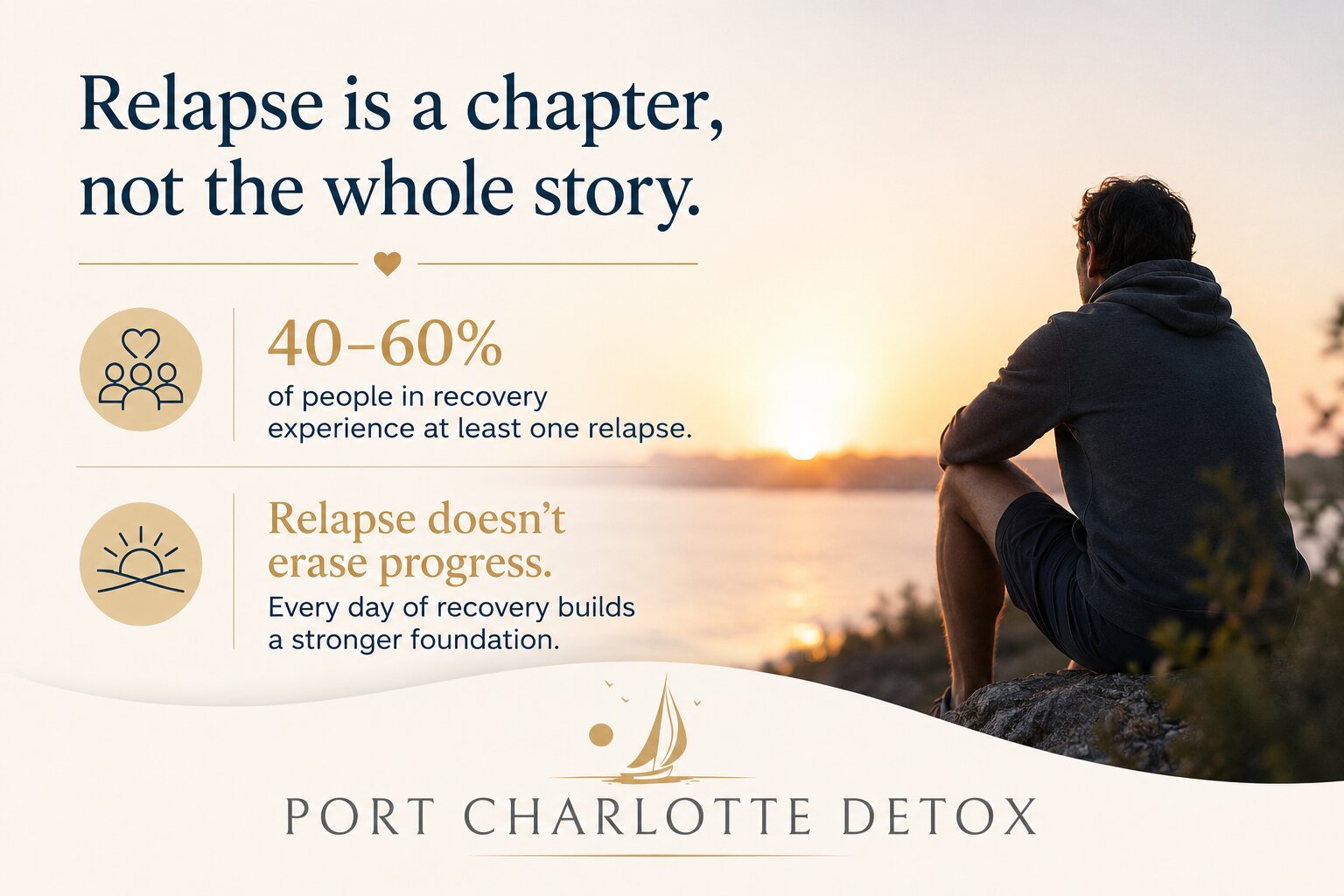
One relapse did not erase everything I had learned during those ninety days.
I still understood my triggers.
I still knew what healthy routines looked like.
I still remembered how good sobriety felt.
Recovery hadn’t disappeared.
I had simply wandered away from it for a while.
That realization gave me permission to stop thinking about failure and start thinking about what came next.
My Biggest Fear Wasn’t the Relapse—It Was the Withdrawal
Once the alcohol wore off, a different fear appeared.
“What happens if I stop again?”
My hands began trembling.
Sleep became almost impossible.
I felt anxious even when nothing was happening.
Every heartbeat seemed louder than normal.
At first, I convinced myself it was guilt.
Then I wondered if it was anxiety.
Eventually, I realized I couldn’t tell the difference.
That’s one of the reasons so many people begin searching for alcohol withdrawal treatment near me after returning to alcohol.
The body doesn’t always respond the same way every time.
Some people experience mild symptoms.
Others develop dangerous withdrawal that requires immediate medical attention.
Trying to predict which one you’ll experience can feel like guessing the weather without looking outside.
That’s a risk I eventually realized I didn’t need to take.
Shame Keeps More People Stuck Than Alcohol Does
I expected disappointment when I reached out.
Instead, I found compassion.
Nobody asked why I had ruined my recovery.
Nobody questioned whether I deserved another opportunity.
Instead, someone simply said,
“I’m glad you’re here.”
Those four words carried more weight than I expected.
Shame tells us to stay silent.
Recovery asks us to speak honestly.
The longer I hid my relapse, the worse everything became.
When I finally admitted I needed help, the burden immediately became lighter—not because my problems disappeared, but because I wasn’t carrying them alone anymore.
I’ve since learned that many alumni feel exactly the same way.
Returning for help often feels embarrassing.
Until they discover they’re welcomed back with understanding rather than judgment.
Recovery Isn’t a Straight Line
Before treatment, I imagined recovery like climbing a staircase.
Each day sober meant another step upward.
Relapse felt like falling all the way back to the bottom.
Today, I see it differently.
Recovery is more like hiking through the woods.
Sometimes the trail is clear.
Sometimes you lose sight of the path.
Sometimes you have to stop, look around, and ask someone which direction to go.
That doesn’t mean the destination disappeared.
It simply means you need help finding the trail again.
That perspective changed how I viewed myself.
Instead of asking,
“Why did I fail?”
I started asking,
“What can I learn from this?”
Those questions opened doors that shame had kept closed.
Asking for Medical Help Wasn’t Giving Up
One of my biggest misconceptions was believing medical support was only for people whose drinking was worse than mine.
I thought I needed to prove I could stop on my own.
The truth was very different.
Seeking professional care wasn’t about admitting defeat.
It was about protecting my health.
Alcohol withdrawal can be unpredictable, especially after periods of sobriety followed by relapse.
Having trained professionals monitor symptoms, provide medical support when appropriate, and respond quickly if complications develop gave me something I hadn’t felt in weeks:
Peace of mind.
For the first time since relapsing, I stopped wondering whether I was making the wrong decision.
I could simply focus on getting better.
You Deserve the Same Compassion You’d Give Someone Else
One exercise changed my perspective completely.
Someone asked me,
“If your best friend relapsed after ninety days, what would you tell them?”
I answered without hesitation.
“I’d tell them they’re not a failure.”
“I’d tell them to get help.”
“I’d remind them that ninety days still mattered.”
Then came the next question.
“Why don’t you believe those same things about yourself?”
I didn’t have an answer.
Many of us extend kindness to everyone except ourselves.
Recovery becomes much easier when we begin practicing the same compassion inward that we so freely offer others.
Your Story Didn’t End With One Bad Chapter
If you’ve relapsed after ninety days, you may feel like everyone else has moved forward without you.
That’s rarely true.
Recovery communities are filled with people who started again.
Some started twice.
Some started five times.
What matters isn’t how many times you’ve stumbled.
It’s whether you choose to keep moving.
Like a book, your life isn’t defined by one difficult chapter.
Readers don’t judge a story halfway through.
They wait to see how it ends.
Your recovery story is still being written.
And today’s decision can become the turning point that changes everything.
Frequently Asked Questions
Does relapsing after 90 days mean treatment didn’t work?
No. Recovery is a long-term process, and relapse can happen for many reasons. Many people use a relapse as an opportunity to better understand their triggers and strengthen their recovery plan.
Can alcohol withdrawal be different after a relapse?
Yes. Withdrawal symptoms can vary each time someone stops drinking. Factors such as drinking patterns, overall health, and previous withdrawal experiences all influence how the body responds.
When should I seek medical help after drinking again?
If you’re concerned about withdrawal symptoms, have experienced severe withdrawal before, or aren’t sure whether it’s safe to stop drinking on your own, seeking a professional evaluation is an important step.
Will treatment providers judge me for coming back?
Most addiction professionals understand that relapse can be part of the recovery journey. Their goal is to help you move forward safely, not criticize your past.
Can I recover even if I’ve relapsed more than once?
Absolutely. Many people achieve lasting sobriety after multiple attempts. Every step toward recovery provides new experience, stronger coping skills, and another opportunity to build a healthier future.
How do I rebuild confidence after a relapse?
Start with one manageable step at a time. Reaching out for support, reconnecting with healthy routines, and remembering that previous progress still matters can help restore confidence over time.
Take the Next Step
If you’re worried about alcohol withdrawal after a relapse, you don’t have to face it alone. Professional support can help you safely navigate withdrawal and begin rebuilding your recovery with confidence.
Call 844-336-2690 or visit our Alcohol Detox Program to learn more about our alcohol detox services Charlotte County, FL .