


Even after a year—or three or five—sober, something can shift. Not a relapse. Not a crisis. Just… quiet. A sense of distance. You go through the motions. You keep the routines. And still, something inside feels off.
You might look fine on the outside. You’re doing what you’re supposed to do. But inside, there’s a question starting to echo: “Why do I feel so far away from myself?”
This feeling is more common than people talk about. And if you’re here—reading this—you probably already know that white-knuckling your way through it doesn’t work. This is where many long-term alumni find themselves. Not in crisis. Not using. But disconnected.
And here’s the truth: feeling this way doesn’t mean something is wrong with you. It means something in you is ready for attention.
The Flatness You’re Feeling Is Real
There’s a point in recovery where the big highs of early sobriety fade—and the daily effort of staying well becomes… quiet. You stop counting days. You’ve done the work. Life is stable. But inside, it can start to feel hollow.
You might be thinking:
- “I should feel grateful… so why don’t I?”
- “Why does this feel so mechanical?”
- “Is this what recovery is supposed to feel like forever?”
This isn’t failure. It’s not a sign that you’re ungrateful or broken. It’s often a signal: something needs care that hasn’t had words yet.
Maybe a layer of grief is just now rising. Maybe your nervous system is finally safe enough to process old pain. Or maybe you’re just burned out from always being “okay.”
You Don’t Have to Hit Rock Bottom to Reconnect
One of the most damaging myths in recovery culture is that you need to be in full relapse—or some kind of crisis—to seek help again. But healing is not reserved for emergencies. Growth doesn’t only happen in chaos.
Sometimes the biggest emotional pivots happen when we pause during the plateau.
Our drug detox program in Port Charlotte, Florida isn’t just for first-timers or those in active withdrawal. It’s a place to recenter. A structured space to feel your feelings again. To step out of the fog. To let someone else hold things for a little while so you can breathe.
Because disconnection is a weight—and you don’t have to carry it alone.
What Emotional Disconnection Can Look Like in Long-Term Sobriety
You don’t need to be falling apart to know something isn’t right. Sometimes, it shows up in quieter ways:
- You stop reaching out to your support system—not because you’re hiding, but because it feels pointless.
- You’re tired all the time, even if you’re sleeping.
- You start to envy people who seem emotionally “lit up”—even if they’re new to recovery.
- You go numb during things you used to love.
- You feel restless, but unmotivated.
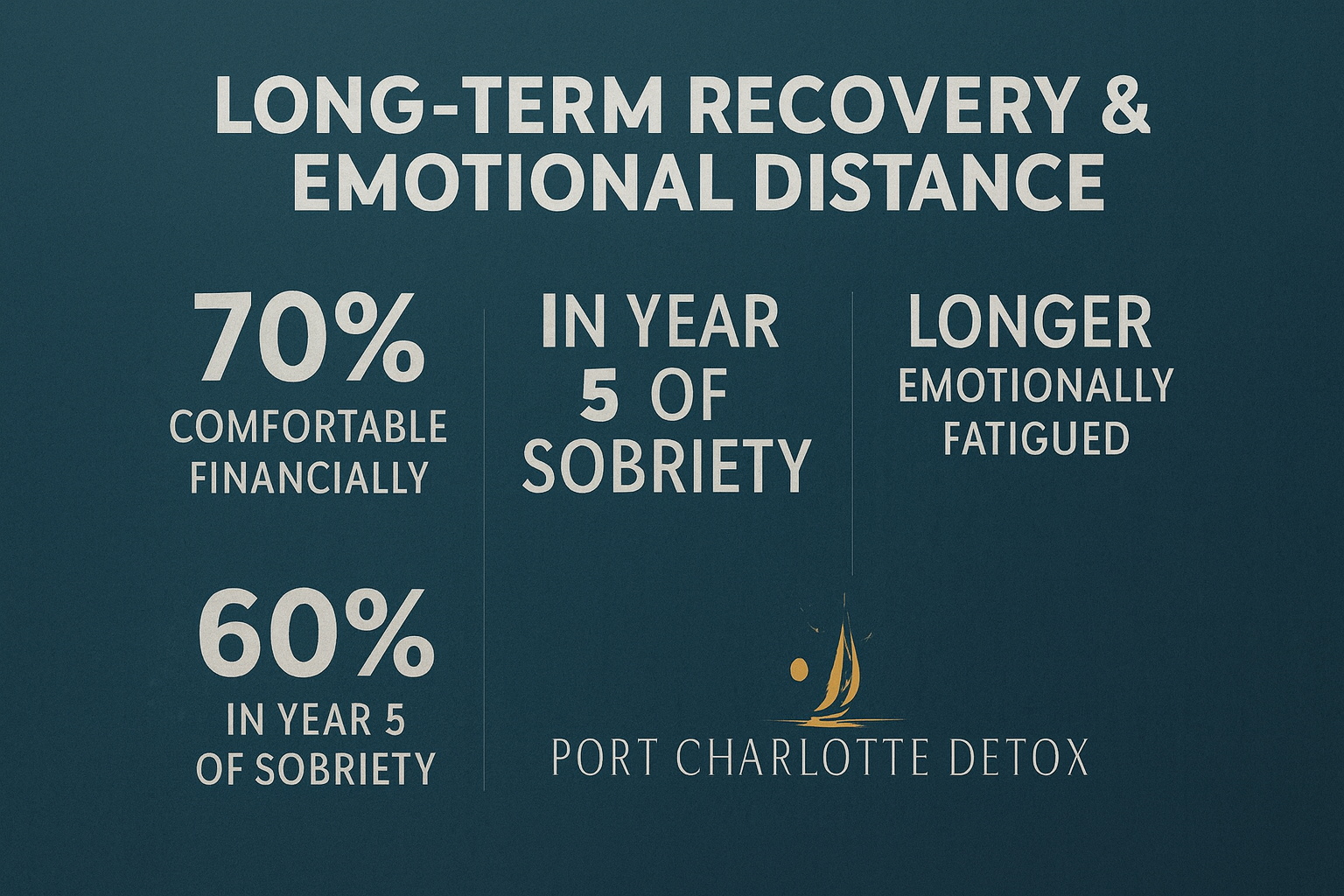
If that sounds familiar, take a breath. You’re not alone. This is a real phase of recovery—and it has a name: emotional fatigue. It doesn’t mean you’re regressing. It means your system is asking for care, not performance.
Detox as a Place to Reset—Not Just Withdraw
It may feel strange to think about a detox program when you’re years sober. But detox, at its best, isn’t just about getting substances out of the body. It’s about clearing space—internally and externally—for clarity, regulation, and support.
At Port Charlotte Detox, we’ve helped alumni return to treatment not because they failed—but because they wanted to reconnect. To slow down. To let themselves be seen again.
Sometimes a few days of rest in a supported environment can give you the breathing room to figure out what’s really going on beneath the surface.
And if there’s a need for medical support—maybe due to medication interactions, lingering cravings, or physical dysregulation—we’re equipped for that too.
If you’re looking for a drug detox program in Charlotte County or even considering services near Fort Myers, FL, know this: not every return to care is a crisis. Sometimes, it’s just wise.
Real Talk: Sobriety Is a Lifelong Process
Here’s something you probably already know—but it’s worth hearing again:
Sobriety isn’t the same as connection.
You can be years removed from your last use and still feel spiritually, emotionally, or physically off. That’s not a sign that your recovery has failed. It’s a sign that your recovery is evolving.
Long-term recovery isn’t just about staying away from substances. It’s about staying in relationship—with yourself, your values, your life.
And sometimes, that relationship needs a check-in.
“I didn’t relapse. I just… realized I hadn’t felt joy in months. I came back to Port Charlotte Detox not because I was using, but because I was empty. They didn’t judge me. They helped me figure out what was missing.”
— Alumni, 2023
How Port Charlotte Detox Supports Emotional and Physical Reconnection
We’re not a one-size-fits-all program. When long-term alumni return, we meet them where they are—not where we assume they should be.
Our drug detox program includes:
- Medical support, in case your body needs help re-regulating.
- Emotional check-ins, not just symptom charts.
- Quiet spaces to think, journal, or rest.
- Access to counselors who understand that recovery plateaus are real.
- Nutrition and hydration support, because burnout lives in the body, too.
Sometimes, just stepping into a space where you don’t have to pretend you’re fine can be the beginning of true reconnection.
You’re Allowed to Come Back. You’re Allowed to Feel Off.
Maybe no one told you that this was normal. That at year two or three or ten, you might still hit a wall. That you might wake up one day and wonder what this is all for.
But here’s the thing: these moments don’t erase your progress.
They are your progress.
The fact that you’re willing to feel the flatness instead of run from it? That’s growth. The fact that you’re considering reaching out again—not because you “need to” but because you want to feel more alive? That’s healing.
FAQs: Returning to Detox in Long-Term Sobriety
Can I come to detox even if I haven’t used again?
Yes. Our program supports emotional and physical resetting—not just crisis detox. If you’re sober but struggling, you’re welcome here.
What if I’m just emotionally tired, not physically sick?
That’s still valid. We’ve helped many long-term alumni reconnect with their recovery even when there’s no active use involved.
Will people judge me for needing help again?
No. Our staff understands that recovery is non-linear. You won’t be treated like a failure—you’ll be treated like someone who deserves care.
Is this only for people in Charlotte County?
Nope. If you’re nearby—whether you’re in Fort Myers or anywhere in Southwest Florida—you can reach out for support.
How do I know if this is what I need?
If you’ve read this far, something in you is asking for attention. That’s enough. You don’t need a dramatic reason. You’re allowed to want to feel better.
You’re Still on the Path
Feeling disconnected doesn’t mean you’ve lost your way. It just means it’s time to stop walking alone for a bit.
At Port Charlotte Detox, we hold space for people at every stage of recovery—including the ones who feel like they should be okay, but aren’t.
Let us help you come back to yourself.
Call (844)336-2690 or visit our drug detox program in Port Charlotte, Florida to take the next step—without judgment, without pressure.
You’re allowed to press pause.
We’ll be here when you do.