


There’s a specific kind of loneliness that can show up long after someone gets sober.
Not the chaos from active drinking. Not the panic. Something quieter than that.
It’s the feeling of going through the motions while emotionally drifting further away from yourself.
A former alumni from Port Charlotte Detox described it like this:
“I wasn’t drinking every day yet. But mentally? I was already gone.”
That’s the part people don’t always talk about. Relapse often begins emotionally before it happens physically. The withdrawal from connection comes first. Calls stop getting returned. Meetings feel exhausting. Small lies become easier. Isolation starts sounding reasonable.
By the time he searched for help again, he wasn’t looking for motivation. He was searching for interruption. A pause button before things got worse. That search eventually brought him back to alcohol addiction treatment after months of convincing himself he should be able to “handle it” alone.
And honestly, that mindset almost kept him from reaching out at all.
The Hardest Part Was Admitting Sobriety Didn’t Automatically Fix Everything
Long-term alumni carry a strange kind of pressure.
Once someone has a year or more sober, people assume they’re “good now.” Family relaxes. Friends stop checking in. Even the person themselves starts believing they should have fully figured life out by this point.
But emotional numbness doesn’t care how much clean time you have.
He talked openly about feeling disconnected for nearly a year before asking for help again. Work was stressful. Relationships felt surface-level. Sleep became inconsistent. He wasn’t openly spiraling, but he also wasn’t okay.
That middle space is dangerous because it doesn’t always look dramatic enough to justify asking for support.
So instead, he minimized it.
He told himself:
- “Everybody feels burned out.”
- “I’m just stressed.”
- “At least I’m not where I used to be.”
- “I should know how to fix this by now.”
That last one hits a lot of alumni hard.
Sobriety can sometimes create unrealistic expectations. People think healing should feel complete after enough time passes. But recovery isn’t a straight line toward permanent emotional clarity. Some seasons feel grounded. Others feel painfully flat.
And flatness can become risky if nobody talks about it.
The Search History Told the Truth Before He Did
He admitted later that his phone already knew he was struggling weeks before anyone else did.
Searches like:
- “same day alcohol detox”
- “can relapse happen slowly”
- “alcohol detox near me”
- “how bad does drinking have to get before detox”
He’d search late at night after drinking, then clear the tabs the next morning like deleting evidence from a crime scene.
That behavior says a lot.
People who are truly unconcerned about their drinking usually aren’t researching detox at 2 a.m. while promising themselves tomorrow will be different.
But shame makes people negotiate with themselves for a long time.
Especially alumni.
There’s this quiet fear of becoming “the person who came back.”
The person who had sobriety and lost it.
What helped him eventually make the call wasn’t suddenly feeling hopeful. It was exhaustion. Emotional exhaustion has a way of cutting through denial because eventually the performance becomes too heavy to carry.
He said something during intake that stuck with staff afterward:
“I didn’t call because I felt strong. I called because I couldn’t keep pretending I was fine.”
That level of honesty matters.
Same-Day Admission Can Change the Outcome Completely
One thing many people misunderstand about relapse is how fast motivation can disappear.
A person might genuinely want help at 9 a.m. and completely talk themselves out of it by dinner.
That window is real.
For alumni especially, there’s often an internal battle happening:
- One side remembers recovery working.
- The other side remembers how emotionally hard rebuilding can feel.
That tension creates hesitation.
Same-day support matters because it shortens the distance between honesty and action.
When he called, he expected resistance. Questions. Maybe even judgment about returning after slipping.
Instead, the conversation stayed simple.
“Can you come in today?”
That calmness mattered more than people realize.
No guilt.
No speech.
No “how could you let this happen?”
Just immediate support focused on safety and stabilization.
For many alumni, that response removes the biggest emotional barrier: fear of disappointment.
Relapse Doesn’t Erase the Work Someone Already Did
This is important.
A relapse does not delete years of growth, insight, or recovery experience. It doesn’t erase therapy. It doesn’t erase coping skills. It doesn’t erase the version of someone who fought hard to get sober in the first place.
People tend to think recovery resets to zero after a setback. That’s rarely true emotionally.
In his case, there was still awareness underneath the struggle. He recognized warning signs earlier than he would have years ago. He understood how isolation affected him. He knew dishonesty was creeping back in before things became catastrophic.
That awareness is recovery too.
A lot of alumni return carrying intense shame because they think everyone will only see the relapse itself.
But many treatment teams see something else:
Someone who came back before it destroyed everything.
That matters.
There’s strength in returning. Quiet strength, maybe. But real strength.
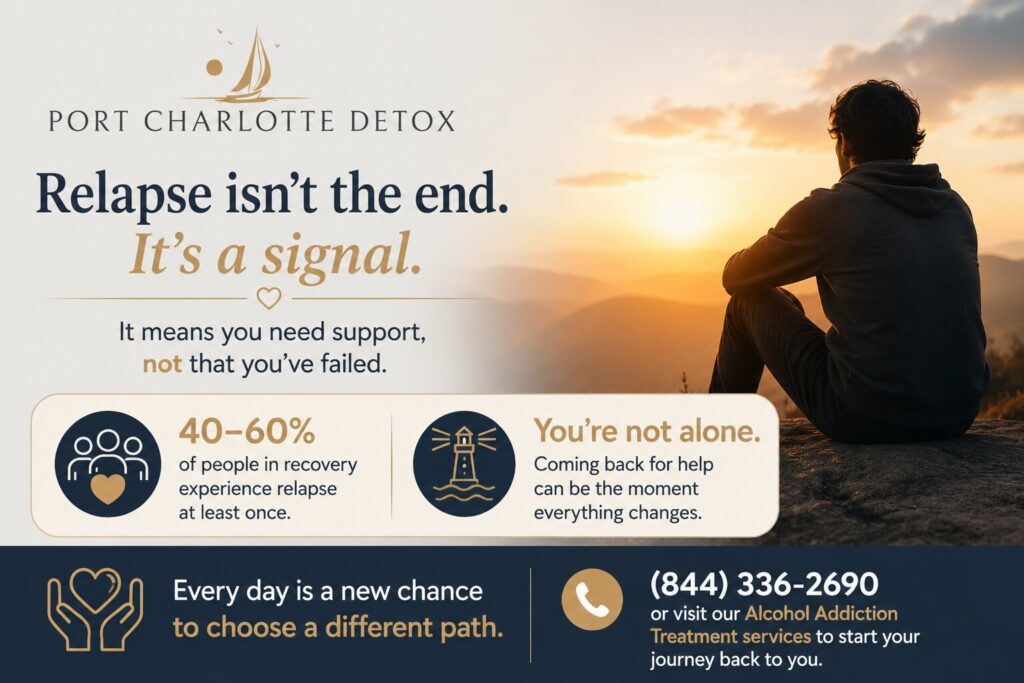
The Drive Back Felt Worse Than Detox
He later joked that the drive to treatment felt longer than any withdrawal symptom.
Not because he didn’t want help. Because he was terrified of what people would think.
Would staff remember him?
Would people judge him?
Would he be treated like a failure?
Those fears stop a lot of people from reaching back out.
But what he found instead was familiarity.
Not in a forced “welcome back” kind of way. More like people understood he was human before he even had to explain himself.
That softened something in him immediately.
One of the strange truths about recovery is this: sometimes people don’t need a brand-new strategy. Sometimes they need reconnection. Structure. Sleep. Honest conversation. A nervous system that finally gets to unclench for a minute.
The emotional exhaustion had become so constant he forgot what calm even felt like.
That happens more than people admit.
Recovery After Long-Term Sobriety Can Feel Surprisingly Fragile
There’s a myth that long-term sobriety eventually becomes effortless.
For some people, it gets easier. For others, life simply changes shape. New stress shows up. Grief appears. Relationships evolve. Identity shifts.
And sometimes old coping patterns quietly wait in the background for emotionally vulnerable seasons.
That doesn’t mean sobriety failed.
It means people are still human after treatment.
One of the healthiest things alumni can hear is this:
You are allowed to ask for support before everything completely falls apart.
You don’t have to earn help through catastrophe.
Too many people wait until they’ve destroyed relationships, careers, finances, or health because they think they need “proof” they’re struggling badly enough.
But emotional pain counts too.
Disconnection counts too.
The hollow feeling some alumni experience after years sober deserves attention long before relapse turns severe.
What Changed After He Came Back
Not everything magically fixed itself overnight.
That’s another myth people carry into recovery — the idea that one admission suddenly repairs years of emotional fatigue.
But several things shifted quickly:
- He stopped isolating.
- He started sleeping consistently again.
- He began talking honestly instead of managing impressions.
- His nervous system slowed down enough for clarity to return.
And maybe most importantly, he stopped carrying the entire thing alone.
There’s a line he shared a few weeks later that stayed with people:
“I thought everyone would see me as the guy who relapsed. Instead, they saw me as someone worth helping.”
That difference matters more than most people realize.
Because shame tells people they’ve become a burden.
Connection reminds them they’re still human.
Sometimes the Most Important Decision Happens Quietly
No dramatic movie scene.
No public breakdown.
No life-altering speech.
Just one exhausted person making a phone call before things got worse.
That’s often what recovery really looks like.
Quiet decisions. Honest moments. Tiny openings where someone chooses not to disappear into themselves again.
And for alumni feeling emotionally stuck, disconnected, or dangerously numb, that choice can matter more than they know.
Especially on the days they feel least deserving of support.
Frequently Asked Questions
Can someone return to treatment after years of sobriety?
Absolutely. Many people return to treatment or support services after long periods of sobriety. Relapse or emotional disconnection does not erase previous progress. In many cases, alumni return with more self-awareness and honesty than they had during their first admission.
What are signs someone may need help again?
Some common signs include:
- Isolating from supportive people
- Hiding drinking or minimizing it
- Emotional numbness or hopelessness
- Searching for terms like “alcohol detox near me”
- Returning to unhealthy routines or coping behaviors
- Feeling emotionally exhausted all the time
The earlier someone reaches out, the easier it often is to interrupt the spiral.
Is same-day admission really possible?
In many situations, yes. Same-day admission may be available depending on medical needs, bed availability, and clinical assessment. Reaching out quickly can help someone move toward safety before fear or shame talks them out of getting help.
What if someone feels embarrassed about coming back?
That feeling is incredibly common among alumni. Many people worry they’ll be judged or viewed as failures after returning. But asking for help again is not weakness. It’s often a sign that someone still believes their life is worth protecting.
Does someone need to hit rock bottom before seeking detox?
No. Waiting for things to become catastrophic can make recovery harder emotionally, physically, and financially. Someone does not need to lose everything before asking for help.
Why do long-term alumni sometimes feel emotionally disconnected?
Recovery doesn’t make someone immune to stress, grief, burnout, or emotional fatigue. Some alumni experience periods where life feels flat or disconnected even years later. Reaching back out for support during those periods can prevent deeper struggles from developing.
Call (844)336-2690 or visit our alcohol addiction treatment services to learn more about our Alcohol addiction treatment services in Charlotte County, FL.