


Sometimes the fear shows up before the facts.
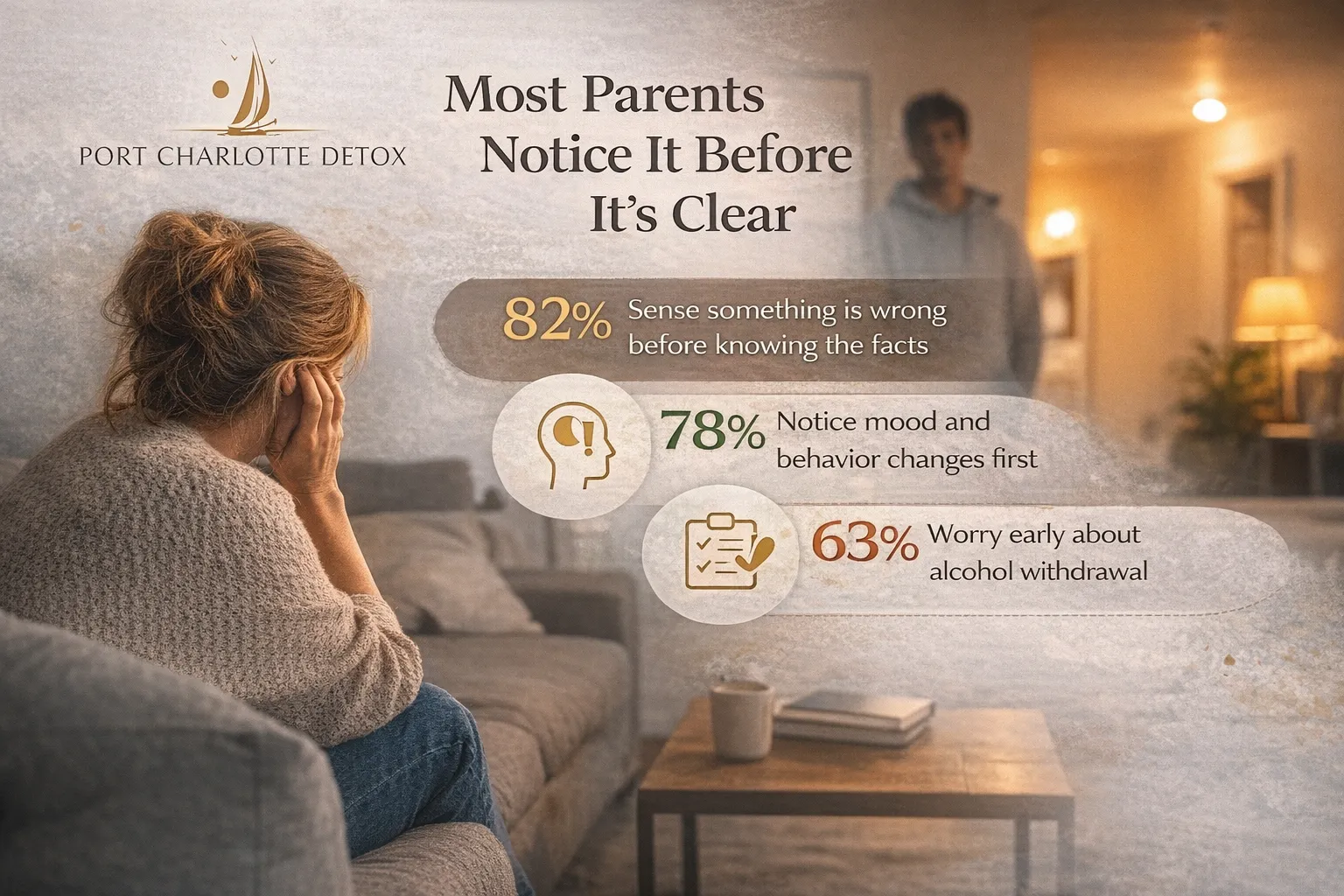
A parent notices the late-night calls. The empty promises. The sudden mood swings or the quiet distance that wasn’t there before.
You may not know exactly what’s happening yet. But something inside you says your child isn’t okay.
Many families begin searching for ways their child can safely stop drinking under medical supervision, including options like a medically supervised alcohol withdrawal program in Southwest Florida.
Before parents ever make that call, though, most of them carry the same heavy questions.
Questions about safety.
Questions about hope.
And questions about whether their child can still find their way back.
The Moment Parents Realize Something Has Changed
Parents often describe a quiet turning point.
Maybe their child starts cancelling plans more often. Maybe their voice sounds different during phone calls. Maybe they begin noticing defensive reactions when alcohol is mentioned.
It’s rarely just one moment.
Instead, small changes start stacking up.
Missed responsibilities. Sudden irritability. Memory gaps after drinking. Sleep problems. Withdrawal from family conversations.
At first, many parents try to explain these things away.
Stress. College pressure. Work challenges.
But eventually that inner voice becomes harder to ignore.
When parents begin worrying consistently, it usually means their instincts are noticing something real.
Why Stopping Isn’t Always Simple
One of the hardest things for parents to understand is why their child can’t simply stop drinking.
From the outside, it can look like a decision.
Inside the body and brain, though, alcohol changes how the nervous system functions.
Over time, the brain adapts to the presence of alcohol. When drinking suddenly stops, the body can react strongly.
Some people experience anxiety, shaking, nausea, sleep disruption, or intense emotional swings.
For others, symptoms can become more severe.
Beyond the physical effects, alcohol often becomes tied to emotional survival.
Young adults sometimes rely on it to quiet anxiety, numb stress, or escape overwhelming thoughts.
Taking alcohol away without support can feel frightening for someone who has been using it to cope.
This is why structured medical environments exist—to help the body stabilize while emotional healing begins.
The Conversation Parents Fear Having
Few conversations feel harder than talking to your child about drinking.
Parents worry about saying the wrong thing. They worry about pushing their child further away. They worry that bringing up the issue will cause anger or denial.
Those fears are understandable.
But silence can sometimes create distance.
Many families find that approaching the conversation with curiosity rather than accusation can change the tone.
Instead of demanding immediate change, some parents simply share what they’re noticing.
“I’ve been worried about you lately.”
“I love you, and I want to understand what you’re going through.”
These kinds of statements open space instead of closing it.
Your child may not respond right away.
But compassionate honesty often stays with them longer than criticism.
Why Medical Support Can Matter During Early Withdrawal
Alcohol withdrawal affects everyone differently.
Some individuals experience mild discomfort. Others experience symptoms that require careful monitoring.
Medical supervision allows professionals to monitor vital signs, manage symptoms, and support physical stability.
This stage often focuses on helping the body recover from prolonged alcohol exposure.
It can also give individuals time to rest.
Many people who seek help are physically exhausted and emotionally overwhelmed. Their sleep cycles are disrupted. Their nervous systems are overactive.
Providing a safe environment where the body can recover is often the first meaningful step toward healing.
For parents, knowing their child is medically supported during this stage can bring enormous relief.
What Parents Often Misunderstand About Recovery
Recovery rarely happens in a straight line.
Parents sometimes imagine a clear sequence: stop drinking, feel better, move forward.
In reality, recovery is more complex.
Stopping alcohol addresses the physical side of addiction. But the emotional reasons behind drinking still need attention.
Young adults often benefit from therapy, support groups, and structured recovery programs that help them understand their relationship with alcohol.
These environments help people learn how to handle stress, relationships, and difficult emotions without turning back to alcohol.
Healing takes time.
But with the right support, many people build lives that are stronger and healthier than before.
What If Your Child Says They Don’t Need Help?
This situation is incredibly painful for parents.
You may see the danger clearly while your child insists everything is fine.
Denial is common, especially for young adults who fear losing independence or feeling judged.
While you cannot force someone into recovery, you can influence the environment around them.
Staying connected matters.
Expressing concern without hostility matters.
Setting boundaries that protect your own wellbeing also matters.
Sometimes change happens slowly.
But many people eventually remember the people who stayed calm, loving, and present during the hardest moments.
The Emotional Weight Parents Carry
Parents often blame themselves when their child struggles with alcohol.
They wonder what they missed.
They replay old decisions, conversations, or moments when things could have gone differently.
But addiction rarely has a single cause.
It develops through a complicated mix of biology, environment, emotional stress, and life experiences.
Your child’s struggle is not proof that you failed as a parent.
In fact, the very reason you’re searching for answers right now shows how deeply you care.
Parents often become one of the strongest sources of stability during recovery.
Not because they fix everything—but because they remain present.
Families across Charlotte County, Florida often share similar fears when they begin noticing serious changes in their child’s drinking behavior.
Nearby communities like Lee County, Florida have also seen many parents quietly searching for answers, support, and hope for their children.
These families often discover something important along the way.
They are not alone.
Many parents are asking the same questions you are asking right now.
The Hope That Many Parents Eventually See
Recovery stories rarely begin with certainty.
They begin with concern.
A worried phone call.
A difficult conversation.
A parent searching late at night for answers because they refuse to give up on their child.
But many families eventually witness something remarkable.
Young adults rediscover their strength. They rebuild relationships. They learn healthier ways to face stress and uncertainty.
Recovery doesn’t erase the past.
But it can transform what comes next.
And for many parents, seeing their child rediscover hope becomes one of the most powerful experiences of their lives.
Ready to Talk?
If you’re worried about your child’s drinking and aren’t sure what steps to take next, compassionate guidance is available.
Call 844-336-2690 to learn more about our alcohol detox in Southwest Florida.