


I swore I’d never be here again.
But there I was—hands shaking, heart racing, feeling like my body was turning against me. It wasn’t my first day one, but it hit just as hard. I thought maybe I could handle it at home. That maybe if I just sweated it out, no one would have to know.
If that’s where you are right now—scared, ashamed, unsure—let’s take the shame off the table.
Let’s talk about what’s actually safe, especially when alcohol is part of the picture.
This isn’t about scaring you. It’s about giving you options that keep you alive—and connected to what matters.
If you’re considering alcohol addiction treatment, this is where it begins.
Detox Isn’t Just a Bad Hangover—It Can Be Life-Threatening
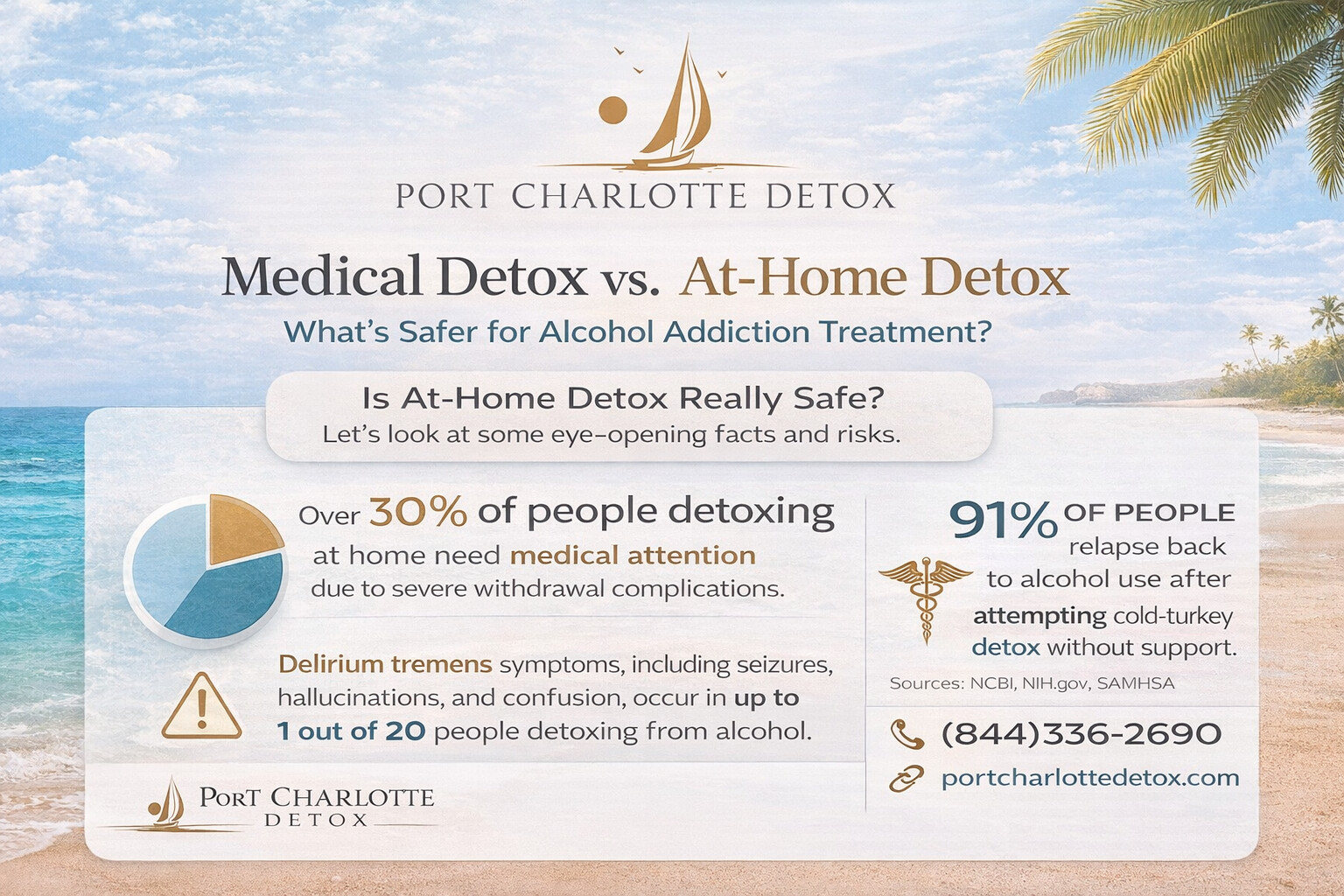
One of the biggest myths in recovery is that alcohol detox is “less serious” than detoxing from other drugs. But the reality is: alcohol withdrawal is one of the most dangerous types of detox there is.
Even people who’ve gone through it before are surprised at how bad it can get the next time.
Depending on your history, relapse pattern, or how long you were drinking before this attempt, you could face:
- Delirium tremens (DTs): A potentially fatal condition involving confusion, tremors, seizures, and hallucinations
- Cardiac issues: Irregular heartbeat, high blood pressure, and heart attacks
- Severe anxiety or panic: Emotional instability that spirals without proper support
- Seizures: Which can come on without warning
At-home detox leaves you without the tools or support to handle any of that safely.
It’s not about weakness. It’s about risk.
Why So Many of Us Try to Detox at Home
If you’ve been sober before, it’s easy to convince yourself:
“I know what to expect.”
“I’ve done this before. I can manage.”
“I don’t want to disappoint anyone again.”
Those thoughts are real—and they come from a place of pain and pressure.
We don’t want to feel like we’ve “failed.” We don’t want to go back to a facility where people saw us doing better. And we definitely don’t want to start over.
So we try to handle it alone.
But detox isn’t something you “earn your way out of.” It doesn’t matter how long you were sober—your body still needs help coming off alcohol safely.
At-Home Detox Can Feel Easier—Until It Isn’t
For some people, early withdrawal starts like a hangover. Nausea, sweats, anxiety, trouble sleeping.
But the danger is what happens 24–72 hours later. That’s when the serious complications often kick in. And if you’re alone, you may not recognize the signs—or be able to get help in time.
Even if you get through withdrawal, at-home detox often means:
- No emotional support when things feel hopeless
- No medication to ease symptoms or prevent seizures
- No one watching for warning signs
- No bridge to continued treatment
And most of all: no plan for what comes next.
What Medical Detox Really Offers (Besides Safety)
Medical detox isn’t just about emergency care—it’s about comfort, stability, and support.
At Port Charlotte Detox, here’s what happens when you come in:
- A full medical assessment to understand your history, usage, and risks
- 24/7 monitoring by experienced nurses and clinical staff
- Medication-assisted detox to reduce withdrawal symptoms and protect your health
- Emotional and mental health support as you stabilize
- A next-steps plan so you’re not left wondering what to do after detox
You’re not “committed.” You’re supported. You’re allowed to feel fragile.
You’re allowed to need help again.
This Isn’t Square One—It’s Still Your Recovery
One of the cruelest thoughts after relapse is: “I threw it all away.”
But here’s the truth no one tells you loud enough: you didn’t lose what you learned.
The tools you built? Still in you. The growth you made? Still there.
Your story didn’t reset. It took a turn—and now you get to decide where it goes next.
Coming back into detox doesn’t make you a failure.
It makes you brave enough to keep going.
“What If I’m Not Ready for Full Treatment Again?”
That’s okay. Medical detox doesn’t lock you into anything. It just keeps you safe during the most physically dangerous part.
And while you’re there, you get space to breathe. To think. To feel something other than panic or pain.
From there, you and the team can talk about what makes sense next—whether that’s inpatient, outpatient, or another option.
But you don’t have to figure all that out right now. First things first: you deserve to detox safely.
Choosing Alcohol Addiction Treatment That Works for You
There’s no shame in coming back. There’s only danger in waiting too long.
If alcohol is back in your system and you’re scared to go through detox again—especially alone—you’re not weak. You’re human.
And you’re worth more than a dangerous gamble on at-home withdrawal.
At Port Charlotte Detox, we’re not here to judge your relapse. We’re here to help you get through it—safely, honestly, and with the dignity you deserve. Serving Charlotte County, FL, & Lee County, FL.
FAQ: Medical vs. At-Home Detox for Alcohol
Is alcohol withdrawal really that dangerous?
Yes. Unlike some other substances, alcohol withdrawal can cause life-threatening symptoms such as seizures, heart complications, and delirium tremens. It should always be taken seriously.
Can I just taper off alcohol instead of going to detox?
Some people try to taper, but it’s risky—especially without medical guidance. It’s hard to judge how your body will respond, and withdrawal symptoms can escalate quickly.
What happens during medical detox?
You’ll receive 24/7 monitoring, medications to manage withdrawal, hydration, nutrition, and emotional support. Most importantly, you’re in a place that’s equipped to keep you safe.
Will I be forced into long-term treatment if I go to detox?
No. Detox is a separate phase. While continuing treatment is encouraged, it’s your choice. Many people use detox to regroup and make decisions about next steps from a more stable place.
What if I’ve relapsed before—will I be judged?
Absolutely not. At Port Charlotte Detox, we understand relapse is part of many people’s journey. You’ll be met with respect, not shame.
📞 Ready to take the first step—again?
Call (844)336-2690 or visit to learn more about our Alcohol addiction treatment services in Port Charlotte, Florida.