


There are few experiences more painful than watching your child become someone you barely recognize.
One day, she’s laughing with friends and talking about college, work, or her future. Then gradually, small things begin to change. She sleeps at odd hours. She becomes secretive. Money disappears from your wallet. Jewelry goes missing. Excuses become more frequent. Conversations end in anger, tears, or silence.
If you’ve found yourself searching, “My 19-year-old daughter is hooked on pain pills and stealing money. How do I help her?” you’re probably carrying far more than fear.
You’re carrying guilt.
Confusion.
Heartbreak.
And perhaps a small voice that keeps asking, “Did I somehow fail as a parent?”
At Port Charlotte Detox, we’ve met many families who never imagined they would face addiction in their own home. The good news is that this situation does not have to define your daughter’s future. Recovery is possible, and many families begin rebuilding trust after receiving the right level of care. If you’re wondering whether it may be time to explore round-the-clock support for recovery, understanding what’s happening beneath the surface can help you take the next step with confidence instead of fear.
You’re Probably Mourning Someone Who Is Still Standing Right in Front of You
Parents often describe addiction as a strange kind of grief.
Your daughter is still alive.
She’s still sitting across the dinner table.
She still has the same smile you’ve known since childhood.
Yet she doesn’t seem like herself anymore.
The young woman who once apologized for forgetting to text you may now lie without hesitation. The daughter who used to save birthday money suddenly cannot explain where her paycheck went. Someone who once cared deeply about family relationships may become defensive whenever anyone asks a simple question.
That emotional conflict is incredibly difficult.
You aren’t grieving because your daughter is gone.
You’re grieving because addiction has begun changing how she thinks, reacts, and makes decisions.
Many parents blame themselves during this stage.
Perhaps you wonder if you were too strict.
Too trusting.
Too busy.
Not attentive enough.
The truth is that opioid addiction affects families from every background. Loving parents, stable homes, financial security, and good intentions do not make someone immune from developing a substance use disorder.
Recognizing that reality doesn’t erase the pain.
But it can remove some of the unnecessary shame that keeps families from asking for support.
When Money Starts Disappearing, the Problem Is Usually Bigger Than the Theft
Discovering stolen money creates a deep wound between parent and child.
It’s easy to focus on replacing what’s missing because money is measurable.
Trust isn’t.
When prescription pain pills become physically and emotionally necessary, obtaining them often becomes the person’s highest priority. As tolerance increases, maintaining the addiction becomes more expensive. Some individuals spend their savings. Others borrow from friends. Eventually, some begin taking money from the people who love them most.
That doesn’t mean your daughter has stopped caring about you.
It means addiction has begun changing the way her brain prioritizes survival.
Think of addiction as a smoke alarm that never stops ringing.
Eventually, every other sound fades into the background.
Responsibilities.
Relationships.
Promises.
Future plans.
They all become quieter than the constant need to avoid withdrawal or continue using.
Understanding this distinction matters because many parents mistakenly believe stealing means their child no longer has values or morals.
More often, it reflects the growing power of the addiction—not the disappearance of the person underneath it.
That doesn’t excuse the behavior.
Healthy accountability still matters.
But seeing the larger picture can help families respond with both firmness and compassion instead of anger alone.
Why Arguing Rarely Changes What Addiction Has Already Changed
Many parents spend months trying to find the perfect conversation.
“If I could just explain how much she’s hurting us…”
“If she understood what this is doing to our family…”
“If I say the right thing, maybe she’ll stop.”
Unfortunately, addiction rarely responds to logic alone.
You’ve probably already had emotional conversations.
Maybe she promised she’d quit tomorrow.
Maybe she insisted she had everything under control.
Maybe she blamed stress, friends, school, or work.
Perhaps she even admitted there was a problem—only to return to using a few days later.
This cycle leaves parents emotionally exhausted.
One of the hardest lessons families learn is that repeated arguments often become part of the addiction cycle.
You confront.
She denies.
You worry.
She apologizes.
Things improve briefly.
Then everything repeats again.
Breaking that cycle usually requires more than another difficult conversation.
It often requires professional support that addresses both the physical dependence and the emotional reasons someone continues using.
Many families begin searching for help for opioid addiction after realizing love alone cannot overcome a medical condition that affects judgment, decision-making, and impulse control.
That realization is not giving up.
It’s recognizing that your daughter deserves more support than your family can realistically provide on its own.
Love and Boundaries Can Exist Together
One of the greatest fears parents have is making the wrong decision.
Some worry they’re enabling.
Others fear they’re being too harsh.
Healthy boundaries are not punishments.
They’re expressions of love that protect everyone involved.
For example, boundaries might include:
- Refusing to give cash when you suspect it may be used to purchase pills.
- Protecting financial accounts and valuables.
- Remaining calm instead of arguing during moments of crisis.
- Encouraging treatment rather than negotiating repeated promises.
- Following through consistently with expectations.
Many parents worry boundaries will push their child away.
Ironically, unclear boundaries often allow addiction to continue growing.
Imagine trying to stop a flood with a towel.
No matter how hard you work, the water keeps coming because the source hasn’t been addressed.
Professional treatment focuses on addressing that source instead of asking families to keep cleaning up the damage alone.
You Don’t Have to Wait Until Everything Falls Apart
One of the most common misconceptions about addiction is that someone has to “hit rock bottom” before treatment can help.
Many families wait because they believe things are not bad enough yet.
They tell themselves:
- “She still has a job.”
- “She still comes home most nights.”
- “She’s too young to have a serious addiction.”
- “Maybe she’ll grow out of this.”
Unfortunately, opioid addiction rarely improves simply because time passes.
In many cases, the behaviors become more severe. Financial problems grow. Relationships become increasingly strained. Legal issues may develop. The risk of overdose also increases as tolerance changes or pills are replaced with more dangerous substances.
Seeking professional support early doesn’t mean you’re overreacting.
It means you’re responding before the consequences become even more devastating.
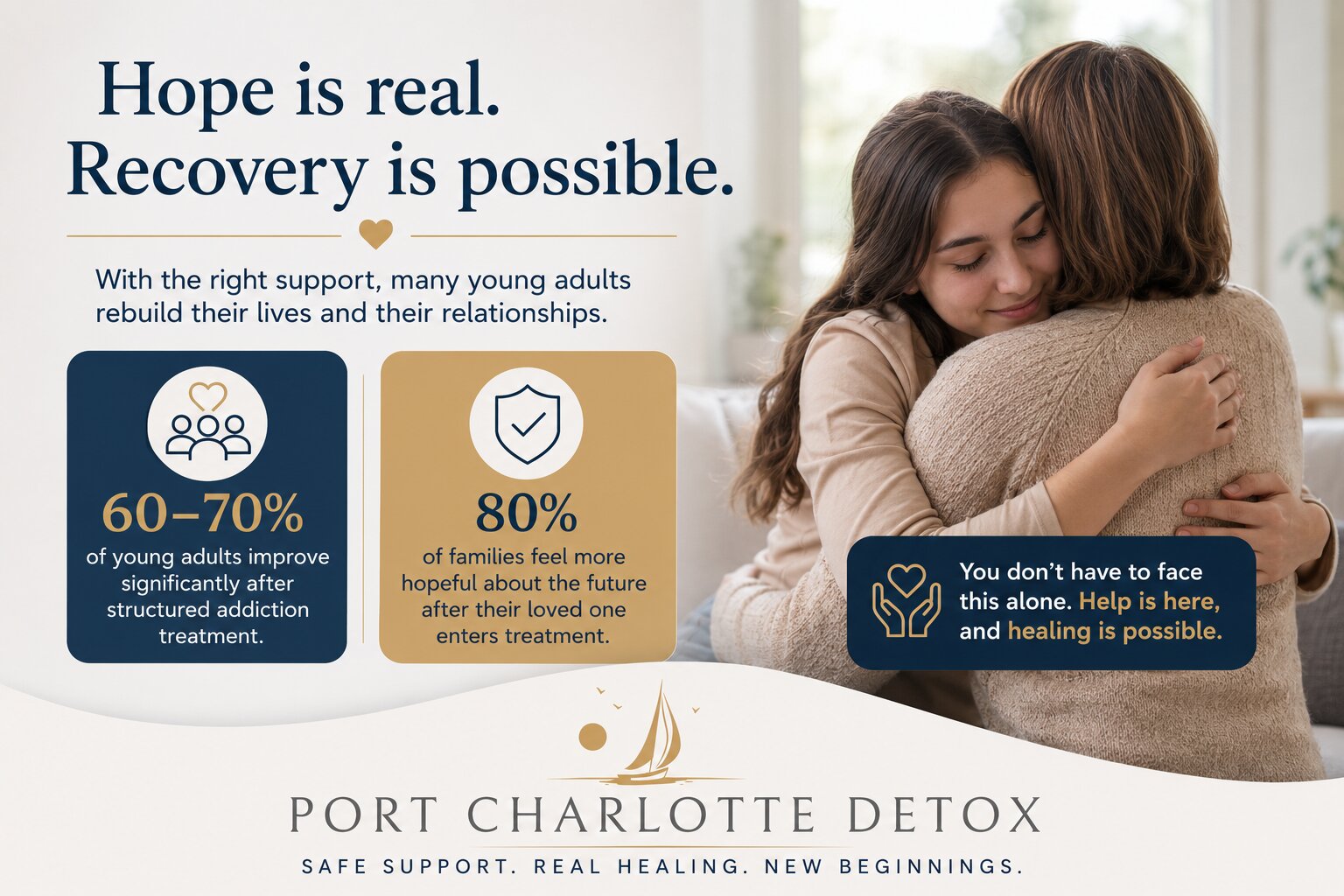
Many young adults recover after receiving structured care at the right time. Early intervention can give them an opportunity to rebuild their health, continue their education or career goals, and repair family relationships before addiction causes even greater harm.
Hope doesn’t begin after everything is lost.
Sometimes hope begins the moment a family decides they no longer have to face addiction alone.
Recovery Is About More Than Stopping the Pills
When parents first think about treatment, they often focus on one goal:
“I just want her to stop using.”
That desire is completely understandable.
But lasting recovery involves much more than simply removing substances.
Many young adults who misuse pain pills are also struggling with anxiety, depression, trauma, overwhelming stress, grief, or emotional pain they haven’t known how to express.
Without addressing those underlying challenges, stopping opioid use may only solve part of the problem.
This is why comprehensive, live-in treatment provides more than a safe place to stop using substances. It gives individuals time away from daily triggers while they receive therapy, develop healthier coping skills, rebuild routines, and begin understanding the reasons addiction gained such a strong hold.
Families are often included in the healing process as well.
Learning healthier communication, rebuilding trust, and setting realistic expectations can strengthen relationships long after treatment ends.
Recovery is rarely a straight line.
There may be setbacks, difficult conversations, and moments of uncertainty.
But every positive step creates another opportunity for healing.
The daughter you remember is not necessarily gone.
She’s often still there beneath the fear, the shame, and the addiction.
Treatment helps create the space for that person to emerge again.
One Conversation Can Change the Direction of Your Family’s Story
Right now, it may feel as though you’re carrying an impossible weight.
You’re watching someone you love make decisions that frighten you.
You’re wondering whether to trust her.
You’re questioning every decision you’ve made as a parent.
Most of all, you’re hoping there’s still time.
There is.
You don’t need every answer before reaching out for guidance.
You don’t have to know exactly what kind of treatment your daughter needs.
You simply need to take the next right step.
Think of recovery like finding a path through heavy fog.
You may not be able to see the entire journey ahead.
But once the first few steps become visible, the rest of the path slowly begins to appear.
That first step could be asking questions.
It could be learning about treatment.
It could be having a conversation with professionals who understand what your family is experiencing.
No matter how overwhelming today feels, your daughter’s story is still being written.
So is yours.
Conclusion
Watching your 19-year-old daughter misuse pain pills and steal money is one of the most painful experiences a parent can face. While it’s natural to feel angry, confused, or overwhelmed, it’s important to remember that addiction changes behavior in ways families often struggle to understand.
You don’t have to choose between loving your daughter and protecting your family. Both are possible. With healthy boundaries, compassionate support, and professional care, many young adults begin rebuilding their lives and repairing relationships that once seemed beyond saving.
If you’ve been waiting for the “right time” to ask for help, today can be that day.
Ready to Take the Next Step?
Call 844-336-2690 or learn more about our Residential Treatment Program to discover how compassionate, round-the-clock care can support your loved one’s recovery.
Frequently Asked Questions
How can I tell if my daughter’s pain pill use has become an addiction?
While only a healthcare professional can diagnose a substance use disorder, warning signs often include taking more pills than prescribed, seeking pills from multiple sources, changes in mood or behavior, financial problems, secrecy, declining performance at school or work, and continuing to use despite negative consequences.
Should I confront my daughter if I know she’s stealing money?
It’s important to address the behavior, but timing and approach matter. Try to have the conversation when she is sober and remain calm. Focus on specific behaviors instead of accusations, set clear boundaries, and encourage a professional assessment rather than turning the discussion into an argument.
Is it normal to feel guilty as a parent?
Yes. Many parents wonder if they caused the addiction or could have prevented it. In reality, opioid addiction is a complex medical condition influenced by many factors. Blaming yourself often delays getting the support both you and your daughter need.
What if my daughter refuses treatment?
You cannot force someone to want recovery, but you can control your own boundaries and continue encouraging professional care. Many families benefit from speaking with treatment professionals about healthy ways to communicate, reduce enabling behaviors, and prepare for future opportunities to encourage treatment.
Why is residential treatment sometimes recommended?
For individuals struggling with ongoing opioid misuse, a live-in treatment setting can provide a structured environment away from daily triggers. It allows medical and clinical professionals to address substance use, emotional challenges, coping skills, and recovery planning in one supportive setting.
Can families heal after addiction?
Yes. Although rebuilding trust takes time, many families experience healthier relationships through honest communication, appropriate boundaries, and ongoing recovery support. Healing often becomes a process that involves the entire family—not just the person receiving treatment.