


A lot of people researching treatment aren’t in full crisis.
They’re still going to work. Still answering emails. Still functioning well enough that nobody around them fully understands how exhausted they are.
That’s why searches about treatment length are often emotionally loaded. Questions like “Do people stay 30, 60, or 90 days?” usually aren’t just about scheduling.
They’re about fear.
Fear of stepping away from life.
Fear of losing control.
Fear of making recovery “too serious.”
Fear that asking for help means admitting something permanent about yourself.
If you’re sober curious or quietly wondering whether treatment could help, you’re not alone. Many people exploring live-in treatment options spend weeks or months researching before they ever speak to someone directly.
And honestly, that hesitation makes sense.
You’re not just trying to figure out how long treatment lasts. You’re trying to figure out what your life might look like if you finally stopped surviving on autopilot.
Stop Thinking of Recovery Like a Deadline
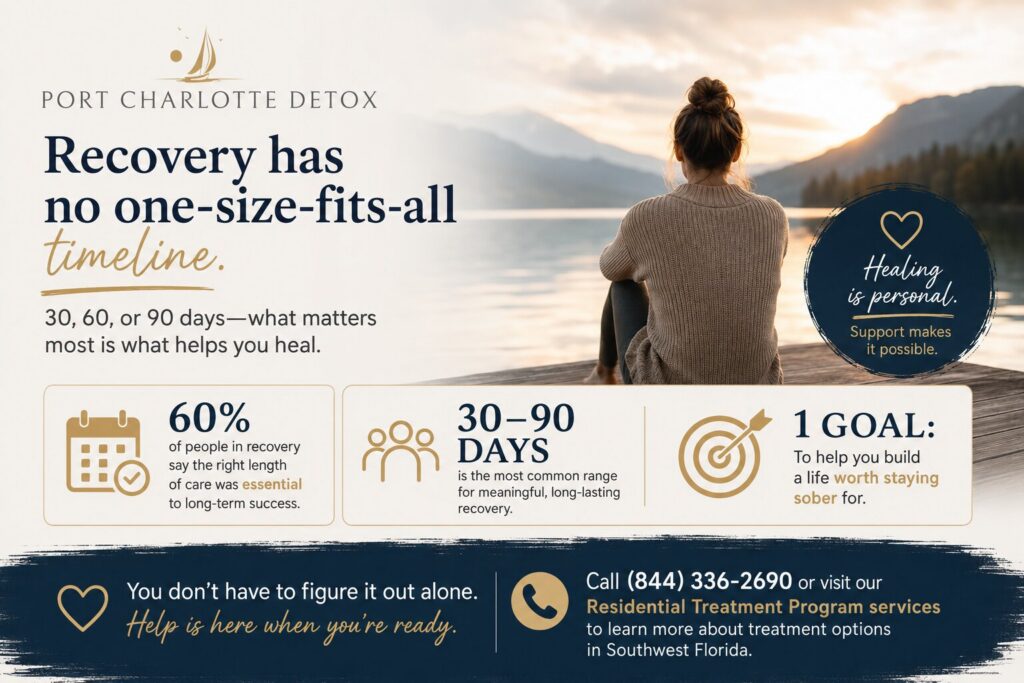
One of the biggest misconceptions about treatment is that recovery happens on a strict timeline.
People often approach it like a work project:
- 30 days to reset
- 60 days to improve
- 90 days to “fix everything”
But human beings don’t heal in straight lines.
Recovery is less like completing a task and more like slowly regaining circulation in parts of yourself that have gone emotionally numb.
That’s why there’s no universal answer for everyone.
Some people benefit deeply from a shorter stay because they caught the problem early. Others need longer support because years of stress, anxiety, trauma, burnout, or substance use have reshaped the way they cope with life.
The length of treatment is usually influenced by:
- Physical dependence
- Mental health symptoms
- Emotional exhaustion
- Relapse history
- Family dynamics
- Work stress
- Support systems
- Medical concerns
- Personal goals
A lot of sober curious people secretly hope someone will simply tell them the minimum amount of time they can stay while still “getting better.”
But recovery rarely responds well to bargaining.
Why the First Few Weeks Often Feel Strange
Many people imagine treatment will feel dramatic from day one.
In reality, the first stage is often surprisingly quiet.
Your body slows down.
Your nervous system begins settling.
You sleep differently.
You start noticing thoughts and emotions that alcohol or substances may have been muting for a long time.
That silence can feel uncomfortable at first.
One client described it this way:
“I didn’t realize how loud my brain had become until things finally got quiet.”
A 30-day stay often gives people enough space to stabilize physically and emotionally. For many, it’s the first uninterrupted period they’ve had in years without constantly managing stress through substances, distraction, or overworking.
During that time, people may begin:
- Sleeping more normally
- Eating consistently again
- Feeling less physically reactive
- Recognizing emotional triggers
- Learning healthier coping skills
- Reconnecting with themselves socially and emotionally
And honestly, many people are surprised by one thing in particular:
They laugh more than they expected to.
Not because recovery is easy, but because constantly carrying a secret is exhausting.
Why Some People Extend Beyond 30 Days
Here’s something treatment centers see often:
A person enters care convinced they only need 30 days. Then somewhere around week three, they realize they’re only beginning to understand what’s actually been happening underneath the surface.
That’s not failure.
That’s awareness.
The first month is often about stabilization. The deeper emotional work usually begins afterward.
This is especially true for people who have spent years functioning through:
- Burnout
- Anxiety
- Depression
- Emotional avoidance
- Perfectionism
- Chronic stress
- Relationship strain
A 60-day stay creates more room to move beyond immediate crisis management and into sustainable healing.
That additional time can help people:
- Build healthier routines
- Strengthen emotional regulation
- Practice vulnerability
- Address self-destructive patterns
- Develop relapse prevention strategies
- Rebuild confidence gradually
Think of it this way:
The first month often helps people stop drowning.
The second month helps them learn how to actually live differently.
That distinction matters more than people realize.
Why 90 Days Can Create Deeper Change
Longer treatment stays are not about punishment or weakness.
In many cases, they simply give people enough time to stop operating in survival mode.
A 90-day stay may offer:
- Greater emotional stabilization
- More consistent therapy work
- Time to rebuild physical health
- Family involvement
- Trauma support
- Improved self-awareness
- Better transition planning
For people who have spent years escaping stress instead of processing it, this can be life-changing.
Many high-functioning adults discover something difficult but important during treatment:
Their substance use was never the entire problem.
Sometimes alcohol or drugs became a coping strategy for:
- Emotional loneliness
- Constant pressure
- Anxiety
- Identity confusion
- Unresolved grief
- Burnout
- Fear of slowing down
- Feeling disconnected from themselves
Removing the substance is important. But understanding the pain underneath it often takes longer than people expect.
One client once said:
“I came in thinking I needed a break from drinking. I left realizing I needed a break from the life I was forcing myself to survive.”
That kind of insight usually doesn’t happen overnight.
Don’t Let Productivity Decide Your Worthiness
Sober curious adults often struggle with this question:
“Am I really bad enough to need treatment?”
That question can keep people stuck for years.
Because many people still:
- Pay bills on time
- Maintain relationships
- Perform at work
- Show up socially
- Keep functioning externally
But functionality can become a trap.
Some people become so skilled at appearing okay that they stop recognizing their own suffering as valid.
You do not need to collapse publicly before you deserve support.
You do not need:
- A DUI
- Job loss
- Divorce
- Isolation
- Catastrophic consequences
- Public humiliation
before asking for help.
In fact, seeking support earlier often creates more flexibility, more options, and less disruption long term.
There’s a particular sadness that comes from waiting until your pain becomes undeniable before treating it as real.
The Right Length of Stay Is the One That Helps You Stay Present
A lot of people searching how long is inpatient rehab are actually asking a deeper question:
“How much time would I need to finally feel okay again?”
And the honest answer is this:
Recovery is not just about stopping substances. It’s about becoming emotionally present enough to build a life you no longer feel desperate to escape from.
For some people, 30 days creates momentum.
For others, leaving too early means returning to the same emotional chaos before real healing has time to settle in.
That’s why individualized care matters.
Treatment is not a competition. There’s no prize for recovering as quickly as possible.
Sometimes the strongest thing a person can do is stop rushing themselves long enough to heal honestly.
Why Sober Curious People Often Wait Too Long
People exploring sobriety without fully identifying as “addicted” often stay stuck in research mode.
They compare themselves constantly:
- “Other people have it worse.”
- “I’m still functioning.”
- “Maybe I’m overthinking this.”
- “I can stop anytime.”
- “I just need better self-control.”
But if you keep returning to the same questions, your mind may already be trying to tell you something important.
Curiosity itself matters.
Most people do not spend months researching treatment lengths because everything feels perfectly fine.
Part of you may already know your current way of coping is becoming unsustainable.
And that awareness deserves compassion, not shame.
Recovery Rarely Looks the Way People Fear It Will
A lot of sober curious adults worry treatment will erase who they are.
They fear becoming:
- Emotionally flat
- Isolated
- Boring
- Different
- Weak
- “One of those people”
But many people experience the opposite.
They become:
- More emotionally available
- More rested
- More grounded
- More honest
- More connected
- More capable of joy without constantly forcing it
Recovery doesn’t remove your personality. If anything, it often gives it room to breathe again.
There’s a reason so many people describe early recovery as finally putting down a backpack they forgot they were carrying.
FAQ: Choosing Between 30, 60, and 90 Days in Treatment
Is 30 days enough for recovery?
For some people, yes. A 30-day stay may provide stabilization, structure, and a strong starting point. Others benefit from longer care depending on emotional, physical, and environmental factors.
Why do some people stay 60 or 90 days?
Longer stays can provide more time for emotional healing, relapse prevention work, routine-building, and addressing underlying stressors connected to substance use.
Do I have to decide my treatment length before entering care?
Not always. Many people begin with one plan and adjust based on how they’re progressing and what support they need.
What if I’m sober curious but not sure I need treatment?
That uncertainty is extremely common. Many people seek information long before they fully identify their relationship with alcohol or substances as problematic.
Is longer treatment always better?
Not necessarily. The best treatment plan is individualized. The goal is sustainable healing, not simply staying longer.
Can treatment help if I’m still functioning in daily life?
Yes. Many people entering treatment still have careers, families, and responsibilities. External stability does not erase internal exhaustion.
What happens after a live-in program?
People often transition into therapy, support groups, structured daytime care, or multi-day weekly treatment depending on their goals and needs.
Will treatment feel overwhelming emotionally?
At times, recovery can feel emotionally uncomfortable. But many people also describe treatment as relieving because they no longer have to carry everything alone.
How do I know if I’m ready?
You do not have to feel 100% certain before asking questions. Often, readiness begins with curiosity, honesty, and the willingness to explore another way of living.
Call (844)336-2690 or visit our supportive Residential Treatment Program services to learn more about Residential Treatment Program services in Southwest Florida.