


If you’ve started hearing sounds that aren’t there or seeing things after cutting back on alcohol, it’s understandable to feel frightened. Many people immediately assume they’re experiencing delirium tremens (DTs), but that’s not always the case. Even so, hallucinations related to alcohol withdrawal should never be ignored.
For someone who has been drinking heavily for a long time—even if they have continued working, caring for family, or hiding their alcohol use—these symptoms can be a sign that the brain is struggling to adjust without alcohol. Learning when hallucinations require emergency care can help protect your health. If you’re looking for support, understanding how medical alcohol detox works can help you know what to expect and why professional monitoring is so important.
What Is Alcoholic Hallucinosis?
Alcoholic hallucinosis is a withdrawal-related condition in which a person experiences hallucinations during or shortly after a period of heavy alcohol use, usually after reducing or stopping drinking.
Unlike delirium tremens, people experiencing alcoholic hallucinosis often remain:
- Awake and alert
- Aware of where they are
- Able to hold a conversation
- Oriented to time and place
The hallucinations are real to the person experiencing them, even though they understand something is wrong.
The most common experiences include:
- Hearing voices, whispers, or conversations
- Hearing music or sounds that are not present
- Occasionally seeing shadows or figures
- Feeling extremely suspicious or frightened because of what they hear
Because a person can still appear “normal” between hallucinations, family members sometimes underestimate how serious the situation is.
Why Does It Happen?
Alcohol slows activity in the central nervous system. Over months or years of heavy drinking, the brain adapts by increasing excitatory activity to compensate.
When alcohol is suddenly removed, that balancing system no longer works the same way.
Instead, the brain becomes overactive, leading to symptoms such as:
- Anxiety
- Tremors
- Sweating
- Insomnia
- Increased heart rate
- Hallucinations
This state of nervous system hyperexcitability explains why withdrawal symptoms can worsen quickly without medical supervision.
How Is It Different From Delirium Tremens?
One of the biggest misconceptions is that every hallucination during alcohol withdrawal means someone has delirium tremens.
While both conditions involve alcohol withdrawal, they are not identical.
Alcoholic Hallucinosis |
Delirium Tremens (DTs) |
|---|---|
| Person usually remains alert and oriented | Severe confusion and disorientation |
| Hallucinations are often auditory | Visual hallucinations are more common |
| Thinking is generally organized | Thinking becomes severely impaired |
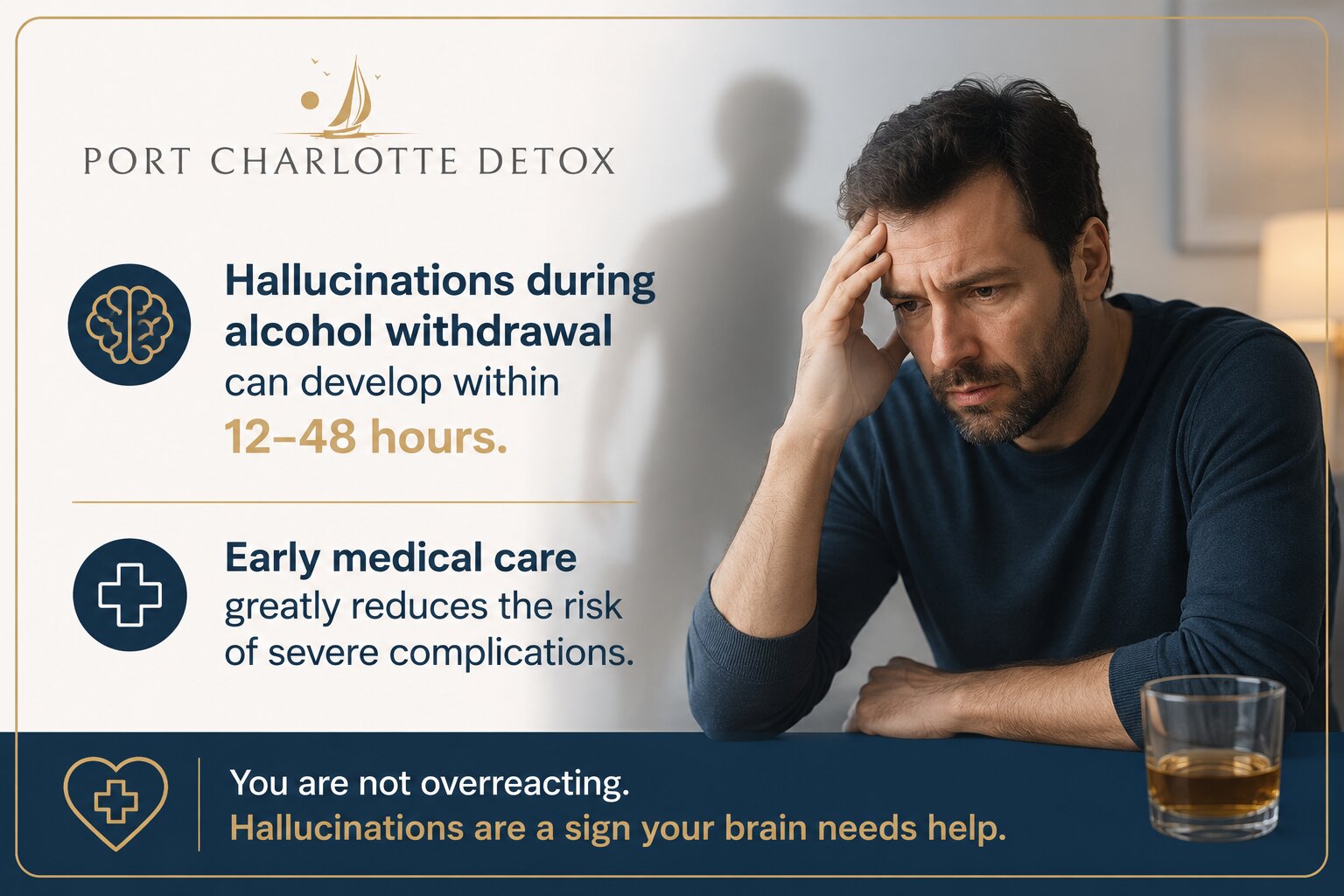
| Usually develops within 12–48 hours after reducing alcohol | Often develops 48–72 hours after the last drink |
| Can progress if untreated | Medical emergency with significant risk of complications |
A person with alcoholic hallucinosis may still recognize loved ones, answer questions appropriately, and understand where they are. Someone with delirium tremens often cannot.
That distinction matters—but it should never lead someone to believe hallucinosis is “safe.”
When Does It Become a Medical Emergency?
Any hallucinations during alcohol withdrawal deserve prompt medical evaluation.
Seek emergency medical care immediately if hallucinations occur along with:
- Severe confusion
- Inability to recognize people or surroundings
- Seizures
- High fever
- Extreme agitation
- Rapid heartbeat with heavy sweating
- Difficulty staying awake
- Loss of consciousness
These symptoms may indicate delirium tremens or another life-threatening medical condition.
Even if those symptoms are absent, hallucinations alone should not be managed at home.
Why Medical Care Still Matters
Some people delay treatment because they assume, “At least it isn’t DTs.”
Unfortunately, alcohol withdrawal does not always follow a predictable path.
Someone who initially experiences only hallucinations may later develop:
- Withdrawal seizures
- Severe autonomic instability
- Delirium tremens
- Dehydration
- Dangerous electrolyte abnormalities
Medical professionals can monitor for these complications while helping reduce withdrawal symptoms safely.
Treatment may include:
- Continuous monitoring of vital signs
- Medications that reduce withdrawal severity
- IV fluids when needed
- Nutritional support, including thiamine
- Ongoing assessment for worsening symptoms
Early treatment is generally safer than waiting to see whether symptoms become more severe.
Why High-Functioning Drinkers Often Wait Too Long
Many people experiencing alcoholic hallucinosis have spent years maintaining jobs, caring for families, and meeting responsibilities despite heavy drinking.
Because they have managed daily life successfully, they may believe they can also manage withdrawal alone.
Common thoughts include:
- “I’m not sick enough.”
- “I’ll sleep it off.”
- “It’s probably just stress.”
- “I don’t want anyone to know.”
Hallucinations are a sign that the brain is under significant stress—not a personal weakness.
Getting help early is often the safest decision, regardless of how functional someone appears on the outside.
If you’re in Southwest Florida and beginning to experience alcohol withdrawal symptoms, seeking medically supervised detox in southwest Florida can provide continuous monitoring and treatment before complications develop.
Recovery Begins With Safe Withdrawal
Alcohol withdrawal can change rapidly, even in people who have never experienced severe symptoms before.
Recognizing the difference between alcoholic hallucinosis and delirium tremens can help reduce confusion, but it should never reduce urgency. Hallucinations during or after heavy drinking deserve medical evaluation because they may signal significant withdrawal that can worsen without treatment.
If someone you know is experiencing hallucinations during or after drinking, don’t wait. Our medical alcohol detox in Port Charlotte team is available 24/7.
Call (844) 336-2690 today or learn more about treatment in Port Charlotte and take the first step toward recovery with confidence. Port Charlotte Detox proudly provides medically supervised addiction treatment for residents of Charlotte County, Lee County, and Sarasota helping individuals throughout Southwest Florida begin recovery safely.
Frequently Asked Questions
Is alcoholic hallucinosis the same as psychosis?
Not necessarily. Alcoholic hallucinosis is specifically related to heavy alcohol use or withdrawal and often occurs while a person remains alert and oriented. Other forms of psychosis can have different causes and require separate evaluation.
Can alcoholic hallucinosis go away on its own?
Symptoms may improve as withdrawal resolves, but there is no reliable way to predict whether withdrawal will remain mild or progress to seizures or delirium tremens. Medical evaluation is the safest approach.
Should someone experiencing hallucinations during alcohol withdrawal go to the hospital?
Yes. Hallucinations during alcohol withdrawal should always be evaluated by a healthcare professional. Prompt treatment can identify complications early and help prevent the withdrawal process from becoming life-threatening.