


You held it together longer than most.
No one would’ve guessed. You kept your job. Paid your mortgage. Showed up to the parent-teacher conferences and the work Zooms and the friend group texts. But behind closed doors, the drinking or using was constant. Quiet. Justified. And somewhere along the line, you realized: you weren’t failing, but you weren’t okay either.
So you did something most people never do. You walked into detox.
Now you’re on the other side of it. Clearer. Sleeping a little better. Maybe even eating again. But a new, unfamiliar discomfort has set in—the kind that asks: What happens now?
Detox Isn’t the Finish Line—It’s the Foundation
Medical detox is a critical first step. It’s how your body safely clears substances under medical supervision. It’s about reducing risk, managing withdrawal, and stabilizing your system.
But detox doesn’t teach you what to say when someone offers you a drink at dinner. It doesn’t prepare you for a hard Tuesday when your brain still reaches for that shortcut. And it doesn’t untangle years of pressure, perfectionism, or pain that might’ve driven the behavior in the first place.
That’s why real recovery begins after detox.
High-Functioning Doesn’t Mean You Don’t Need Help
A lot of high-achieving people worry that continuing treatment will mean giving up everything they’ve worked for. But the truth is, many of the most successful people in recovery had the same thought. The ones who stayed well? They made space for support, not because they were weak—but because they were smart enough to know willpower alone wouldn’t cut it.
Your brain needs a new framework. Your nervous system needs a reset. Your relationships might need new boundaries. That takes more than a week in medical care.
And you don’t have to fall apart to earn that kind of healing.
What Comes After Detox? Your Options Explained
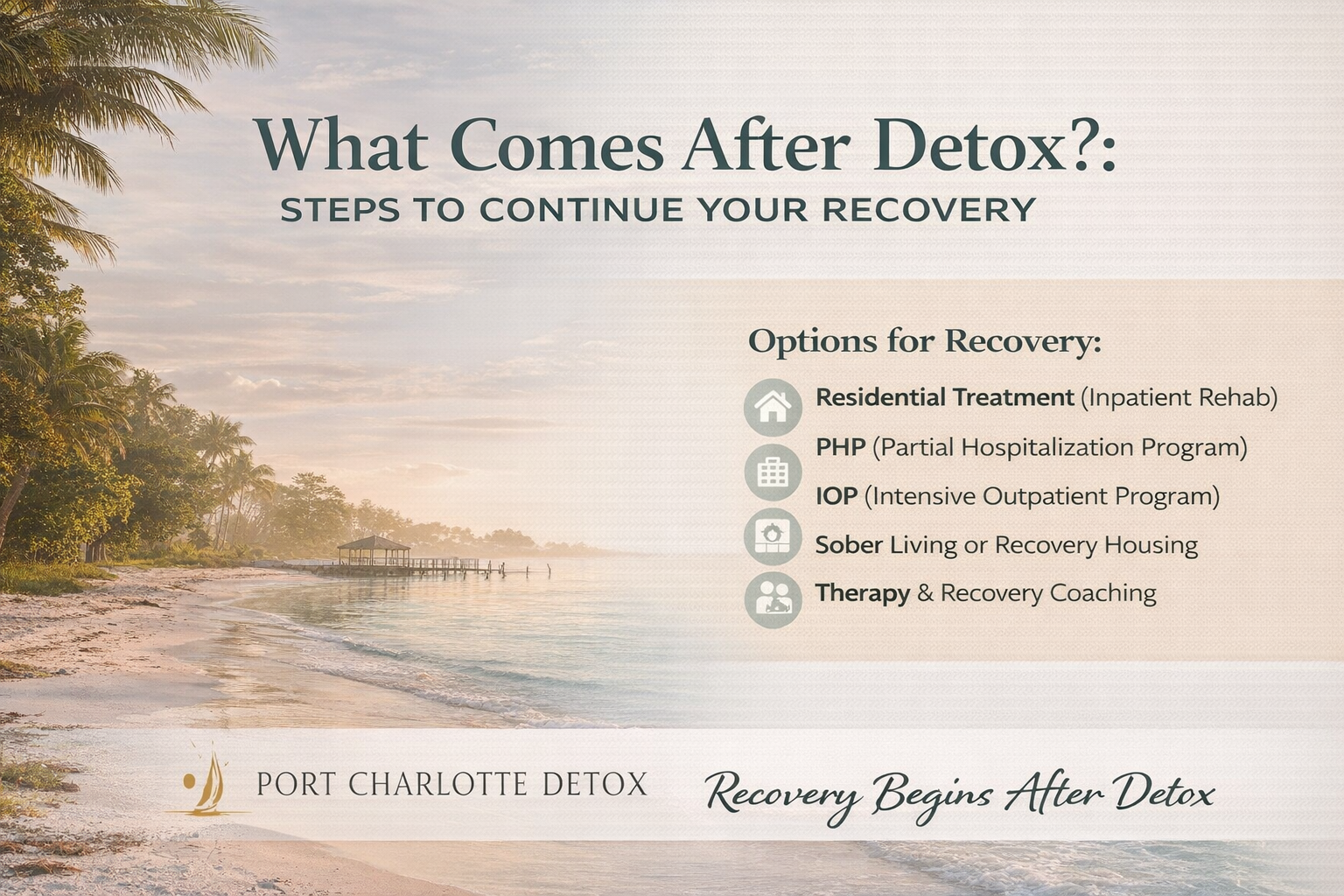
There’s no single “right” next step—but there are smart ones. Here’s a breakdown of what might follow detox, based on what you need most:
1. Residential Treatment (Inpatient Rehab)
For those who need a full reset—away from triggers, responsibilities, and access—residential care offers 24/7 support. Therapy, structure, rest. It’s intensive, and for many high-functioning clients, it’s the first time they’ve ever fully stopped moving.
You don’t have to be falling apart to need rest. You just have to be tired enough to want something different.
2. Partial Hospitalization Programs (PHP)
PHP offers clinical intensity with the flexibility of going home (or to sober living) at night. It’s perfect for people who need more than therapy—but less than full-time residential care.
3. Intensive Outpatient Programs (IOP)
IOP is one of the most popular post-detox options for high-functioning clients. It allows you to live at home, work part-time, and attend structured treatment 3–5 days per week. At Port Charlotte Detox, we help coordinate transitions to IOP that match your schedule, needs, and goals.
4. Sober Living or Recovery Housing
For people whose home environment is stressful or unsafe for sobriety, sober living offers accountability without isolation. You’re surrounded by others in recovery—but with independence.
5. Ongoing Therapy + Recovery Coaching
Some clients move into private therapy, group support, or sober coaching. This path works best for people with strong natural support systems and a lower risk of relapse—but should never replace medical or clinical recommendations if more care is advised.
“I Needed a Plan That Respected My Life—But Still Challenged Me”
One of our former clients put it best:
“I didn’t want to blow up my life to get better. I just needed help. I wanted a plan that respected the fact that I have a family and a business—but still pushed me to grow. That’s what Port Charlotte gave me.”
– Alumni, 2023
Success After Detox Looks Different Than You Think
It’s not about being fixed. It’s about being honest. Here’s what thriving post-detox has looked like for some of our clients:
- The trial attorney who built in a 5-minute pause before responding to late-night client emails—so he didn’t react in panic or pour a drink.
- The nurse who started therapy for trauma and stopped numbing her exhaustion with Adderall and wine.
- The mom who told her best friend the truth, joined an IOP, and let herself cry during group instead of holding it all in.
No Instagram stories. No dramatic “rock bottom” moment. Just one honest move after another.
What Happens If You Don’t Continue Care?
A lot of people feel good after detox and assume they’ve got it handled. But early recovery without follow-up care is like waking up from surgery and walking out of the hospital before rehab.
Without a plan, you’re more likely to:
- Return to old routines that quietly trigger use
- Underestimate stress, cravings, or withdrawal timelines
- Feel emotionally raw without knowing why
- Lose sight of why you quit in the first place
Continuing care isn’t about punishment. It’s about making your new clarity sustainable.
Post-Detox Planning at Port Charlotte
We don’t send you out the door with a folder and a “good luck.” Your post-detox plan is built with you. We look at your:
- Career and family obligations
- History of use
- Medical and mental health needs
- Goals for sobriety or reduced use
Then we connect you to the right programs, professionals, and local or virtual supports—many of which we coordinate directly.
Explore our drug detox program services to see how it all connects.
FAQs: Life After Detox
Do I have to go to rehab after detox?
Not always. Some people move into outpatient programs, therapy, or sober living depending on their situation. But it’s important to have some form of structured support. Detox clears the body—what comes next heals the rest.
Can I work while continuing treatment?
Yes. Many IOPs and outpatient programs are designed for working professionals. Your care plan can often be scheduled around your job or family needs.
What if I don’t want people to know I was in treatment?
Privacy is protected by law. Your employer, clients, or friends don’t need to know unless you choose to tell them. At Port Charlotte, we prioritize discretion for high-functioning individuals.
What if I’ve done detox before and still relapsed?
That’s not a failure. Many people need multiple rounds of care before finding what truly sticks. The key is adjusting the support—not giving up.
Is aftercare optional or part of the program?
It’s both. You have choice, but we strongly recommend a next step. Your post-detox care isn’t a bonus—it’s what turns progress into stability.
You Don’t Have to Pretend You’re Fine Anymore
If you’ve just completed detox—or are thinking about starting—and you’re already worrying about what comes next, that’s a good sign. It means you’re clear-headed enough to plan for your future.
And here’s the truth: you don’t need to be anyone else’s version of “rock bottom” to keep going. You just need to want something better than survival.
Ready to Take Your Next Step?
If you’re ready to find a next step that fits your life—and actually supports your recovery—we can help. Call (844)336-2690 or visit Port Charlotte Detox’s drug detox program services to learn more.
You’ve already done the hardest part. Let’s make sure it wasn’t just a pause—but the start of something stronger.