


Some people arrive at treatment after losing everything.
Others arrive while their life still looks perfectly intact.
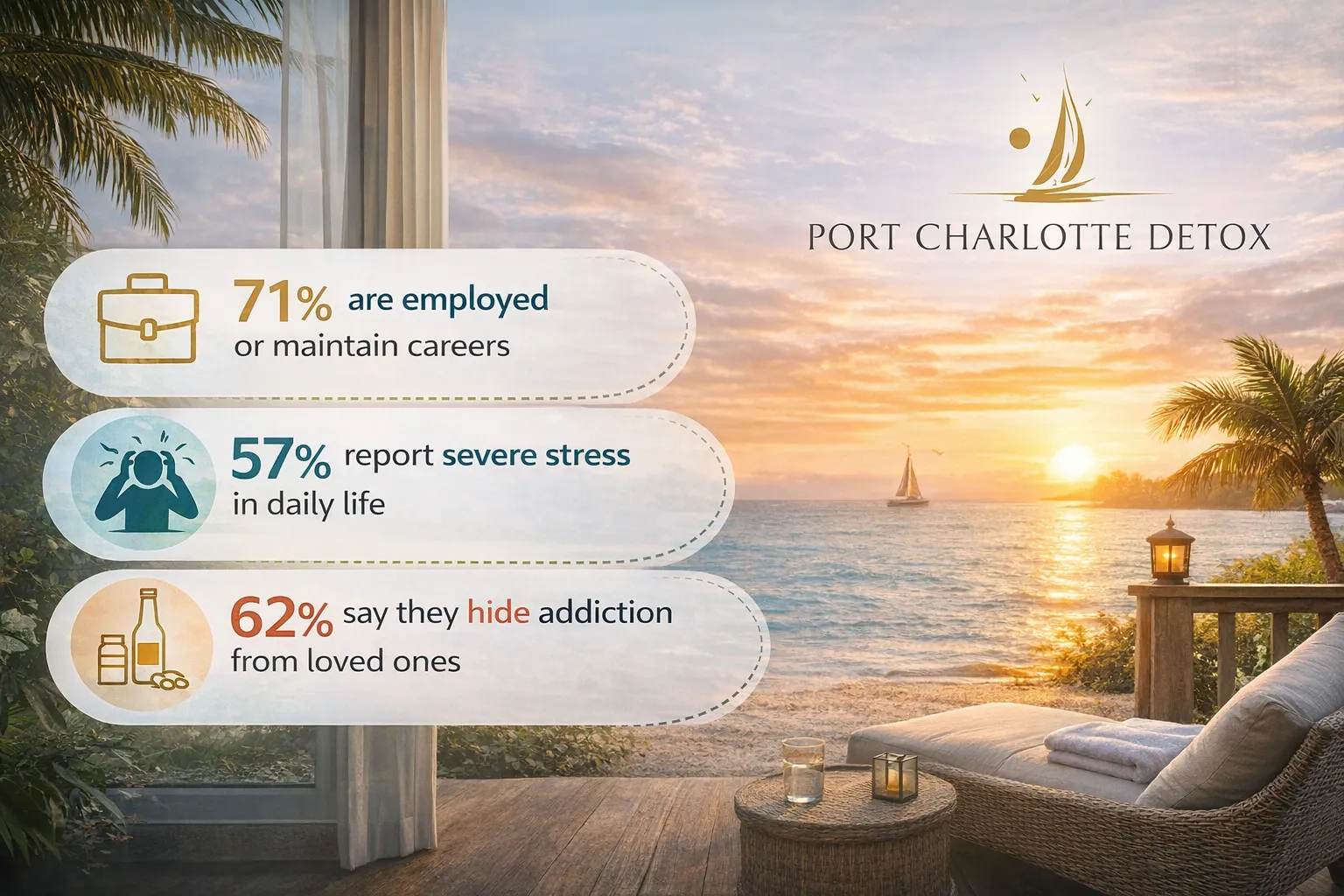
They’re executives, nurses, contractors, business owners, parents, and professionals who keep showing up every day—meeting expectations, hitting deadlines, and holding families together. From the outside, nothing appears broken.
But inside, many of them are running on fumes.
As a clinician, I’ve worked with many high-functioning clients who enter care not because their lives collapsed, but because they quietly reached a point where they couldn’t keep carrying the same weight. Some eventually decide to step into a structured, supportive environment like the one offered through our residential treatment program in Southwest Florida.
They often expect structure, rules, and therapy.
What they rarely expect are the realizations that come once the noise finally quiets down.
The Exhaustion They Couldn’t Admit
High-functioning addiction often looks like endurance.
People keep performing long after their energy is gone. They wake up early, push through meetings, attend family events, and handle responsibilities that never slow down.
Substances become a way to keep the machine running.
Alcohol to wind down.
Stimulants to stay sharp.
Prescription medications to sleep.
From the outside, it can appear like someone has found a way to balance everything.
Inside, it often feels like holding your breath for years.
One of the first things many clients discover after entering treatment is just how tired they truly are. When the schedule becomes simpler and the expectation to perform disappears, a deep fatigue surfaces.
Not just physical fatigue.
Emotional fatigue.
The kind that builds slowly over time from managing stress, expectations, secrecy, and self-doubt all at once.
Many people describe the first week of treatment as the first time they’ve slept deeply in years.
The Mental Load of Keeping the Secret
High-functioning individuals are often skilled problem solvers. They know how to manage complicated systems at work and in life.
Unfortunately, that same skill can also be used to manage addiction.
Clients sometimes realize that an enormous portion of their mental energy was being spent on maintaining appearances.
They tracked how much they drank.
They calculated when it was safe to have another drink.
They rehearsed conversations with spouses or coworkers.
They worked overtime to compensate for mornings that felt foggy or slow.
All of that effort becomes invisible to the outside world.
But inside treatment, when substances are removed and routines become stable, many people notice something surprising: their minds feel quieter.
The constant calculations stop.
And with that silence comes an unexpected sense of relief.
The First Time They Hear Their Own Story From Someone Else
Group therapy can be one of the most powerful experiences for high-functioning clients.
Many arrive believing their situation is unique.
They assume no one else understands what it feels like to maintain a career, raise children, or lead a team while privately struggling with substance use.
Then someone across the room tells a story that sounds almost identical.
A business owner describes late-night drinking alone after successful days.
A teacher talks about waking up with anxiety but still showing up for students.
A parent admits they drink after everyone goes to bed just to quiet their thoughts.
The moment recognition happens, the room often becomes very still.
Clients realize they are not strange or uniquely flawed.
They are human.
And many people who look successful on the outside are quietly fighting the same internal battles.
Identity Begins to Shift
One of the biggest fears high-functioning clients carry into treatment is the fear of losing who they are.
Professionals worry they will lose their drive.
Creative individuals worry their spark will disappear.
Parents worry they will feel weak or incapable.
What often happens instead is that many people begin rediscovering parts of themselves that had slowly faded beneath stress and substance use.
They reconnect with hobbies they abandoned.
They laugh more easily.
They feel emotions that were previously numbed or muted.
Instead of losing their identity, many people realize they had been operating under a version of themselves that was exhausted and stretched too thin.
Recovery doesn’t erase personality.
It often restores clarity.
The Moment They Recognize How Hard They’ve Been on Themselves
Another common realization appears in therapy sessions: many high-functioning clients have been holding themselves to impossible standards.
They expect perfection.
Mistakes feel like personal failures.
Stress becomes something they believe they should simply power through.
Substances can temporarily silence the inner critic that never stops evaluating performance.
Inside treatment, people often begin practicing something unfamiliar—self-compassion.
That doesn’t mean ignoring mistakes or avoiding responsibility.
It means learning to treat themselves with the same patience and understanding they show others.
For many high achievers, this shift can feel surprisingly emotional.
They realize how long they have been pushing themselves without pause.
Redefining What Strength Actually Looks Like
Before entering treatment, strength is often defined by endurance.
Keep going.
Push harder.
Handle everything.
High-functioning clients often pride themselves on their ability to operate under pressure.
But recovery introduces a different definition of strength.
Strength becomes honesty.
It becomes asking for support.
It becomes setting boundaries around stress, work, and relationships.
This idea can feel uncomfortable at first. People who are used to carrying everything alone sometimes struggle with the idea of sharing responsibility.
Over time, though, many begin to recognize something important:
Real strength isn’t about surviving endless pressure.
It’s about building a life that doesn’t require constant survival.
The Unexpected Calm of Structure
Many high-functioning clients arrive worried that treatment will feel restrictive.
Schedules. Groups. Therapy sessions. Curfews.
What they often discover is that structure actually removes a tremendous amount of stress.
The day becomes predictable.
Meals happen at consistent times.
Sleep patterns stabilize.
Therapy sessions provide space to talk openly about things that have been buried for years.
Without the chaos of unpredictable substance use, life starts to slow down.
For someone who has spent years living at full speed, that slower pace can feel unfamiliar—but also deeply calming.
The Relief of Not Performing
Perhaps the most surprising realization many clients share is this:
Treatment can be the first place in years where they don’t have to perform.
They don’t have to appear confident.
They don’t have to pretend everything is under control.
They don’t have to impress anyone.
They can simply be honest.
For people who have spent years maintaining a carefully managed image, this honesty can feel almost freeing.
One client once said something that perfectly captured the experience:
“I came here thinking I needed to fix my drinking. What I really needed was a place where I didn’t have to pretend anymore.”
Local Access to Structured Recovery
Many individuals who seek treatment while still maintaining careers or family responsibilities prefer programs close to home.
Facilities that serve communities like Charlotte County, Florida often work with professionals and families who need a supportive environment while still remaining connected to their lives outside treatment.
Nearby regions such as Lee County, Florida also see growing numbers of high-functioning individuals seeking help before their situation escalates into a larger crisis.
Seeking care earlier—before major losses occur—can make the recovery process smoother and more sustainable.
The Beginning of a Different Life
The goal of treatment is not to strip away ambition, personality, or independence.
It’s to help people reconnect with themselves without the constant pressure of substances and secrecy.
For high-functioning individuals, recovery often becomes less about fixing something broken and more about removing something that was quietly draining their energy.
Clarity returns.
Relationships improve.
Sleep becomes restorative.
And perhaps most importantly, people begin to experience life without the constant background noise of addiction.
That shift can change everything.
Frequently Asked Questions
Do high-functioning people really struggle with addiction?
Yes. Many individuals maintain careers, relationships, and financial stability while quietly struggling with substance use. Because their lives appear stable, the problem can remain hidden for years. High-functioning addiction often involves intense internal stress, secrecy, and emotional exhaustion.
Why do successful professionals seek treatment before hitting “rock bottom”?
Not everyone waits for a crisis. Some people recognize early warning signs—declining mental health, increasing dependence on substances, or growing strain in relationships. Seeking help early can prevent deeper consequences and make recovery more manageable.
What do people usually learn about themselves during treatment?
Many clients discover several important things:
- They were carrying far more stress than they realized
- Their substance use was connected to deeper emotional pressures
- They had been managing everything alone for too long
- They deserve rest and support just like anyone else
These realizations often become powerful turning points in recovery.
Will treatment take away my motivation or professional drive?
Most people find the opposite happens. As physical health and mental clarity improve, many clients regain focus and energy. Recovery often strengthens decision-making, productivity, and emotional stability.
Is it common for high achievers to hide addiction?
Very common. High achievers often feel strong pressure to maintain their image. This can lead them to hide stress, substance use, and emotional struggles for long periods. Treatment provides a safe space where they no longer have to maintain that mask.
How long does it take to start feeling better?
Everyone’s timeline is different. Some people notice improvements in sleep, clarity, and mood within the first few weeks. Deeper emotional and behavioral changes continue to develop throughout the recovery process and after treatment ends.
Can someone seek help even if their life hasn’t completely fallen apart?
Absolutely. In fact, seeking support earlier can prevent major disruptions in career, health, and relationships. Many people choose treatment precisely because they want to protect the life they’ve worked hard to build.
Ready to Talk?
If you’re holding everything together on the outside but quietly struggling inside, support is available.
Call 844-336-2690 to learn more about our Residential Treatment Program in Southwest Florida.