


Maybe you’ve reached the point where you’re tired of having the same conversation with yourself.
The one that starts with, “I should probably do something about this.”
And ends with, “Maybe next week.”
For many people who are sober curious, the hardest part isn’t admitting that alcohol or drugs have become a problem.
It’s figuring out what happens after that admission.
You may have already searched treatment options. You may have read success stories. You may even know that detox is often the first step.
But then another question appears:
“What happens after detox?”
And suddenly everything feels complicated again.
At Port Charlotte Detox, we talk to people every day who aren’t necessarily afraid of getting help. They’re afraid of stepping into the unknown. They worry they’ll start the process only to find themselves confused about where to go next.
That’s why many people exploring treatment options eventually begin learning about a live-in recovery program that allows support to continue after detox rather than starting over somewhere new.
Because when you’re already carrying the weight of addiction, the last thing you need is a complicated roadmap.
The Fear Is Often Bigger Than the Process
One thing we’ve noticed over the years is that people often imagine treatment as a series of overwhelming decisions.
What if I choose the wrong place?
What if I don’t fit in?
What if I start and can’t finish?
What if detox helps, but then I don’t know what to do afterward?
These questions are normal.
In fact, they’re often signs that someone is seriously considering change.
The human brain naturally looks for certainty before taking action. Unfortunately, recovery rarely begins with certainty.
It usually begins with willingness.
The willingness to ask questions.
The willingness to explore options.
The willingness to consider that life might become easier if you stop trying to carry everything by yourself.
The good news is that recovery doesn’t have to be figured out all at once.
Why Detox Is Only the Beginning
Many people view detox as the finish line.
They think:
“If I can just get through withdrawal, I’ll be okay.”
We understand why people think that.
Withdrawal symptoms can be frightening. Physical discomfort can feel like the most urgent problem.
But recovery is about more than removing substances from the body.
Think of detox like clearing smoke from a room.
The smoke may disappear, but you still need to figure out what caused the fire.
The days immediately after detox are often when people begin facing the deeper reasons they turned to substances in the first place.
Stress.
Anxiety.
Depression.
Trauma.
Loneliness.
Burnout.
Relationship struggles.
Old habits.
Without additional support, these challenges don’t magically disappear simply because withdrawal ends.
That’s why many individuals looking into detox and rehab Florida discover that continued care can be an important part of the process.
The Emotional Crash Nobody Talks About
Something many people don’t expect is what happens emotionally after detox.
For months or years, substances may have served a purpose.
They may have numbed pain.
Reduced stress.
Created escape.
Offered temporary relief.
When substances are removed, emotions often become louder.
Not because something is wrong.
Because they’re finally being felt.
This surprises many people.
They expect physical symptoms.
They don’t expect emotional exhaustion.
That’s one reason transitioning directly into continued support can be so valuable.
Healing doesn’t stop when withdrawal ends.
In many ways, that’s when healing begins.
Why Starting Over Can Feel So Difficult
Imagine finally gathering the courage to ask for help.
You arrive at a facility.
You meet staff members.
You begin sharing your story.
You slowly lower your guard.
You start trusting the process.
Then you’re told it’s time to move somewhere else.
For some people, that’s manageable.
For others, it feels exhausting.
Trust takes energy.
Vulnerability takes energy.
Starting over requires energy.
When support continues within the same treatment environment, many people experience less disruption and more continuity.
The people around them become familiar.
The routines feel more predictable.
The environment becomes less intimidating.
Instead of focusing on another transition, they can focus on recovery.
Recovery Works Better When Momentum Builds
One of the biggest challenges in early recovery is maintaining momentum.
Every positive step matters.
Every healthy routine matters.
Every breakthrough matters.
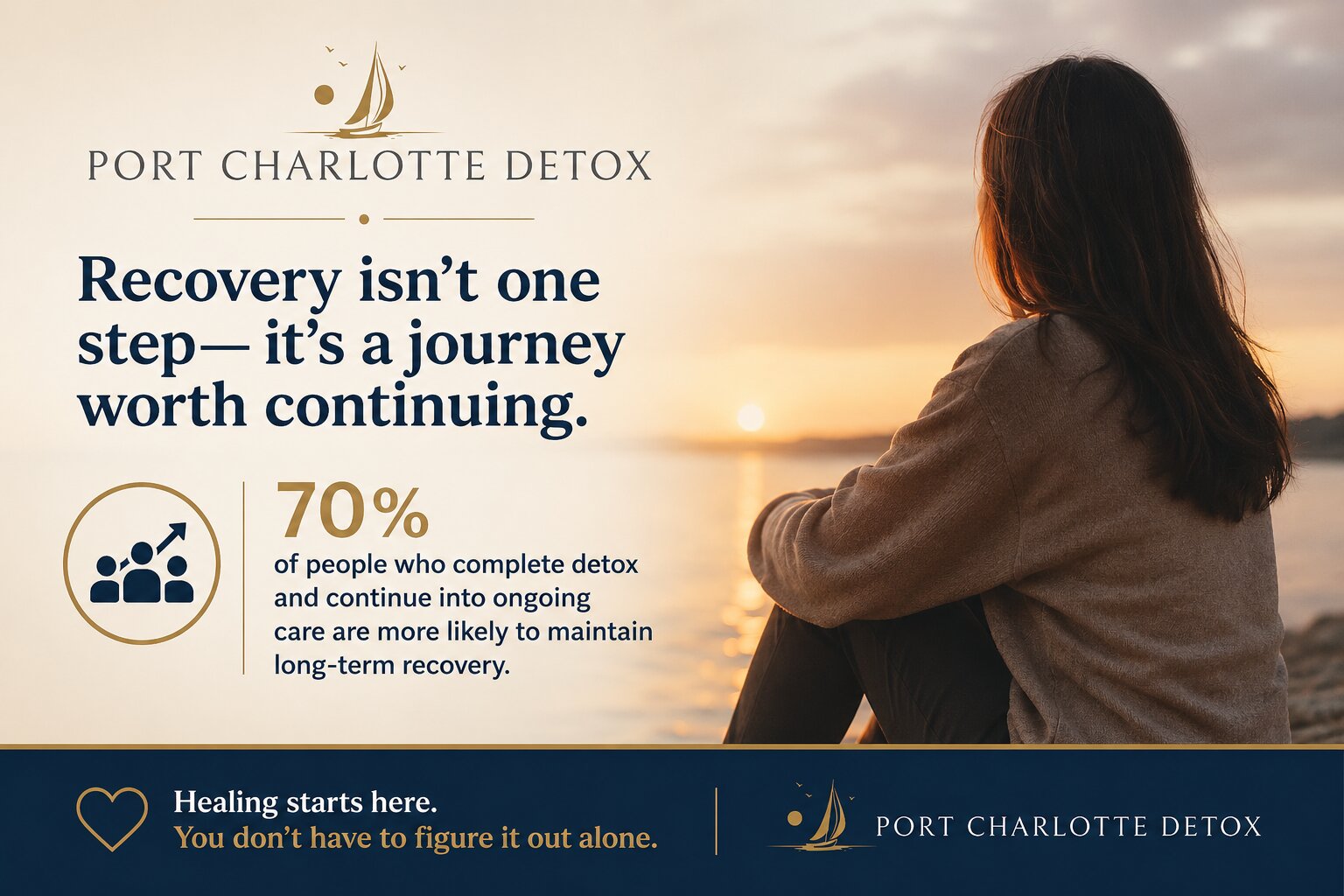
When people move directly from detox into additional care, they often continue building on the progress they’ve already made.
Think about pushing a car uphill.
The hardest part is getting it moving.
Once momentum develops, continuing forward becomes easier.
Recovery often works the same way.
The first phone call is difficult.
The first day is difficult.
The first week can be difficult.
But once someone begins experiencing support, structure, and stability, continuing the process often feels more manageable than stopping and starting over.
The Hidden Benefit of Staying in One Place
People often focus on the clinical side of treatment.
What they don’t always consider is the emotional comfort that comes from familiarity.
When someone is vulnerable, small things matter.
Recognizing faces.
Knowing where things are.
Understanding daily routines.
Feeling safe enough to focus inward.
These details may seem minor.
They’re not.
Recovery requires significant emotional work.
Reducing unnecessary stress can make that work feel more achievable.
That’s one reason many people appreciate moving from detox into ongoing care without completely changing environments.
The less energy spent adapting, the more energy available for healing.
You Don’t Need to Have Everything Figured Out
One of the most common misconceptions about treatment is that you need complete commitment before making a phone call.
You don’t.
Many people reach out while still uncertain.
They have questions.
Doubts.
Concerns.
They wonder whether they’re “bad enough.”
They wonder whether treatment will work.
They wonder whether they’re ready.
The truth is that readiness rarely arrives all at once.
For many people, readiness grows through conversation.
Through information.
Through understanding their options.
You don’t need to know what the next year looks like.
You only need enough courage to explore what tomorrow could look like.
What Recovery Can Start Looking Like
As people move beyond detox and continue receiving support, something interesting often happens.
Their goals begin changing.
Initially, many people simply want relief.
They want withdrawal to stop.
They want the chaos to calm down.
But after a while, they start wanting more.
They want healthy relationships.
They want better sleep.
They want confidence.
They want peace of mind.
They want to trust themselves again.
They want a future that feels bigger than survival.
That shift is powerful.
Because recovery isn’t just about leaving substances behind.
It’s about building something worth moving toward.
The Next Step Doesn’t Have to Be Perfect
If you’re reading this because you’ve been wondering what happens after detox, remember this:
You don’t need a perfect plan.
You don’t need absolute certainty.
You don’t need every answer before taking action.
You only need enough willingness to ask the next question.
Recovery isn’t built through giant leaps.
It’s built through small decisions made consistently over time.
And sometimes one of the most important decisions is choosing a path that allows support to continue rather than starting over from scratch.
The future doesn’t have to be mapped out today.
It just needs a beginning.
Frequently Asked Questions
Can I stay in treatment after detox?
Many individuals continue receiving support after detox because recovery often involves more than managing withdrawal symptoms. Ongoing care can help address emotional, behavioral, and lifestyle challenges.
Why would someone choose treatment in one location?
Some people prefer continuity. Remaining in the same environment can reduce stress, create familiarity, and allow them to focus on recovery rather than adjusting to a completely new setting.
Is detox enough by itself?
Detox addresses the immediate physical effects of substance use, but many people benefit from continued support that helps them build coping skills, routines, and long-term recovery strategies.
What happens during the transition after detox?
For many individuals, the focus shifts toward understanding triggers, developing healthier habits, strengthening emotional wellness, and building a foundation for long-term recovery.
What if I’m not sure I’m ready?
That’s okay. Many people start by gathering information and asking questions. Reaching out does not mean you’re committing to treatment. It simply means you’re exploring your options.
How do I know if ongoing support is right for me?
Every person’s situation is unique. Speaking with a treatment professional can help you understand available options and determine what level of support best fits your goals and needs.
Will I have to tell my story repeatedly?
When care continues within the same treatment setting, many people find there is less repetition and fewer transitions, allowing them to focus more fully on healing and progress.
Call (844)336-2690 or visit our Residential Treatment Program services to learn more about our Residential Treatment Program services in Charlotte County, FL.