


For many people, the fear doesn’t start during drinking.
It starts the next morning.
The trembling hands.
The racing heartbeat before the day even begins.
The anxiety that feels far too intense to be “just a hangover.”
And maybe the most frightening part of all: realizing a drink seems to make it calm down.
That realization can hit hard for both the person struggling and the people who love them. Especially parents watching a son or daughter slowly change in ways they don’t fully understand yet.
You may find yourself searching questions late at night like:
“Why are their hands shaking every morning?”
“Is this alcohol withdrawal?”
“How serious is this really?”
Those questions matter. And if you’re asking them, there’s a good chance part of you already knows something deeper may be happening.
The important thing to understand is this: physical dependence on alcohol can develop quietly. Many people continue functioning outwardly while their nervous system is struggling underneath the surface.
That’s why early support matters. Programs offering medical alcohol detox support can help people safely stabilize while addressing both the physical and emotional sides of alcohol dependence.
Why Do the Mornings Feel So Much Worse?
Alcohol affects the central nervous system heavily.
When someone drinks consistently over time, the brain gradually adapts to alcohol being present. The body starts compensating for alcohol’s sedating effects by increasing stimulating activity in the nervous system.
Then overnight, alcohol levels suddenly drop.
The result can feel like the nervous system slamming on the gas pedal without warning.
That’s why mornings often become the hardest part of the day for someone developing dependence. Symptoms may include:
- Shaking or trembling hands
- Sweating
- Panic or dread
- Nausea
- Racing heartbeat
- Restlessness
- Intense anxiety
- Trouble concentrating
People often describe the feeling as waking up already overwhelmed before anything has even happened yet.
One young adult described it this way:
“It felt like my body was afraid before my brain even opened its eyes.”
That kind of fear wears people down emotionally very quickly.
Is It a Hangover or Something More Serious?
This is one of the most common questions families ask.
A hangover and withdrawal can overlap in some ways. Both can involve headaches, nausea, dehydration, fatigue, or shakiness. But withdrawal often carries a different physical intensity and emotional urgency.
Parents may notice that:
- The shaking happens repeatedly, not just occasionally
- Symptoms are getting worse over time
- Anxiety feels extreme in the mornings
- Their child seems desperate to calm down physically
- Drinking again appears to temporarily “fix” the symptoms
That last part matters.
When alcohol temporarily relieves shaking or panic, it may indicate the nervous system has started depending on alcohol to regulate itself.
This is where phrases like “alcohol shakes in the morning” often start appearing in private search histories.
Not because someone is dramatic.
Because they’re scared.
And honestly, many people are terrified long before they ever admit it out loud.
Can Someone Be Physically Dependent and Still Look “Fine”?
Yes. Very much so.
This is one reason families become confused for so long.
Many people struggling with alcohol dependence still:
- Go to work
- Attend school
- Maintain friendships
- Show up for family events
- Laugh normally in public
- Hide symptoms carefully
Especially young adults.
A parent may think:
“If this were really serious, wouldn’t their whole life already be falling apart?”
Not necessarily.
Addiction and physical dependence often develop quietly before they become visibly destructive. Some people become incredibly skilled at appearing functional while privately struggling every single morning.
That hidden suffering can become exhausting.
And underneath it, many young adults feel trapped between fear and denial:
- Fear that something serious is happening
- Denial because admitting it feels overwhelming
That emotional tug-of-war keeps many people silent far longer than they should be.
Why Do Some People Need Alcohol Just to Feel “Normal” Again?
This part can feel deeply unsettling for families.
When the nervous system becomes dependent on alcohol, the body may begin reacting strongly when alcohol levels drop. A person may no longer drink only to feel intoxicated. They may start drinking to stop feeling physically terrible.
That shift changes everything emotionally.
At that point, alcohol often becomes about:
- Reducing panic
- Stopping the shaking
- Calming the nervous system
- Relieving nausea
- Feeling temporarily stable again
Parents sometimes interpret this as weakness or lack of self-control because they understandably want their child to “just stop.”
But dependence changes how the brain and body respond to alcohol.
That doesn’t remove responsibility.
But it does mean compassion matters.
Because underneath many drinking patterns is someone quietly trying to escape physical and emotional discomfort they no longer fully understand themselves.
Why Does Withdrawal Scare People So Much?
Because it can feel genuinely frightening.
Even mild withdrawal symptoms can create intense emotional distress. Many people describe feeling:
- Physically unsafe
- Unable to calm down
- Hyperaware of their heartbeat
- Terrified something bad is happening
- Ashamed that they “need” alcohol to feel steady
That combination of fear and shame creates isolation fast.
And isolation is where alcohol problems tend to deepen quietly.
One painful reality about alcohol dependence is that many people continue pretending they’re okay because they’re terrified of becoming “a problem” in the eyes of the people they love.
Especially young adults who already feel like they’ve disappointed their families.
That fear can keep someone suffering silently for much longer than most parents realize.
Is Alcohol Withdrawal Dangerous?
It can be.
This is why morning shaking shouldn’t simply be brushed off as “having a rough night.”
Alcohol withdrawal symptoms can range from uncomfortable to medically serious depending on the person, their drinking history, and overall health.
Potential symptoms may include:
- Severe anxiety
- Hallucinations
- Dangerous blood pressure changes
- Seizures
- Severe confusion
- Intense agitation
Not every person experiencing shaky mornings will develop severe complications. But withdrawal symptoms deserve professional attention rather than guesswork.
Many parents unintentionally minimize what they’re seeing at first because accepting the reality feels emotionally overwhelming.
That reaction is human.
No parent wants to think:
“My child’s body may be physically dependent on alcohol.”
But early intervention can prevent situations from becoming more dangerous emotionally and medically later.
What Should Parents Actually Say?
This question matters because fear often makes conversations harder.
Parents usually swing between two painful instincts:
- Panic and confrontation
- Silence and avoidance
Neither extreme tends to help much.
What often works better is calm honesty:
- “I’ve noticed you seem physically sick in the mornings.”
- “I’m worried because this looks painful.”
- “You don’t have to handle this alone.”
- “I’m not trying to punish you. I’m concerned.”
People struggling with alcohol often expect judgment automatically. A calmer approach can lower defensiveness enough for honest conversation to happen.
That doesn’t mean avoiding boundaries or pretending everything is fine.
It means leading with care before control.
Because shame already screams loudly inside many people struggling with dependence.
Why Do Some People Resist Help Even When They’re Scared?
Fear.
Not laziness. Not always denial. Often fear.
People worry:
- “What if I can’t stop?”
- “What if treatment changes how people see me?”
- “What if I disappoint everyone?”
- “What if this is worse than I thought?”
- “What if I fail?”
Those fears keep many people stuck in dangerous middle ground for a long time.
Especially young adults who still feel emotionally dependent on their parents’ approval while simultaneously trying to appear independent.
Sometimes a person needs several conversations before they feel emotionally ready to accept help.
That doesn’t mean your concern isn’t reaching them.
Often, it means they’re terrified too.
Physical Dependence Does Not Mean Someone Is Hopeless
This is incredibly important.
A person developing withdrawal symptoms is not broken beyond repair.
Many people recover successfully after alcohol dependence becomes physical. In fact, recognizing the problem early can become the turning point that changes everything.
And recovery usually starts much smaller than families expect.
Not with dramatic speeches.
Not with instant transformation.
Often it begins with one honest moment:
“I don’t think I’m okay anymore.”
That moment matters.
Because honesty opens the door to support. And support changes outcomes.
Even now, if someone is searching questions about withdrawal symptoms, there’s a good chance part of them still wants help — even if they don’t fully know how to ask for it yet.
Hold onto that possibility.
Frequently Asked Questions
Are shaky hands in the morning a sign of alcohol withdrawal?
They can be. Repeated morning trembling after drinking may suggest the nervous system is becoming physically dependent on alcohol, especially if symptoms improve after drinking again.
Why do alcohol withdrawal symptoms often happen in the morning?
Alcohol levels drop overnight while someone sleeps. By morning, the nervous system may begin reacting strongly to the absence of alcohol, creating shaking, anxiety, sweating, or nausea.
Can young adults experience alcohol withdrawal?
Yes. Physical dependence can develop at different ages, including in young adults who still appear outwardly functional.
What do alcohol shakes feel like?
People often describe trembling hands, internal shaking, racing heartbeat, sweating, panic, nausea, and feeling emotionally overwhelmed immediately after waking up.
Is alcohol withdrawal dangerous?
It can be. Some cases involve serious medical risks including seizures, hallucinations, severe confusion, or dangerous cardiovascular symptoms. Professional medical support is often safest.
Why does drinking again sometimes stop the shaking?
Alcohol may temporarily calm withdrawal symptoms because the nervous system has adapted to functioning with alcohol present. This can indicate physical dependence.
How should parents approach the conversation?
Gentle honesty usually helps more than blame or panic. Focus on concern, safety, and support rather than punishment or shame.
Can someone recover even if they’re already experiencing withdrawal symptoms?
Absolutely. Many people recover successfully after developing physical dependence on alcohol. Early treatment and medical support can make the process safer and more manageable.
What if someone refuses help at first?
That’s common. Fear and shame often make people resistant initially. Staying calm, consistent, and supportive can help keep communication open over time.
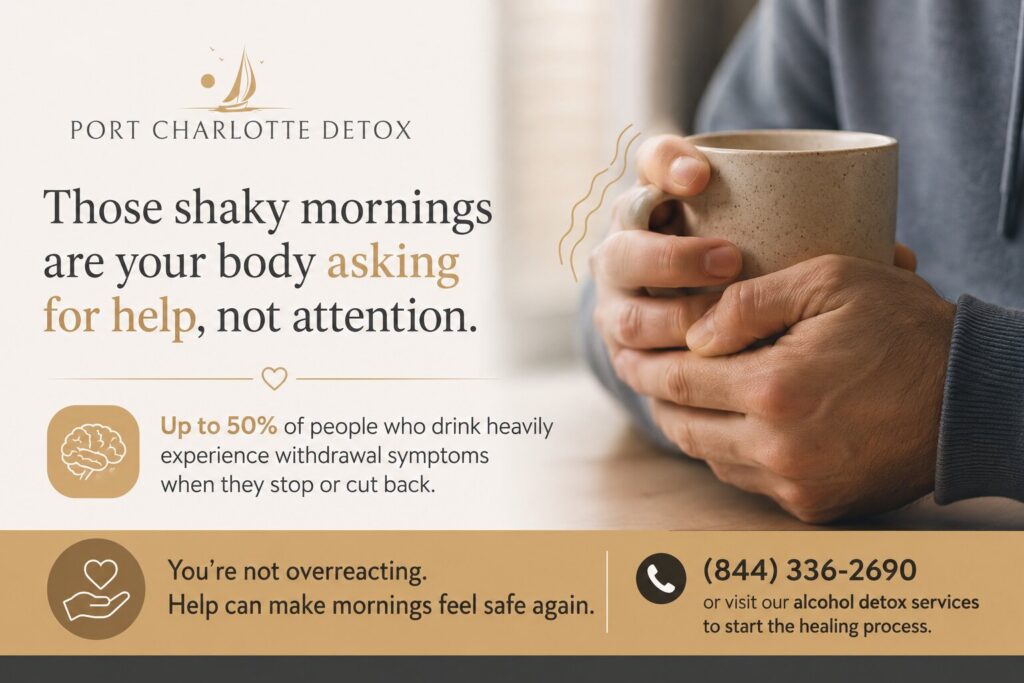
Call (844)336-2690 or visit our alcohol detox services to learn more about our alcohol detox services in Charlotte County, FL.