


I didn’t expect the second phone call to feel heavier than the first.
The first time I asked for help, I was desperate. Scared. Tired. There was almost relief in admitting I couldn’t do it alone anymore.
The second time? I had 90 days behind me. I had chips. I had people who said they were proud of me. I had proof that I could do this.
And then I drank.
If you’re in that space right now—relapsed after real time sober—I want to talk to you like someone a few steps ahead, not like a brochure. Because going back can feel harder than the first time. And not because you’re weaker.
Because you care more.
If you’re considering stepping back into support, including options like alcohol addiction treatment, you deserve to understand why this feels so complicated—and why it still makes sense.
The First Time Was Chaos. The Second Time Is Personal.
The first time I got help, everything was burning.
Relationships strained. Health slipping. Sleep wrecked. I wasn’t negotiating with myself anymore—I was surviving.
The second time? Life looked better on the outside.
I had routine. I had clarity. I had mornings that didn’t hurt.
So when I picked up again, it didn’t feel like chaos.
It felt like betrayal.
That’s why going back feels heavier. The first time you’re escaping pain. The second time you’re confronting the loss of progress.
That loss can feel unbearable.
But here’s the part no one says out loud:
Relapse after 90 days doesn’t erase those 90 days. It exposes what still needed attention.
Shame Hits Harder After “Proving” Yourself
There’s something about the 90-day mark. It feels legitimate. Like you’ve crossed into real recovery.
People start trusting you again.
You start trusting yourself again.
So when you slip, it’s not just about the alcohol. It’s about identity.
“I was doing so well.”
“They believed in me.”
“I said I was done.”
Shame gets louder because your standards are higher now.
And shame can convince you that going back means admitting you’re incapable.
But here’s the uncomfortable truth: relapse is common in recovery. Especially with alcohol. It doesn’t mean you didn’t try hard enough. It doesn’t mean treatment “didn’t work.” It means something unresolved resurfaced.
Shame says hide.
Wisdom says adjust.
You’re Not Starting From Scratch
This is where perspective matters.
When I walked back in the second time, I felt like I was back at zero.
But I wasn’t.
I knew:
- What stress did to my thinking
- How isolation crept in before cravings did
- Which coping tools I ignored when I thought I was “fine”
- How quickly “just one” turned into a spiral
That awareness is not nothing.
Relapse doesn’t reset your insight.
You’re not a beginner. You’re someone refining the process.
And that second round? It’s often deeper. Less performative. Less about looking sober—and more about staying sober.
The Fear of Being Judged (Even If No One Is)
Walking back through those doors can feel like showing up to a reunion after breaking your own promises.
You imagine:
- Staff thinking, “Here we go again.”
- Peers whispering.
- Being treated like you failed a test.
But here’s what actually tends to happen:
Compassion.
Recognition.
Understanding.
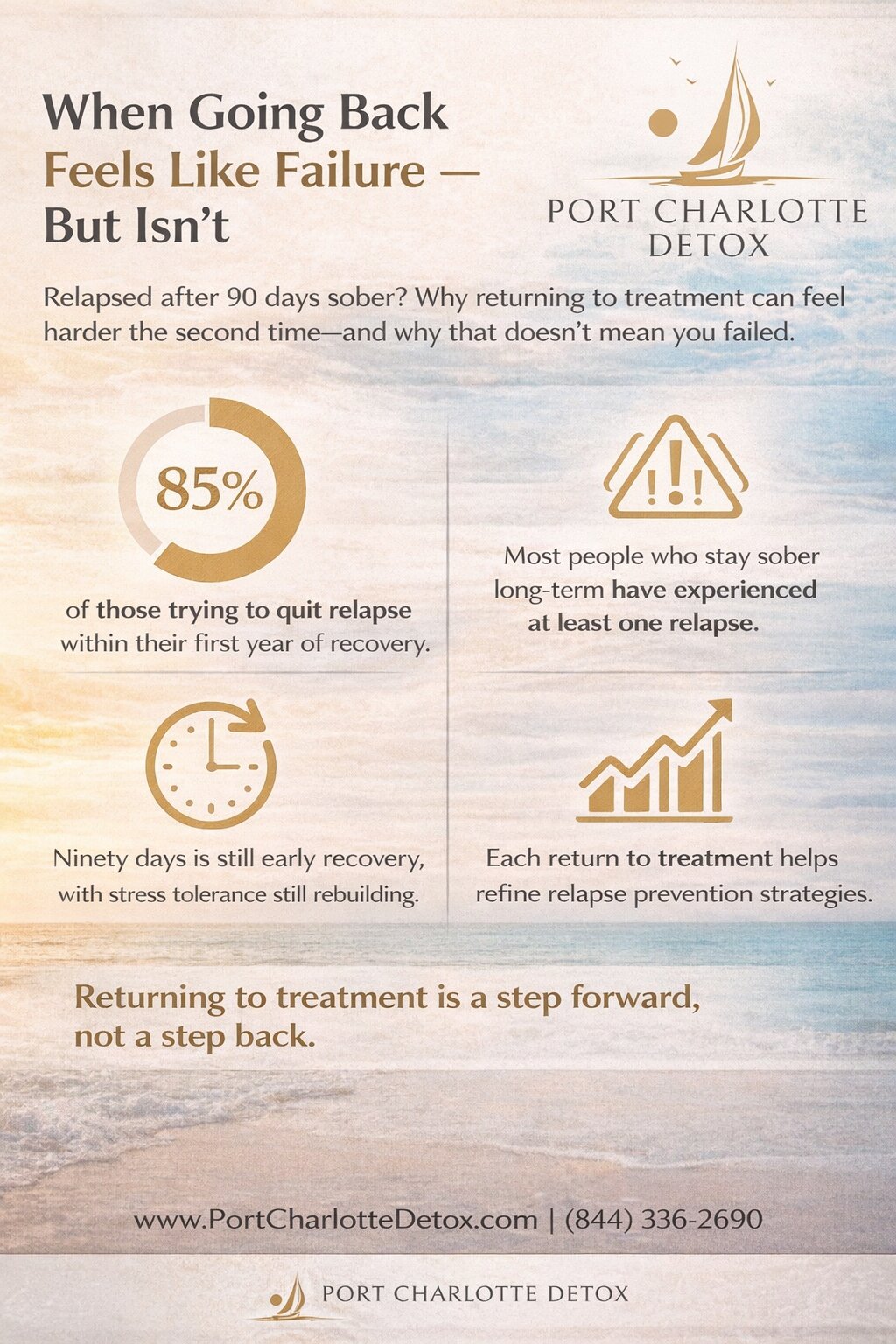
Most people in recovery have slipped before. Many more than once.
The ones who stay sober long-term? They often aren’t the ones who never relapsed. They’re the ones who didn’t let relapse become an exit.
Going back is not embarrassing.
Disappearing is what keeps people stuck.
Sometimes the First Round Only Scratches the Surface
Let’s be honest about something.
Early recovery can be fueled by adrenaline. Fear. Urgency.
You white-knuckle. You attend everything. You follow rules.
But after 60 or 90 days, real life creeps back in. Stress returns. Old patterns knock.
And if deeper issues—anxiety, trauma, depression, loneliness—weren’t fully addressed, alcohol can sneak back in as relief.
The second time around, treatment can shift from “stop drinking” to:
- Why do I reach for it when I feel overwhelmed?
- What emotion am I trying to avoid?
- Where am I still living on autopilot?
That’s not failure. That’s maturation.
The Lie That It Should Have “Stuck”
There’s this unspoken belief: if treatment works, it works the first time.
But addiction doesn’t operate on pride.
Alcohol changes brain chemistry. It rewires reward systems. It builds habits that don’t disappear just because you had 90 clean days.
Recovery isn’t a graduation ceremony.
It’s a practice.
And sometimes practice includes setbacks.
Choosing structured help again—whether that’s detox, live-in support, or multi-day weekly care—isn’t admitting defeat. It’s acknowledging reality.
And reality says: if something didn’t hold, it deserves reinforcement—not abandonment.
What Makes the Second Attempt Stronger
Here’s what changed for me the second time:
I stopped pretending I was “cured.”
I stopped minimizing stress.
I stopped skipping support because I felt stable.
I got honest about how tired I was of managing everything alone.
The second attempt often includes:
- Clearer boundaries
- More humility
- More willingness to talk about uncomfortable stuff
- Less ego
That’s strength, even if it doesn’t feel like it.
If You’re Thinking About Going Back
If you’re in Port Charlotte and quietly wondering whether to reach out again, let me say this gently:
The door is not closed.
There isn’t a limit on how many times you can choose recovery.
You don’t have to explain yourself perfectly. You don’t have to arrive with a polished speech.
You just have to be willing to say, “I need help again.”
And that sentence? It takes courage.
Frequently Asked Questions
Is relapse after 90 days common?
Yes. More common than people admit.
Ninety days is a powerful milestone, but it’s still early recovery. The brain and nervous system are still stabilizing. Stress tolerance is still rebuilding. Many people experience cravings or slips within the first year.
Relapse is not unusual. Staying silent about it is.
Does relapse mean treatment didn’t work?
No.
It means part of the recovery plan needs adjusting.
Treatment can give you tools, insight, and stabilization. But long-term recovery often requires ongoing structure, community, or deeper emotional work.
If you’re considering returning to alcohol addiction treatment, it doesn’t mean the first round failed. It means you’re strengthening the foundation.
Will I be treated differently if I come back?
Reputable programs understand relapse as part of the recovery landscape.
You may be assessed differently to see what needs more attention this time—but that’s about personalization, not punishment.
You’re not “in trouble.” You’re re-engaging.
What if I’m embarrassed to call?
That’s normal.
Embarrassment often keeps people isolated longer than necessary. But treatment teams have heard it all. You won’t shock them. You won’t disappoint them.
If anything, they’ll respect the fact that you called before things got worse.
Should I wait to see if I can fix this on my own?
Ask yourself this: how did that go last time?
White-knuckling can work short term. But if you’ve already seen the pattern, early intervention can prevent deeper consequences—emotionally, physically, relationally.
Waiting often makes the return harder.
What if I’m scared it won’t work again?
That fear makes sense.
But the second attempt isn’t a repeat. It’s a revision.
Different insight. Different honesty. Different willingness.
And sometimes, that’s exactly what shifts the outcome.
You are not the only one who has relapsed after real time sober. You are not weak for needing reinforcement. And you are not disqualified from recovery because you stumbled.
If anything, this moment might be the one that deepens it.
Call (844)336-2690 or visit our alcohol addiction treatment services to learn more about our Alcohol addiction treatment services in Port Charlotte, Florida.