


When a medication is prescribed by a doctor, it’s easy to assume it can’t be addictive or misused.
For many people, that assumption changes after hearing someone mention using Lyrica recreationally or after noticing they feel uncomfortable when they miss a dose. If you’re searching about a Lyrica high, you’re likely looking for honest answers—not judgment.
If you’re concerned about your own use or someone else’s, understanding the risks is the first step. Our prescription drug detox program in Port Charlotte helps people safely manage dependence on prescription medications while preparing for long-term recovery.
What Is Lyrica?
Lyrica is the brand name for pregabalin, a prescription medication approved by the U.S. Food and Drug Administration (FDA). It belongs to a class of medications called anticonvulsants and is commonly prescribed to treat:
- Nerve pain caused by diabetes or shingles
- Fibromyalgia
- Certain seizure disorders
- Neuropathic pain related to spinal cord injuries
Unlike opioids, pregabalin is not designed to relieve pain by binding directly to opioid receptors. Instead, it changes how nerve signals are transmitted in the brain and spinal cord, helping reduce abnormal nerve activity.
Because pregabalin has recognized misuse potential, it is classified as a Schedule V controlled substance in the United States.
Although many people take Lyrica exactly as prescribed without problems, misuse has become increasingly common—particularly among people with a history of substance use disorders.
Can Lyrica Get You High?
Yes.
Although Lyrica is intended for legitimate medical use, taking higher doses than prescribed or using it without a prescription can produce feelings that some people describe as:
- Euphoria
- Relaxation
- Calmness
- Drowsiness
- Mild intoxication
- A floating or dream-like sensation
Not everyone experiences these effects, and increasing the dose does not simply make the medication “work better.” Instead, higher doses significantly increase the risk of dangerous side effects.
People searching for a Lyrica high are often unaware that the same effects producing temporary euphoria can also impair judgment, slow breathing, and increase the likelihood of accidental overdose when other substances are involved.
Why Is Pregabalin Misused?
Most people who misuse pregabalin are not trying to treat nerve pain.
Instead, misuse often happens for one of several reasons.
Some people:
- Take larger doses to experience euphoria
- Use someone else’s prescription recreationally
- Attempt to enhance the effects of opioids
- Mix pregabalin with alcohol or sedatives
- Continue increasing doses because the original amount no longer produces the same effect
One particularly concerning reason for misuse is its ability to potentiate opioids.
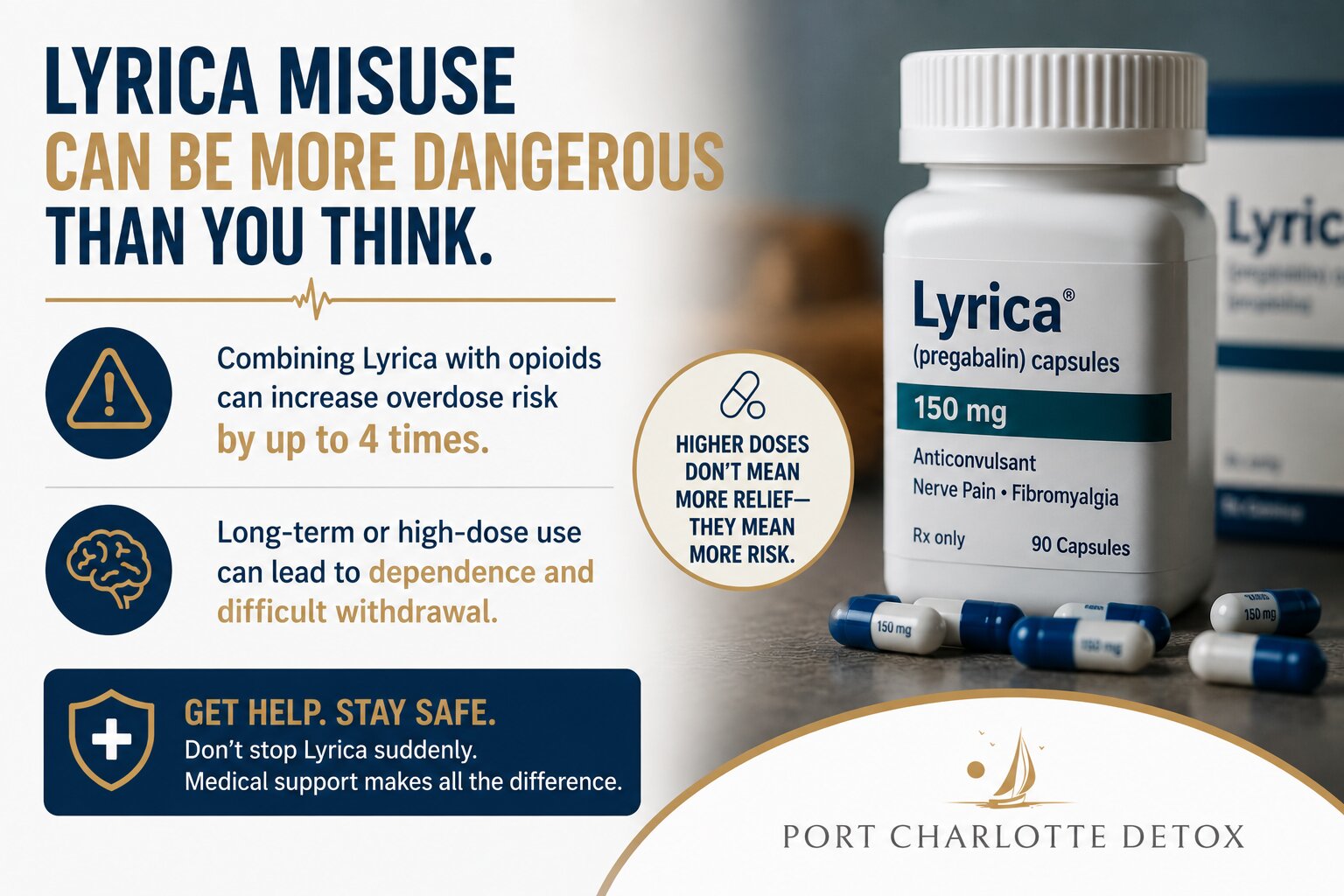
Potentiation means one drug increases the effects of another. When pregabalin is taken alongside opioids such as oxycodone, hydrocodone, fentanyl, or heroin, sedation becomes much stronger.
While some individuals intentionally seek this intensified effect, it also dramatically increases the risk of respiratory depression and overdose.
Why Combining Lyrica With Opioids Is Especially Dangerous
One of the biggest risks associated with pregabalin misuse is combining it with other substances that slow the central nervous system.
These include:
- Prescription opioid pain medications
- Heroin
- Fentanyl
- Alcohol
- Benzodiazepines like Xanax or Ativan
- Sleep medications
Each of these substances can slow breathing on its own.
Together, their effects become much more dangerous.
Possible consequences include:
- Extreme drowsiness
- Confusion
- Poor coordination
- Falls and injuries
- Slowed or stopped breathing
- Loss of consciousness
- Fatal overdose
People sometimes assume that because pregabalin is not an opioid, it is safe to combine with opioid medications. In reality, health professionals have become increasingly concerned about this combination because of its association with serious respiratory complications.
Other Risks of Lyrica Misuse
Even when opioids are not involved, pregabalin misuse can affect both physical and mental functioning.
Common effects include:
- Dizziness
- Blurred vision
- Difficulty concentrating
- Memory problems
- Slowed reaction times
- Poor balance
- Slurred speech
- Fatigue
Higher doses may increase the risk of:
- Severe confusion
- Agitation
- Hallucinations
- Mood changes
- Accidental injuries
- Motor vehicle accidents
These effects can interfere with work, driving, parenting, and everyday responsibilities, even if the person does not feel obviously intoxicated.
Can You Become Dependent on Lyrica?
Yes.
One of the most misunderstood aspects of pregabalin is its ability to cause physical dependence.
Dependence develops when the body adapts to having the medication present. Over time, the nervous system begins functioning differently because it expects regular doses.
This can happen even when someone originally started taking Lyrica exactly as prescribed.
Dependence does not automatically mean someone has an addiction.
However, it does mean the body may react when the medication is suddenly reduced or stopped.
The risk increases with:
- Higher daily doses
- Long-term use
- Taking medication more often than prescribed
- Combining pregabalin with other substances
- Previous substance use disorders
Recognizing dependence early allows people to seek help before withdrawal becomes more difficult.
What Happens During Lyrica Withdrawal?
Stopping pregabalin suddenly can produce uncomfortable—and sometimes dangerous—withdrawal symptoms.
Common symptoms include:
- Rebound anxiety
- Insomnia
- Irritability
- Sweating
- Nausea
- Headaches
- Tremors
- Rapid heart rate
Some people also experience:
- Panic symptoms
- Increased pain sensitivity
- Depression
- Difficulty concentrating
In more severe cases, seizures may occur, particularly among individuals taking high doses or those with seizure disorders.
Because of these risks, healthcare providers generally recommend gradually tapering the medication rather than stopping abruptly.
When Does Misuse Become a Bigger Problem?
It is not always obvious when occasional misuse has become dependence.
Warning signs may include:
- Running out of medication early
- Taking larger doses than prescribed
- Visiting multiple doctors for prescriptions
- Feeling unable to function without Lyrica
- Using pregabalin with opioids or alcohol
- Experiencing withdrawal symptoms between doses
- Continuing use despite problems at work, home, or school
If these patterns sound familiar, it does not mean recovery is out of reach.
It does suggest that professional evaluation may be appropriate before attempting to stop on your own.
Why Medical Supervision Matters
Many people assume they should simply stop taking the medication immediately.
For pregabalin, that approach can increase the risk of significant withdrawal symptoms and, in some cases, seizures.
Medical professionals can evaluate factors such as:
- Current dosage
- Length of use
- Other medications
- Co-occurring medical conditions
- Mental health symptoms
- History of seizures or substance use
Based on those factors, they can develop an individualized tapering plan while monitoring for complications.
For individuals who have also been using opioids, alcohol, or benzodiazepines, supervised care becomes even more important because multiple withdrawal syndromes may occur at the same time.
Those seeking medical detox in southwest Florida may benefit from medical monitoring that prioritizes both safety and comfort during the withdrawal process.
Recovery Is Possible
Developing dependence on a prescription medication is more common than many people realize.
It is not a sign of weakness or failure.
Pregabalin changes how the nervous system functions, and over time the body may adapt to its presence. With appropriate medical guidance, many people successfully taper off the medication and continue treatment for pain or substance use in safer, healthier ways.
The most important step is asking for help before withdrawal becomes overwhelming or dangerous.
Final Thoughts
A Lyrica high may seem harmless compared to illicit drugs, but pregabalin misuse carries real risks. Higher doses can impair thinking, slow breathing, and become especially dangerous when combined with opioids or other sedatives. Just as importantly, long-term use can lead to physical dependence, making it unsafe for many people to stop the medication without medical guidance. Port Charlotte Detox proudly provides medically supervised addiction treatment for residents of Charlotte County, Lee County, and Sarasota helping individuals throughout Southwest Florida begin recovery safely.
If you or someone you love has been misusing Lyrica or has developed a dependence, our prescription drug detox in Port Charlotte team can help you taper safely. Call (844) 336-2690 today or learn more about to get the support you deserve.
Frequently Asked Questions
Is Lyrica addictive?
Lyrica can cause physical dependence, particularly with long-term or high-dose use. While not everyone who takes it develops addiction, misuse increases the risk of compulsive use and withdrawal symptoms.
Can Lyrica cause an overdose?
Yes. The risk is especially high when Lyrica is combined with opioids, alcohol, benzodiazepines, or other medications that slow the central nervous system. These combinations can cause dangerous respiratory depression.
Should I stop taking Lyrica if I think I’m dependent?
Do not stop taking Lyrica suddenly without speaking to a healthcare provider. Abrupt discontinuation can lead to withdrawal symptoms, including rebound anxiety, insomnia, and in some cases, seizures. A medically supervised taper is often the safest approach.