


Many people are surprised to learn that stopping gabapentin isn’t always as simple as skipping a dose.
Because it is not an opioid and is often prescribed for legitimate medical conditions, gabapentin has a reputation for being a “safe” medication to stop whenever you choose. Unfortunately, that isn’t always true. If you’ve been taking it regularly, gabapentin withdrawal can occur, especially after long-term use or higher doses.
If you’re worried about stopping safely, understanding what withdrawal looks like can help you make informed decisions. Our prescription drug detox program in Port Charlotte provides medically supervised taper plans designed to reduce withdrawal symptoms while prioritizing your safety.
What Is Gabapentin Withdrawal?
Gabapentin is a prescription medication commonly used to treat:
- Nerve pain
- Partial seizures
- Restless legs syndrome (in some cases)
- Certain off-label conditions such as anxiety or chronic pain
Although gabapentin is not classified as a federally controlled substance in the same way as opioids, it still affects how the brain and nervous system function.
When someone takes the medication consistently over weeks or months, the body may adapt to its presence. If the medication is suddenly stopped, the nervous system can struggle to adjust, leading to withdrawal symptoms.
Many people mistakenly believe this cannot happen because gabapentin is not considered a traditional addictive drug. However, physical dependence can develop even when the medication is taken exactly as prescribed.
Why Does Withdrawal Happen?
Your brain constantly adapts to medications that affect nerve signaling.
Gabapentin changes communication between nerve cells by influencing calcium channels involved in neurotransmitter release. Over time, the body becomes accustomed to those changes.
When the medication is removed abruptly, the nervous system can become temporarily overactive before it regains balance.
This sudden adjustment is what causes withdrawal symptoms.
Physical dependence is different from addiction.
Someone may develop dependence without misusing the medication, while addiction involves compulsive use despite harmful consequences. Both situations deserve medical attention, but they are not the same condition.
Symptoms of Gabapentin Withdrawal
Withdrawal experiences vary depending on factors such as dosage, length of treatment, overall health, and whether other substances are involved.
Common symptoms include:
- Anxiety
- Restlessness
- Irritability
- Insomnia
- Sweating
- Nausea
- Headaches
- Tremors
- Increased heart rate
- Difficulty concentrating
Some people also report:
- Mood changes
- Increased pain sensitivity
- Fatigue
- Dizziness
- Loss of appetite
Although uncommon, more serious complications can occur.
In higher-risk situations, abrupt discontinuation may contribute to:
- Confusion
- Severe agitation
- Hallucinations
- Seizures
This is one of the main reasons healthcare providers generally recommend tapering the medication rather than stopping it suddenly.
Gabapentin Withdrawal Timeline
Every person’s experience is unique, but withdrawal often follows a predictable pattern.
First 12–48 Hours
Symptoms typically begin within the first one to two days after the last dose.
Early symptoms often include:
- Anxiety
- Trouble sleeping
- Restlessness
- Sweating
- Mild nausea
Some people initially mistake these symptoms for stress or illness before realizing they are related to stopping gabapentin.
Days 3–5
Withdrawal symptoms commonly become more intense during this period.
Individuals may experience:
- Increased anxiety
- Irritability
- Difficulty sleeping
- Tremors
- Gastrointestinal discomfort
- Elevated heart rate
For people at higher risk, this is also when complications such as seizures are most likely to occur.
One to Two Weeks
For many individuals, symptoms gradually improve over the following week.
Sleep patterns begin to stabilize, anxiety decreases, and physical discomfort becomes less noticeable.
Some people may continue experiencing mild symptoms for longer, particularly after prolonged or high-dose use.
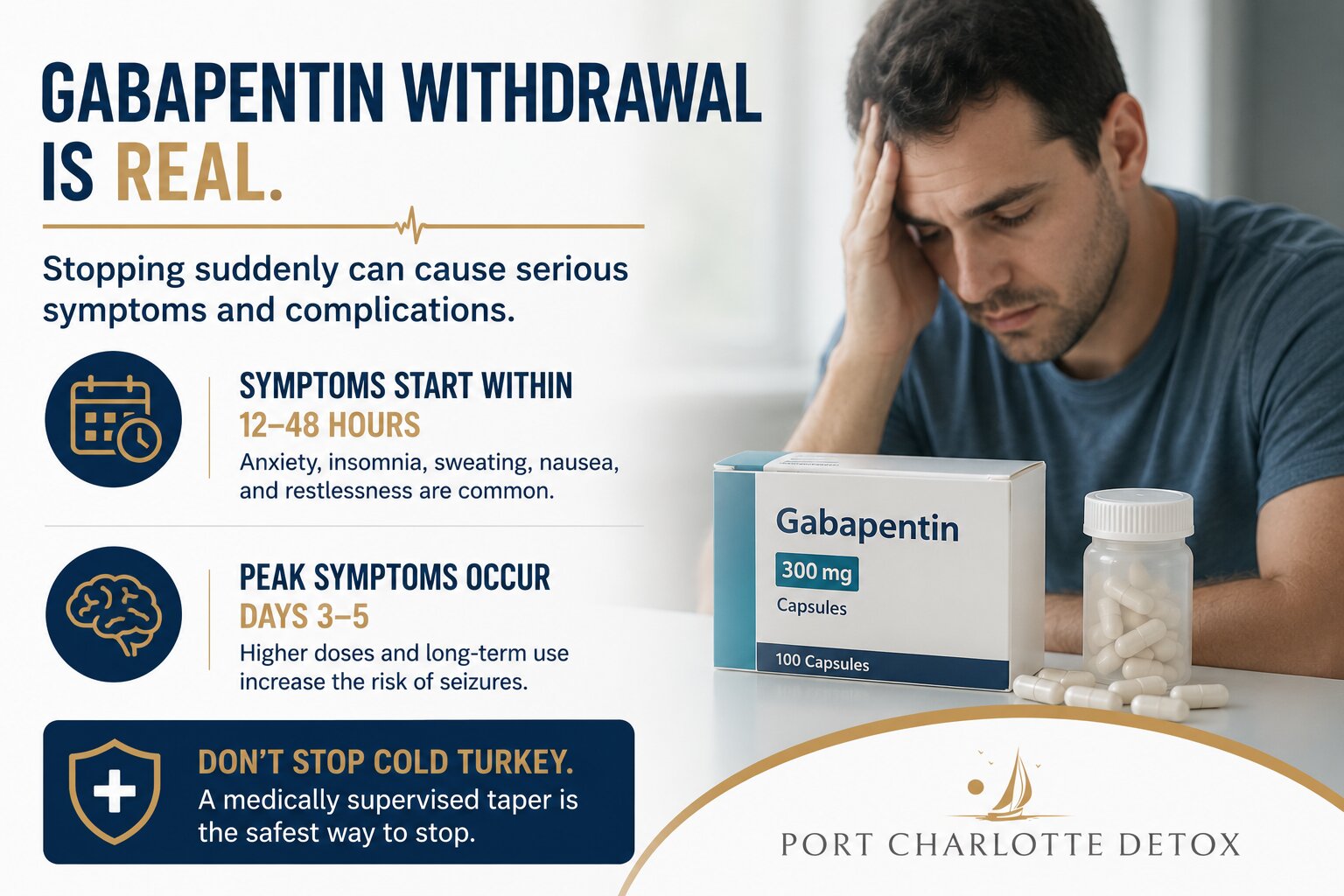
Why You Should Never Stop Gabapentin Cold Turkey
It can be tempting to stop taking a medication immediately, especially if you no longer want to rely on it.
However, abruptly discontinuing gabapentin increases the likelihood of uncomfortable withdrawal symptoms and, in some cases, serious medical complications.
Stopping cold turkey may increase the risk of:
- Severe rebound anxiety
- Persistent insomnia
- Psychological distress
- Increased pain
- Elevated blood pressure
- Seizures in susceptible individuals
The risk tends to be greater for people who:
- Take higher daily doses
- Have used gabapentin for several months or longer
- Have a seizure disorder
- Take other medications affecting the nervous system
- Have a history of substance misuse
Because every person’s medical history is different, there is no universally safe schedule for stopping the medication on your own.
Why a Medically Supervised Taper Is the Safest Option
Rather than stopping abruptly, healthcare providers typically recommend reducing the dose gradually.
A medically supervised taper allows your brain and nervous system time to adjust while reducing the severity of withdrawal symptoms.
During a taper, clinicians can:
- Monitor withdrawal symptoms
- Adjust the taper schedule if needed
- Identify potential complications early
- Address co-occurring medical or mental health conditions
- Provide supportive care throughout the process
For individuals taking multiple medications or using substances such as opioids, alcohol, or benzodiazepines, professional supervision becomes even more important because withdrawal may involve more than one drug.
Those looking for medical detox in southwest Florida can benefit from individualized care that focuses on safety, comfort, and preparing for the next stage of recovery.
When Is It Time to Ask for Help?
Not everyone who takes gabapentin will need medical supervision to stop.
However, it is worth speaking with a healthcare professional if you:
- Have been taking gabapentin daily for several weeks or longer
- Take higher doses than prescribed
- Feel anxious or ill when you miss a dose
- Have experienced withdrawal symptoms before
- Use opioids, alcohol, or sedatives in addition to gabapentin
- Have a history of seizures
Seeking guidance early can help prevent complications and make the process much more manageable.
Recovery Is Possible
Developing physical dependence on gabapentin is not a personal failure.
It is simply a reflection of how the brain adapts to certain medications over time.
With a carefully planned taper and appropriate medical support, many people are able to discontinue gabapentin safely while minimizing withdrawal symptoms. If you’ve been worried about stopping, know that help is available and you do not have to navigate the process alone.
Final Thoughts
Gabapentin withdrawal is real, even though many people are told the medication is harmless or non-addictive. Stopping it suddenly can lead to anxiety, insomnia, sweating, nausea, and, in some cases, seizures. A medically supervised taper is often the safest way to reduce these risks and support a more comfortable recovery. Port Charlotte Detox proudly provides medically supervised addiction treatment for residents of Charlotte County, Lee County, and Sarasota helping individuals throughout Southwest Florida begin recovery safely.
If you’ve been taking gabapentin regularly and want to stop safely, our prescription drug detox in Port Charlotte team can build a medically supervised taper plan. You don’t have to figure this out alone. Call (844) 336-2690 today or learn more about treatment in Port Charlotte and take the first step toward recovery with confidence.
Frequently Asked Questions
How long does gabapentin withdrawal last?
Most people begin experiencing symptoms within 12 to 48 hours after their last dose. Symptoms often peak around days 3 to 5 and improve over one to two weeks, though recovery varies from person to person.
Can gabapentin withdrawal cause seizures?
Yes. Although seizures are uncommon, they can occur, particularly in people taking high doses, those with seizure disorders, or individuals who stop the medication abruptly. This is why medical supervision is recommended.
Can I taper off gabapentin by myself?
You should speak with your prescribing healthcare provider before reducing or stopping gabapentin. An individualized tapering plan is generally much safer than quitting the medication on your own.